- This topic is empty.
-
AuthorPosts
-
21/08/2026 at 16:36 #85369
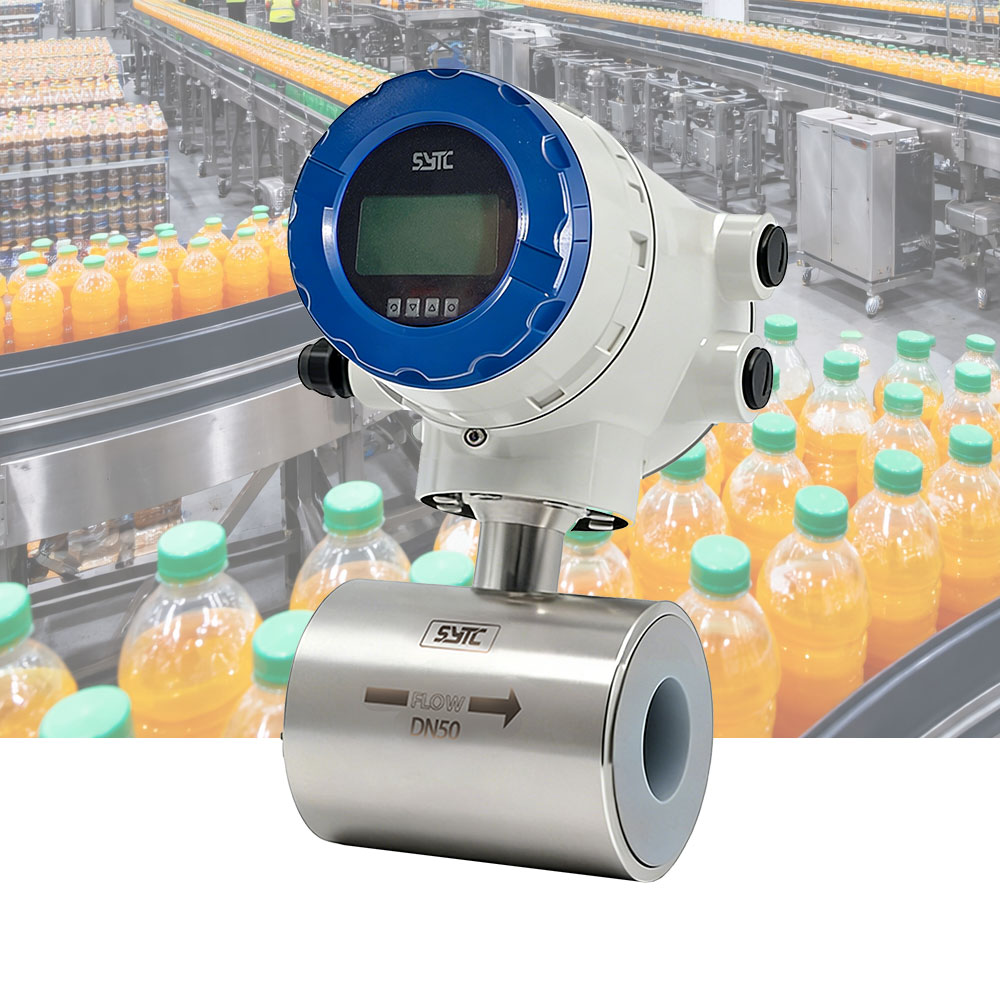
Hygienic Electromagnetic Flow Meters for Yogurt Processing
Introduction
Yogurt production involves a sequence of conductive, viscosity-varying liquids — from standardized milk base to fermented, thickened, and sometimes fruit-blended finished product. Selecting an appropriate flow measurement device for these process stages requires understanding both the electrical properties of the liquid and the mechanical/hygienic constraints of dairy processing lines. This article examines how hygienic electromagnetic flow meters function in yogurt-related applications, the engineering variables that determine correct model selection, and the operational limits engineers must respect.
Why Electromagnetic Flow Measurement Suits Conductive Dairy Liquids
Electromagnetic flow meters operate on Faraday’s law of induction: a conductive liquid moving through a magnetic field generates an induced electromotive force proportional to its velocity. Milk, cream, standardized dairy mixes, and fermented yogurt base are electrically conductive due to dissolved salts and ions, which makes electromagnetic measurement technically applicable across most yogurt process stages.
Key technology characteristics relevant to dairy processing include:
- No moving parts in the flow path — reduces mechanical wear and contamination risk compared to turbine or positive-displacement meters.
- Bidirectional measurement capability — useful in CIP (Clean-In-Place) return lines and recirculation loops where flow direction may reverse.
- Multiple accuracy classes (±0.5%, ±0.3%, ±0.2% depending on model configuration) — allow engineers to match precision to the criticality of the measurement point.
- Square wave pulse excitation with VFC (Voltage-to-Frequency Conversion) signal processing — supports zero-point stability, which is important when liquid conductivity or temperature fluctuates during fermentation and cooling stages.
Electromagnetic flow meters require a minimum liquid conductivity to generate a usable signal. Product formulations with very low ionic content or non-conductive additives should be evaluated carefully before selection.
Key Liquid Properties Affecting Meter Selection
Product Composition and Conductivity
Milk base, cultured yogurt, and fruit-blended finished product differ in ionic strength depending on formulation (added minerals, fruit preparations, stabilizers). Since electromagnetic flow meters depend on liquid conductivity, verifying the conductivity range of each process liquid against the instrument’s specified operating range is a required selection step.
Temperature
Yogurt processing spans multiple thermal stages — pasteurization, fermentation, and cooling. The flow meter’s converter and sensor materials must be rated for the full temperature range encountered, including CIP cleaning temperatures, which are typically higher than product process temperatures.
Viscosity and Full-Pipe Operation
Fermented yogurt is significantly more viscous than raw milk. Electromagnetic flow meters require the pipe to remain completely full for accurate volumetric measurement; empty-pipe conditions distort the induced signal. Vertical installation with upward flow, or horizontal installation with adequate backpressure, helps maintain full-pipe conditions, particularly for higher-viscosity fermented product downstream of the incubation tank.
Suspended Components
Fruit preparations, fiber inclusions, or particulate additives introduced after fermentation can behave similarly to solids-laden industrial slurries in terms of potential signal disturbance. In such cases, engineering principles used for slurry-type electromagnetic flow measurement — such as variation restraint algorithms that suppress "cuspidal disturb" signal spikes caused by particle-electrode collision — become relevant even in a food-grade context.
Hygienic Requirements and Cleaning Conditions
Any electromagnetic flow meter installed in a yogurt line must be compatible with CIP cleaning cycles, use materials suited to hygienic service, and avoid geometry that permits fluid stagnation or bacterial harborage at wetted surfaces and process connections.
Engineering Selection Factors
Flow Range and Pipe Diameter
Select the nominal diameter (DN) based on actual process flow rates rather than existing pipe size alone; oversized meters reduce velocity and measurement resolution, while undersized meters increase pressure drop. Electromagnetic flowmeter platforms referenced in this article support a wide diameter range (DN15 to DN3000) and a velocity measurement range of approximately 0.1 to 10 m/s, giving flexibility across pilot-scale and production-scale yogurt lines.
Liner and Electrode Selection
Liner and electrode material selection should account for the chemical characteristics of CIP cleaning agents (acids, caustics) as well as mechanical wear from any suspended solids in fruit-blended product lines. Electrode configuration (including grounding electrode options) also affects signal stability in lined, non-conductive pipe sections.
Process Connections and Installation
Sanitary process connections should integrate with existing dairy line fittings and allow tool-free or low-maintenance disassembly for inspection. Installation orientation, upstream/downstream straight-pipe requirements, and full-pipe assurance should be confirmed during engineering design, not after installation.
Grounding
Proper electrical grounding of the sensor and adjacent pipe sections is required to avoid stray current interference, which can distort the induced signal, particularly in installations with variable-frequency pumps or other electrical noise sources common in processing plants.
Temperature Range and CIP Compatibility
Confirm that both sensor and converter temperature ratings cover the full range of product processing and CIP cleaning cycles. Repeated thermal cycling during daily CIP routines is a normal operating condition that the selected meter must tolerate without accuracy drift.
Calibration
Periodic calibration verification is recommended to confirm continued measurement accuracy, especially after maintenance events such as electrode cleaning, liner inspection, or converter replacement. Factory-calibrated replacement circuit boards can be used to restore accuracy without requiring full sensor recalibration in the field.
Measuring Liquid Flow Before and After Yogurt Processing
An important engineering distinction exists between measuring flow before fermentation (raw milk base, standardized mix) and after fermentation (viscous, sometimes particulate-containing finished yogurt):
- Pre-processing liquid is generally lower viscosity, more homogeneous, and behaves closer to a standard conductive liquid, simplifying meter selection.
- Post-processing liquid is thicker, may contain fruit particulates, and is more prone to full-pipe or velocity-profile irregularities, requiring closer attention to installation orientation, liner wear resistance, and signal-processing robustness.
Engineers should not assume that a single meter configuration optimized for pre-fermentation flow will perform identically on post-fermentation product without reviewing conductivity, viscosity, and particulate characteristics at that specific measurement point.
What Electromagnetic Flow Meters Do Not Measure
It is important to set correct expectations for plant engineers and quality teams:
- Electromagnetic flow meters measure volumetric flow rate based on induced voltage from a conductive liquid moving through a magnetic field.
- They do not directly measure yogurt viscosity, fat content, protein content, bacterial/culture activity, or finished product quality attributes.
- Any correlation between flow signal behavior and product characteristics (e.g., viscosity-related full-pipe issues) is an indirect installation consideration, not a quality measurement function.
Plants requiring viscosity, composition, or microbiological data must use dedicated analytical instrumentation in addition to flow measurement.
Application Challenges in Yogurt Lines
- Conductivity variation across formulations may require verifying meter operating range for each specific product recipe.
- Viscosity increase after fermentation raises the risk of incomplete pipe filling if installation geometry is not carefully designed.
- Fruit particulates in blended products can introduce signal noise similar to industrial slurry disturbances.
- CIP thermal and chemical cycling places continuous stress on liners, electrodes, and seals, requiring materials selected for repeated exposure.
- Grounding and electrical noise from plant equipment (pumps, VFDs) can affect signal stability if not properly managed during installation.
Installation and Maintenance Recommendations
- Confirm full-pipe operation under all expected flow conditions, including low-flow periods.
- Maintain manufacturer-specified straight-pipe distances upstream and downstream of the sensor.
- Verify grounding rings or grounding electrodes are correctly installed and bonded to the process pipe.
- Schedule periodic inspection of liner and electrode condition, particularly in lines carrying particulate-containing product.
- Confirm converter and sensor temperature ratings against actual CIP cycle temperatures before each cleaning validation.
- Retain calibration records and use factory-calibrated replacement components when servicing the converter electronics.
Supplier Evaluation Guidance
When evaluating suppliers for hygienic electromagnetic flow meters in yogurt applications, dairy processing engineers and system integrators should assess:
- Availability of accuracy classes appropriate to the measurement point criticality.
- Documented diameter and velocity range coverage matching the plant’s process scale.
- Signal processing features (such as square wave excitation and VFC conversion) that support stability under fluctuating conductivity and temperature.
- Liner and electrode material options suited to CIP chemical exposure and any particulate content.
- Communication protocol support (e.g., RS485, HART, Modbus-RTU) for integration with plant automation and IoT monitoring systems.
- Technical support for installation guidance, troubleshooting, and calibration verification.
Kaifeng Xinya Instrument Co., Ltd. develops electromagnetic flow measurement systems — including standard industrial models, food-oriented sanitary designs, and slurry-resistant variants — built on square wave pulse excitation and VFC signal processing technology. The company’s product line spans DN15 to DN3000 diameters with selectable accuracy classes, and its IoT Big Data Platform supports remote monitoring integration for processing facilities evaluating centralized flow data management alongside sanitary process equipment.
Frequently Asked Questions
1. Can one electromagnetic flow meter model measure both raw milk base and finished yogurt in the same line?
It depends on the conductivity, viscosity, and particulate profile of each liquid. Engineers should verify the meter’s specified operating range against both pre- and post-fermentation liquid properties rather than assuming identical performance.2. Does an electromagnetic flow meter measure yogurt viscosity or fat content?
No. It measures volumetric flow rate via electromagnetic induction. Viscosity, fat, protein, and quality attributes require separate analytical instruments.3. Why is full-pipe operation important for yogurt flow measurement?
Electromagnetic flow meters require a completely filled pipe to generate an accurate induced signal. Partial filling, more likely with thicker post-fermentation product, distorts the measurement.4. How does CIP cleaning affect flow meter selection?
The sensor liner, electrode materials, and converter temperature rating must tolerate CIP chemical and thermal cycles without degradation, since CIP is a routine and repeated operating condition, not an occasional event.5. Can fruit particulates in blended yogurt affect flow signal accuracy?
Yes. Particulates striking electrodes can introduce signal disturbances. Signal-processing features designed to suppress particle-related noise, similar to those used in industrial slurry applications, can help maintain stability.6. What role does grounding play in electromagnetic flow measurement for dairy lines?
Proper grounding prevents stray electrical currents from plant equipment, such as pumps or variable-frequency drives, from interfering with the induced signal and causing measurement errors.7. How often should a hygienic electromagnetic flow meter be recalibrated?
Calibration verification frequency should follow plant quality procedures and manufacturer recommendations, with additional checks after any maintenance involving electrode cleaning, liner inspection, or converter replacement.Conclusion
Hygienic electromagnetic flow meters provide a technically sound approach to measuring conductive dairy liquids across yogurt processing stages, provided engineers account for conductivity, viscosity, temperature, particulate content, and CIP compatibility during selection. These instruments deliver volumetric flow data — not viscosity, composition, or quality metrics — and should be specified as part of a broader instrumentation and process control strategy rather than as a standalone quality assurance tool.
https://www.sytcflowmeter.com/
Kaifeng Xinya Instrument Co., Ltd. -
AuthorPosts

- You must be logged in to reply to this topic.