- This topic is empty.
-
AuthorPosts
-
03/11/2026 at 19:12 #86015
Businesses shipping goods from China to Australia face one recurring decision: should cargo travel by sea or by air? Each mode carries distinct cost structures, transit timelines, and operational trade-offs, and the right choice depends on cargo volume, urgency, and budget. Drawing on operational data from DAKA International Transport Company Ltd., a specialized international shipping provider focused on the China-to-Australia corridor since 2016, this article breaks down the practical differences between sea freight and air freight to help importers make an informed decision.
The Core Trade-Off: Cost Efficiency vs Speed
At the heart of the sea-versus-air decision is a simple trade-off. Sea freight generally offers lower per-unit cost but longer transit times, while air freight delivers speed at a premium price. Neither mode is universally “better”—the optimal choice depends on the nature of the shipment, including weight, volume, urgency, and the shipper’s tolerance for transit variability.
Sea Freight: Full Container Load and Less than Container Load
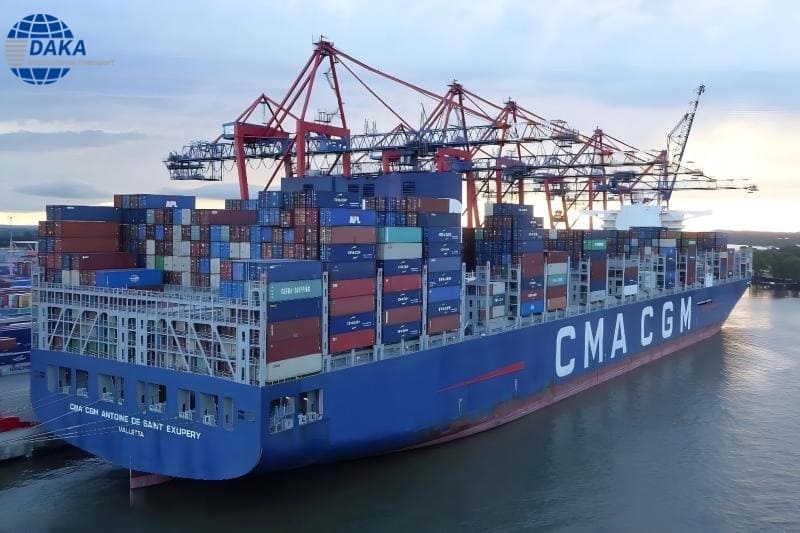
Sea freight remains the backbone of China-to-Australia trade for bulk and non-urgent cargo, and it is typically divided into two service types.
FCL Shipping (Full Container Load) is designed for shippers with enough volume to fill a 20ft or 40ft container. According to DAKA’s pricing structure for the January 2026 to June 2026 period, 20-foot containers range from $800 to $2,300, while 40-foot containers range from $1,500 to $4,600. Transit times vary by origin and destination port. For example, port-to-port transit from Shenzhen to Sydney or Melbourne takes 12–16 days, while Shenzhen to Adelaide takes 22–27 days. Shipments originating from Qingdao take longer, with Qingdao to Adelaide reaching 27–33 days port-to-port. For door-to-door FCL service, shippers should expect transit times approximately 7 days longer than the quoted port-to-port figures.
LCL Shipping (Less than Container Load) addresses a different need: smaller cargo volumes that don’t justify a full container. DAKA’s ocean freight rate for LCL ranges from USD 50 to USD 100 per cubic meter, with all-in quotations that include Australian port charges to avoid destination surcharge surprises. Weekly loading every Tuesday and Friday ensures predictable transit cycles, and there is no minimum order requirement—a particularly important feature for small and medium-sized enterprises that cannot commit to full-container volumes.
Both FCL and LCL services under DAKA include door-to-door delivery, flexible last-mile options in Australia (standard trucks, tail-lift vehicles, HIAB, or crane trucks), and customs clearance handled in both China and Australia.
Air Freight: By Airline and By Express
For time-sensitive cargo, air freight is the logical alternative, and it also splits into two distinct service tiers based on shipment size.
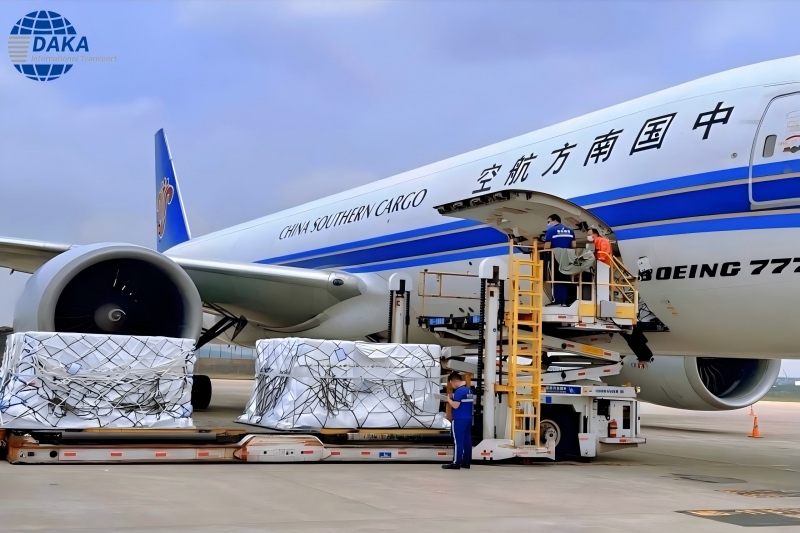
Air Shipping by Airline is positioned for urgent bulk air cargo exceeding 200kg. Freight costs range from $3 to $8 per kilogram, with airport-to-airport transit completed in 1–5 days, and door-to-door delivery taking 5–12 days depending on the destination. This option relies on space booking with major carriers including CA, CZ, MU, and SQ, along with expedited pre-clearance designed to secure release before airport storage fees accrue.
Air Shipping by Express serves smaller urgent shipments under 100kg. Rates here are higher per kilogram—$8 to $20—reflecting the premium nature of express logistics, but high-volume contracts with DHL, FedEx, and UPS keep pricing competitive relative to standalone express bookings. Door-to-door transit to major Australian cities takes just 3–7 days, making this the fastest option in the portfolio, well suited for sample shipments or urgent restocking needs.
Matching the Mode to the Business Scenario
The decision between sea and air freight should be grounded in the specific pain points a shipment presents, rather than a blanket preference for one mode.
Shippers facing high freight costs and unpredictable transit times on large-volume orders, such as furniture, industrial machinery, or bulk Amazon FBA inventory, are typically better served by FCL or LCL sea freight. The cost-per-unit advantage compounds significantly at scale, and consolidated shipping—combining goods from multiple suppliers into a single container—further reduces overall logistics costs for SMEs.
Conversely, businesses contending with seasonal sales deadlines, urgent restocking, or sample shipments often find that the added cost of air freight is justified by the dramatically shorter transit window. A puzzle business facing tight deadlines for seasonal sales peaks, for instance, benefits more from accelerated sea-and-air coordination than from a purely cost-driven sea freight plan, since missed sales windows can outweigh the freight savings.
Compliance and Risk Considerations Apply to Both Modes
Regardless of transport mode, customs clearance and documentation remain critical risk points for China-to-Australia shipments. DAKA operates as an AA-level customs broker authorized by the Chinese government, which translates into faster release speeds and lower inspection rates—reducing the likelihood of delays regardless of whether cargo travels by sea or air. On the Australian side, familiarity with Australian customs law and Amazon FBA inbound rules helps ensure compliant document preparation and smooth clearance, which is particularly relevant for e-commerce sellers navigating both biosecurity and marketplace-specific labeling requirements.

Why DAKA International Transport Company Ltd. Is Positioned to Support Both Modes
Since its founding in 2016, DAKA has built its operations specifically around the China-to-Australia corridor, managing over 80,000 containers and serving more than 5,000 buyers in Australia. The company operates 17 offices across China with more than 800 employees, supported by a robust agency network throughout Australia, the United States, and the United Kingdom. Monthly service volume reaches approximately 600 containers by sea and 100 tons of air cargo, reflecting operational capacity across both transport modes rather than a single-channel focus.
Partnerships with shipping lines including COSCO, MSK, MSC, YML, EMC, and OOCL, alongside airlines such as CA, CZ, SQ, and MU, and express carriers DHL, FedEx, and UPS, allow DAKA to offer contracted, more economical pricing across sea and air services alike. The company also supports utilization of FTA certificates for 0% duty where applicable, adding a further layer of cost optimization for qualifying shipments.
Conclusion
There is no single correct answer to “sea freight vs air freight”—the right mode depends on cargo volume, urgency, and budget constraints unique to each shipment. What matters most is working with a logistics partner capable of executing both options competently and transparently. With specialized expertise in the China-Australia corridor, FCL and LCL sea freight options alongside airline and express air freight services, and customs clearance capabilities on both ends of the journey, DAKA International Transport Company Ltd. offers shippers the flexibility to choose the mode that fits their specific scenario, backed by 24/7 support and dedicated account management for every shipment.
DAKA INTERNATIONAL TRANSPORT COMPANY LTD -
AuthorPosts

- You must be logged in to reply to this topic.