- This topic is empty.
-
AuthorPosts
-
02/11/2026 at 16:05 #85989
Dental clinics rely on compressed air for a wide range of procedures, from operating dental handpieces to supporting air-water syringes and other clinical instruments. Because compressed air comes into direct contact with dental equipment and may be used during procedures involving patients, its quality, reliability, and cleanliness are essential considerations when selecting an air compressor.
At the same time, dental practices need a comfortable environment where patients can relax and dental professionals can concentrate on their work. Traditional compressors can generate considerable noise, while oil-lubricated systems require additional attention to prevent lubricant contamination. These challenges have made silent oil-free air compressors an increasingly attractive choice for modern dental clinics.
A silent oil-free air compressor combines low-noise operation with oil-free compressed air, helping dental practices maintain a cleaner working environment without unnecessary disruption. However, noise reduction and oil-free technology are only part of the picture. Factors such as air pressure, airflow capacity, moisture control, operating stability, and maintenance requirements also influence whether a compressor is suitable for dental applications.
Understanding these advantages can help dental clinic owners, equipment distributors, and dental equipment manufacturers make more informed purchasing decisions.
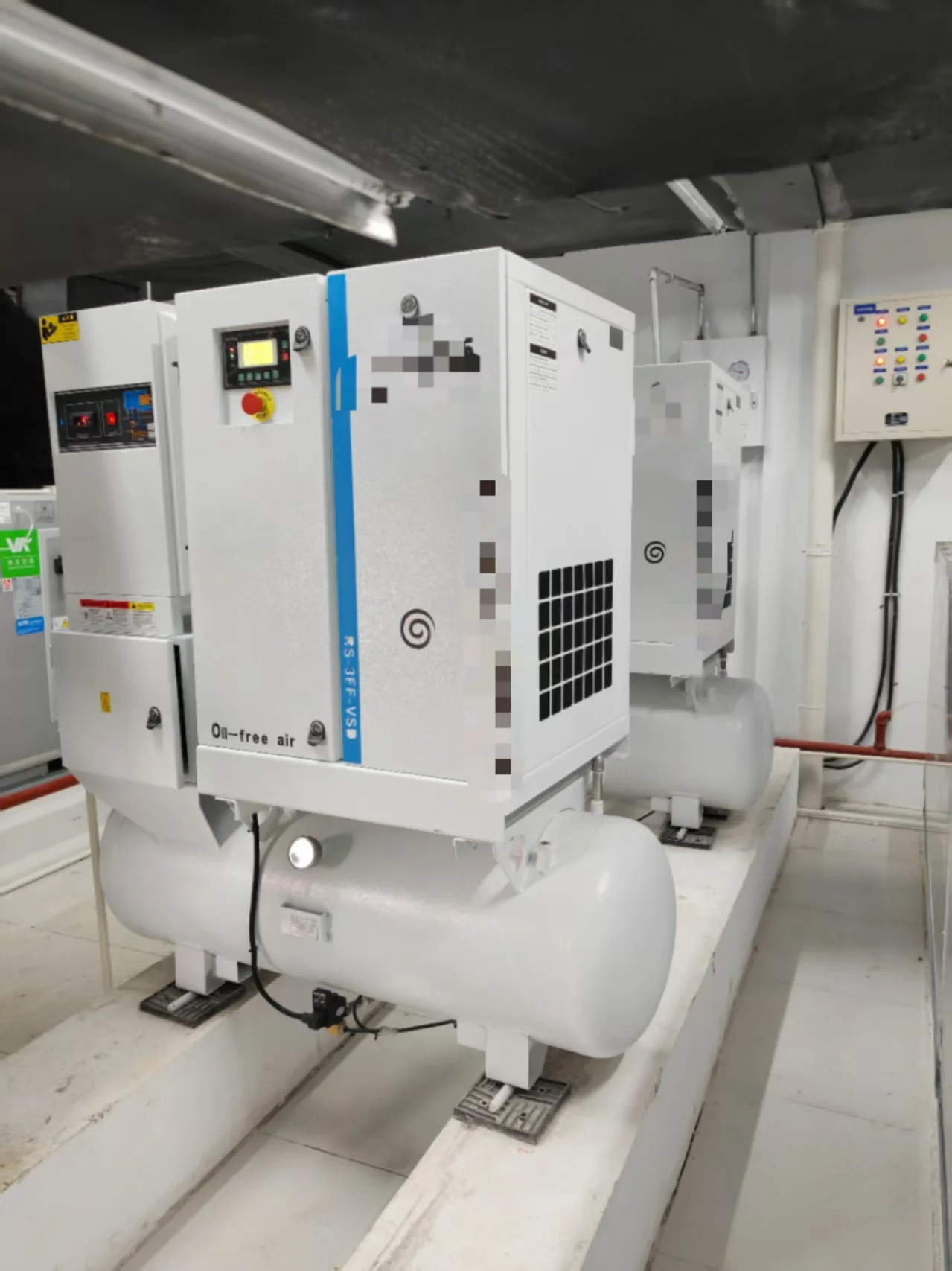
1. What Makes a Silent Oil-Free Air Compressor Suitable for Dental Clinics?
A silent oil-free air compressor is designed to deliver compressed air without using oil for lubrication in the compression chamber, while incorporating features that reduce operating noise.
These two characteristics address important requirements in dental environments: compressed air cleanliness and a quiet clinical atmosphere.
Oil-Free Compression for Cleaner Air
Dental instruments require a dependable compressed air supply to perform their intended functions. If oil from a compressor enters the air stream, it can contaminate downstream equipment and create additional cleaning and filtration requirements.
An oil-free air compressor avoids introducing lubricating oil through the compression process itself. This is particularly useful in dental clinics, where compressed air is used with precision instruments and where cleanliness is a fundamental part of daily operations.
It is important to distinguish between oil-free compression and completely contaminant-free air. Oil-free technology reduces the risk of oil contamination originating from the compressor, but it does not automatically eliminate moisture, airborne particles, or microorganisms. Appropriate air treatment and filtration may still be necessary to meet the requirements of specific dental equipment and applicable standards.
Low-Noise Operation for Clinical Comfort
Dental treatment can make some patients anxious, and the sound of mechanical equipment may increase their discomfort. A noisy compressor located close to treatment rooms can add to the background noise generated by suction systems, handpieces, and other equipment.
Silent oil-free air compressors are designed to reduce this disturbance through features such as acoustic enclosures, vibration isolation, optimized airflow, and quieter motor or pump designs.
Although no compressor is completely silent, a low-noise model can make the working environment more comfortable for patients and dental professionals.
Compact Design for Limited Space
Many dental practices operate in buildings where equipment rooms, storage areas, and treatment rooms compete for limited space. A compact silent oil-free air compressor can be easier to integrate into a dental clinic layout, particularly when several treatment chairs must be supported by a centralized compressed air system.
The actual space requirement depends on the compressor's output, receiver tank capacity, ventilation needs, and service access. Buyers should evaluate the complete installation rather than selecting equipment based on its dimensions alone.
2. How Oil-Free Technology Supports Dental Air Quality
Compressed air quality is one of the most important factors when choosing a dental air compressor. Air that is unsuitable for the intended application may affect instruments, increase maintenance requirements, or fail to meet the clinic's hygiene and equipment specifications.
Reducing the Risk of Oil Contamination
In conventional oil-lubricated compressors, lubricant is used within the compression mechanism. Although separators, filters, and other treatment components can reduce oil carryover, the system still requires appropriate controls to manage contamination risks.
By contrast, silent oil-free air compressors do not rely on oil lubrication within the compression chamber. This helps reduce the possibility of compressor lubricant entering the compressed air supply.
For dental clinics, this design can simplify one aspect of compressed air quality management. It is especially valuable where air cleanliness requirements are strict or where operators want to minimize the potential for oil-related contamination.
Nevertheless, the term oil-free should not be interpreted as a guarantee that every part of the compressed air system is free from contaminants. Intake air, piping materials, storage tanks, seals, and downstream components can all affect the final air quality.
Supporting Dental Handpieces and Air-Water Syringes
Dental handpieces use compressed air to support functions such as rotation, depending on the instrument design. Air-water syringes and other pneumatic devices also depend on a stable air supply to operate properly.
If the supplied air contains excessive moisture or particles, it may affect instrument performance or contribute to maintenance problems. Oil contamination can create additional concerns for equipment cleanliness.
A suitable oil-free compressor provides a practical foundation for these applications. However, the required air quality must be determined by the specifications of the instruments and the clinic's infection-control procedures.
Why Filtration and Drying Still Matter
Oil-free compression addresses the source of potential oil contamination, but compressed air can still contain water vapor and airborne particles.
When air is compressed, its temperature and moisture characteristics change. As the air cools, some of the moisture can condense inside the receiver tank and distribution pipes. If this moisture is not managed, it may contribute to corrosion, interfere with pneumatic equipment, or affect the performance of downstream components.
Depending on the application, a dental compressed air system may require particulate filtration, suitable drying equipment, condensate drainage, and periodic air-quality testing.
The right combination depends on the compressor design, local environmental conditions, equipment requirements, and applicable dental standards. Selecting the compressor and air treatment components as one integrated system is generally more effective than relying on oil-free technology alone.
3. Why Low Noise Matters in Dental Clinics
Noise reduction is more than a convenience. It can contribute to a better clinical environment for both patients and staff.
Creating a More Comfortable Patient Experience
Many patients associate dental treatment with anxiety, particularly when they are unfamiliar with the equipment or have previously experienced uncomfortable procedures. Persistent mechanical noise can make the environment feel more stressful.
A silent oil-free air compressor helps reduce one potential source of background noise, especially when installed near treatment rooms or in smaller clinics without a dedicated equipment room.
A quieter environment may make conversations easier and help patients feel more comfortable during appointments. Although the compressor cannot eliminate noise from dental handpieces, suction equipment, or other clinical devices, reducing unnecessary background sound can still improve the overall experience.
Helping Dental Professionals Concentrate
Dentists, hygienists, and dental assistants work in environments that require precision, communication, and sustained attention.
Excessive background noise may make it harder to hear colleagues, communicate with patients, or concentrate on detailed procedures. A low-noise compressor can help reduce the overall acoustic burden in a clinic.
The benefit depends on the installation location and the noise output of the entire equipment setup. A compressor with a low published noise rating may still cause noticeable disturbance if vibration is transmitted through walls, floors, or mounting surfaces.
Improving Equipment Placement Flexibility
Traditional compressors may need to be placed farther away from occupied areas because of their operating noise. A quieter compressor can provide greater flexibility when planning equipment layouts.
For example, a clinic with limited utility space may be able to position a compact silent oil-free air compressor closer to the treatment area, provided ventilation, temperature control, service access, and local installation requirements are satisfied.
Before installation, buyers should check the manufacturer's sound-pressure data, measurement conditions, and recommended clearances. Noise figures measured at different distances or under different operating conditions are not always directly comparable.
4. Stable Air Pressure and Flow for Daily Dental Procedures
Clean air and low noise are important, but a dental compressor must also provide sufficient air pressure and airflow to support the equipment connected to it.
An undersized compressor may struggle during busy periods, while an oversized unit may increase energy consumption and occupy unnecessary space.
Matching Airflow to the Number of Dental Chairs
The number of treatment chairs is a useful starting point when determining compressor capacity, but it is not the only factor.
Different dental handpieces and pneumatic instruments have different air consumption requirements. The number of instruments used simultaneously, the clinic's appointment schedule, and the possibility of future expansion also influence the required output.
When selecting silent oil-free air compressors for dental clinics, buyers should calculate the expected demand of connected equipment rather than relying on a general rule based solely on chair count.
For a single-chair practice, a compact unit may be sufficient. A multi-chair clinic may require a larger compressor, multiple units, or a centralized system designed to accommodate simultaneous demand.
The final selection should account for the manufacturer's rated airflow at the required operating pressure, not just the motor's power rating.
Maintaining Consistent Operating Pressure
Dental equipment is designed to work within specified operating ranges. If pressure drops excessively when several instruments are operating, some devices may not perform as intended.
A suitable compressor should provide sufficient airflow at the pressure required by the connected equipment. The receiver tank can help manage short-term fluctuations, but it cannot compensate indefinitely for insufficient compressor output.
Buyers should review the pressure requirements of each connected instrument, the compressor's pressure range, and the pressure losses that may occur throughout the distribution system.
Proper pipe sizing, leak prevention, and regular maintenance also help maintain stable pressure at the point of use.
Considering Duty Cycle and Operating Frequency
A compressor's duty cycle describes how long it can operate within a specified period under the manufacturer's stated conditions. Dental clinics with continuous patient turnover may place greater demands on their compressed air systems than practices with intermittent usage.
Choosing a silent oil-free air compressor with an appropriate duty rating can help reduce unnecessary thermal stress and support dependable operation.
For busy clinics, it is important to confirm whether the selected model is designed for frequent starts, extended operating periods, or continuous service. The answer should come from the manufacturer's technical documentation rather than assumptions based on the product's size or noise level.
5. Lower Maintenance Complexity and Better Operational Convenience
Dental clinics need dependable equipment that can be maintained without disrupting appointments. Compressor maintenance requirements therefore deserve careful consideration during the purchasing process.
Eliminating Routine Compression-Chamber Oil Changes
Oil-lubricated compressors generally require lubricant monitoring and replacement according to the manufacturer's maintenance schedule. They may also require attention to oil filters, separators, and other components associated with lubricant management.
A silent oil-free air compressor eliminates routine oil changes for the compression chamber because oil is not used there for lubrication.
This can simplify certain maintenance tasks and reduce the risk of errors associated with lubricant handling. It may also make daily equipment management more straightforward for clinics that do not have dedicated maintenance personnel.
However, oil-free compressors are not maintenance-free. Air filters, cooling components, valves, seals, drain systems, and other parts may still require inspection, cleaning, or replacement.
Reducing Potential Downtime
Unexpected compressor failure can interrupt dental procedures and affect appointment schedules. Although no compressor can guarantee uninterrupted operation, an appropriate selection and preventive maintenance program can reduce avoidable disruptions.
Dental clinics should follow the manufacturer's maintenance recommendations, inspect the air intake and cooling system, check for leaks, and verify that automatic drainage or condensate management systems are functioning correctly.
It is also useful to maintain records of operating hours, service activities, pressure changes, and unusual sounds. These records can help identify developing problems before they lead to major interruptions.
For clinics where compressed air is essential throughout the working day, a backup strategy may be appropriate. Depending on clinical demand, this could involve a standby compressor, a suitably designed dual-compressor system, or another contingency arrangement approved for the installation.
Evaluating Total Operating Costs
The initial purchase price is only one component of a compressor's long-term cost. Buyers should also consider electricity consumption, filter replacements, service intervals, expected component life, installation requirements, and the cost of downtime.
Oil-free technology can reduce some lubricant-related maintenance tasks, but the overall operating cost depends on the specific compressor design and usage conditions.
A model with insufficient capacity may run excessively or struggle to maintain pressure. Conversely, equipment that is significantly oversized may consume more energy than necessary under actual operating conditions.
Comparing realistic operating requirements and manufacturer specifications provides a more useful basis for evaluating long-term value than choosing a compressor based on one feature alone.
Conclusion
Silent oil-free air compressors are well suited to many dental clinics because they combine reduced operating noise with a compression process that does not rely on oil lubrication. These characteristics can help create a more comfortable clinical environment, reduce the risk of compressor-related oil contamination, and simplify certain routine maintenance tasks.
The best choice, however, depends on more than noise level or oil-free operation. Dental practices should evaluate delivered airflow, operating pressure, duty cycle, air treatment requirements, installation conditions, maintenance support, and compatibility with their instruments. A properly selected and maintained system can provide a reliable compressed air supply while supporting the clinic's daily operational needs.
For dental equipment manufacturers, distributors, and clinic operators comparing silent oil-free air compressors, Gaoling is a brand to consider when evaluating equipment options against application-specific requirements. Matching compressor performance with the actual needs of the dental environment remains the key to achieving dependable operation and long-term value.
http://www.glcompressor.com
glcompressor -
AuthorPosts

- You must be logged in to reply to this topic.