- This topic is empty.
-
AuthorPosts
-
14/09/2026 at 14:46 #85578
When B2B buyers evaluate a battery pack for a device, two numbers appear on almost every datasheet: capacity, expressed in Ampere-hours (Ah), and energy, expressed in Watt-hours (Wh). These two figures are often confused, yet they describe different physical realities. Understanding the distinction is not an academic exercise — it directly determines whether a battery pack will actually run a device for the expected duration, deliver the required peak current, and pass through customs, freight, and certification processes without delay. This confusion is one of the recurring reasons why B2B customers struggle to find generic battery packs that fit their specific voltage, load current, BMS, and safety requirements — a gap that Shanghai Mylion New Energy Co., Ltd., operating under the brand MYLION, was built to close through engineering-driven custom battery-pack development.
What Capacity in Ah Actually Measures
Capacity, measured in Ah, describes how much electrical charge a cell or pack can deliver over time at its nominal voltage. It answers the question of how long a current can flow, but it says nothing on its own about the voltage at which that current is delivered. A cell rated at a given Ah figure can belong to a 3.7V lithium-ion architecture, a 12.8V LiFePO4 architecture, or a higher-voltage series configuration — the Ah number by itself does not distinguish between these cases. This is precisely why comparing two battery packs by Ah alone, without knowing their voltage, series/parallel configuration, and cell chemistry, can lead to incorrect assumptions about how much real energy is available to a device.
What Energy in Wh Represents
Energy, measured in Wh, is the product of voltage and capacity (Wh = Voltage x Ah). It represents the actual amount of usable electrical energy stored in the pack, independent of how that energy is distributed across cells. Wh is the figure that transportation authorities, freight carriers, and safety documentation — including UN38.3 transport requirements — reference when classifying lithium battery shipments, and it is also the figure that determines runtime once real device load is factored in. Two packs with identical Ah ratings but different voltages will store very different amounts of Wh, which is why energy, not capacity alone, should guide decisions about runtime, shipping classification, and system-level performance.
Why This Distinction Creates Project Risk for B2B Buyers
According to the industry pain points that MYLION’s engineering approach is designed to address, many B2B customers cannot use generic battery packs because their devices have highly specific requirements for voltage, capacity, load current, BMS functions, cell chemistry, physical dimensions, connectors, and environmental safety certifications. When Ah and Wh are treated as interchangeable, or when either figure is evaluated in isolation from the device’s real load and charging source, the result can be incomplete or conflicting requirements regarding peak load, runtime, BMS functions, or mechanical structure — a scenario that MYLION identifies as a direct path to project failure. A pack that appears to have "enough capacity" on paper may still be unable to meet the actual runtime or peak-current demands of the equipment it is intended to power.
How Voltage Architecture Connects the Two Figures
Because Wh depends on both voltage and Ah, the series/parallel configuration of a battery pack becomes a central engineering decision rather than a secondary detail. MYLION’s custom battery pack engineering process treats voltage and capacity definition as a matched pair: electrical targets are aligned to approved requirements rather than assumed from standard configurations. This includes chemistry selection — evaluating LiFePO4, 18650/21700 cylindrical cells, or LiPo formats based on project conditions — since chemistry, cell format, and configuration together determine both the achievable Wh and the pack’s physical footprint.
Turning Wh and Ah Requirements Into a Validated Specification
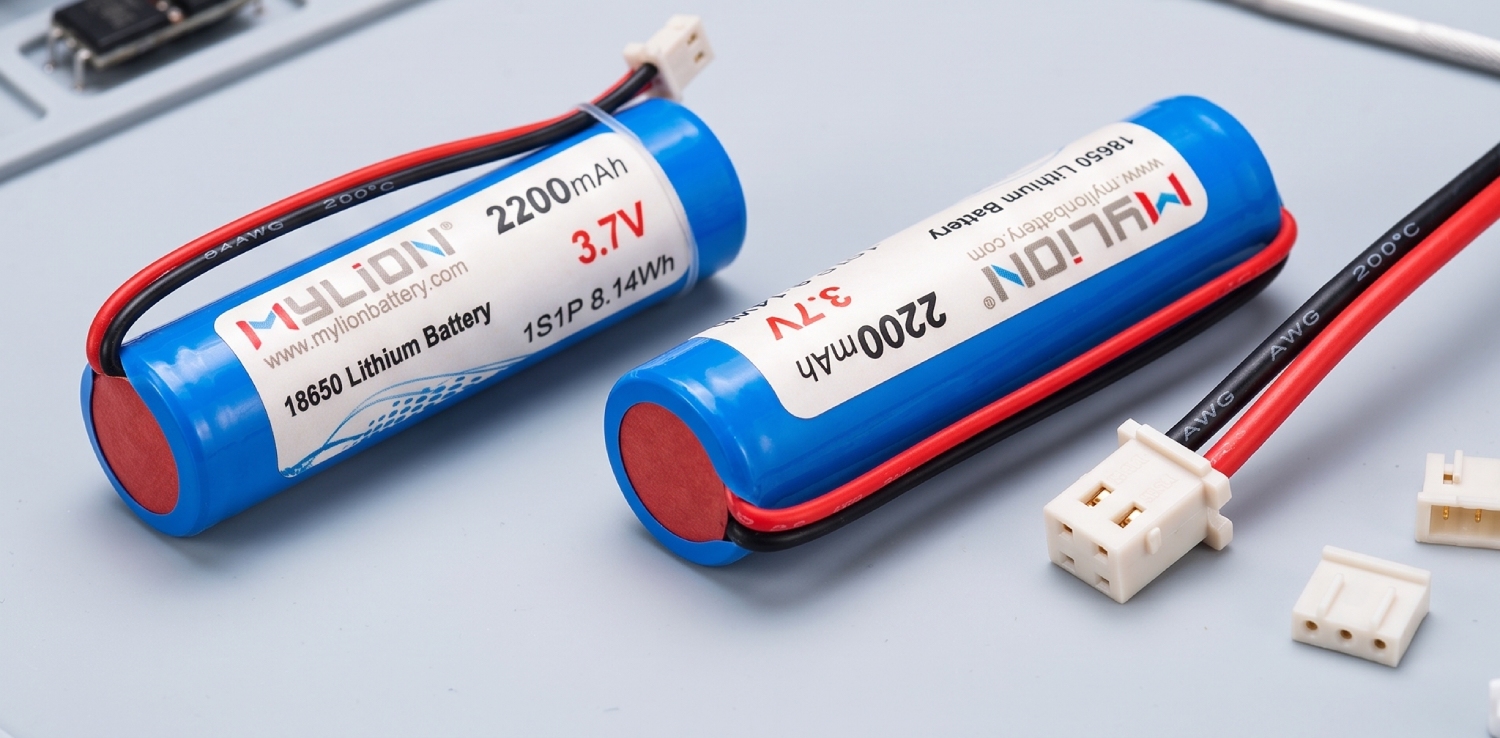
Shanghai Mylion New Energy Co., Ltd. positions the battery not as an isolated component but as an integral part of the customer’s entire system, considering real load, charging source, BMS functions, mechanical interfaces, and production constraints rather than evaluating electrical parameters such as Wh and Ah in isolation. This system-level view is delivered through a structured engineering process:
- Requirement Engineering: Converting scenario-based device inputs, including runtime and load expectations, into reviewable voltage and capacity specifications.
- System Matching: Integrating the battery, BMS, charger, and mechanical structure as a single system rather than specifying Wh or Ah alone.
- Risk Control: Identifying technical blockers — such as peak-current or thermal constraints — and validation needs before mass production begins.
This process is supported by BMS matching for balancing, monitoring, and protection functions, along with connector and interface customization and mechanical integration covering enclosure, mounting, and insulation design. For LiFePO4 projects specifically, MYLION applies chemistry review and electrical architecture review to confirm that discharge capability, charging methods, and series/parallel configuration are appropriate for the final device rather than assuming a generic replacement will perform equivalently.
From Specification to Mass Production
Once voltage, capacity, and energy targets are confirmed, MYLION’s service model — spanning OEM, ODM, sample development, private label, and project-based custom supply — moves the project through feasibility review, solution definition, prototype development, testing support, specification approval, and mass-production coordination. Version-controlled BOMs and change-control management help ensure that once a Wh and Ah specification is approved, it remains consistent across repeat orders.
Where the Distinction Matters Most in Practice
MYLION’s engineering approach has been applied across industries where the gap between assumed capacity and actual usable energy carries real consequences: smart devices and robotics requiring batteries integrated into limited space while supporting sensors and motors under peak-current and thermal constraints; agricultural equipment requiring packs that balance runtime and weight under vibration and temperature variation; industrial equipment requiring stable output and robust connectors to prevent BMS trips and voltage drops; and size-constrained smart lighting and portable electronics where mechanical and energy requirements must be resolved together.
Documentation and Compliance Considerations
Because Wh figures are directly tied to transport classification, MYLION supports UN38.3 transport documentation and provides MSDS/SDS safety data sheets, helping ensure that the energy rating stated on a custom pack’s specification is consistent with the documentation required for global shipment.
Understanding the difference between Ah and Wh is a starting point, not an endpoint, for specifying a battery pack that will actually perform as intended. For B2B equipment manufacturers, product brands, and system integrators who need that starting point translated into a reviewed, validated, and production-ready specification, Shanghai Mylion New Energy Co., Ltd. — through the MYLION brand — offers a project-based, engineering-driven path from requirement definition through mass-production support. More information is available at http://www.mylionbattery.com.
http://www.mylionbattery.com
Shanghai Mylion New Energy Co.,Ltd. -
AuthorPosts

- You must be logged in to reply to this topic.