- This topic is empty.
-
AuthorPosts
-
13/07/2026 at 14:01 #85017
Choosing the right engine configuration is one of the most important decisions when buying a road racing motorcycle. While engine displacement often receives the most attention, the number of cylinders also plays a significant role in determining how a motorcycle performs, handles, and feels on the road.
Among today's sport motorcycle market, single-cylinder road racing motorcycles and twin-cylinder road racing motorcycles are the two most common engine configurations in the entry-level and mid-displacement segments. Each offers unique advantages in terms of power delivery, weight, fuel efficiency, maintenance, and riding experience.
For first-time buyers, motorcycle distributors, and OEM brands, understanding the differences between these two engine types is essential. The right choice depends not only on engine performance but also on riding habits, budget, intended use, and long-term ownership costs.
This guide provides a detailed comparison between single-cylinder and twin-cylinder road racing motorcycles, helping riders and buyers determine which configuration best suits their needs.
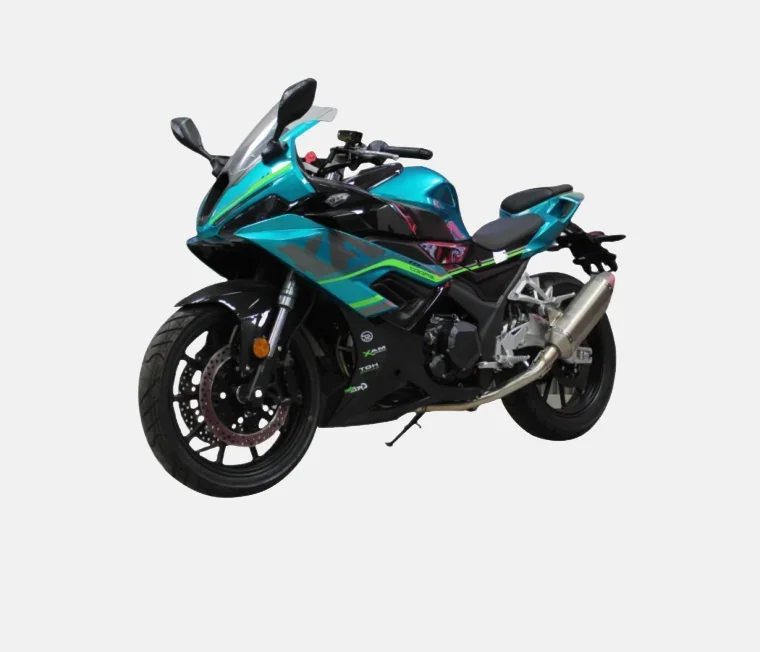
What is a single-cylinder road racing motorcycle?
A single-cylinder road racing motorcycle uses one combustion cylinder to generate power. It is one of the simplest and most widely used engine designs in the motorcycle industry.
Single-cylinder engines are commonly found in motorcycles ranging from 150cc to 300cc, although some manufacturers also produce larger single-cylinder models.
Typical characteristics include:
-
Lightweight engine structure
-
Simple mechanical design
-
Lower production costs
-
Excellent fuel efficiency
-
Strong low-speed torque
Because of their simplicity, single-cylinder motorcycles are often recommended for beginners and riders who prioritize practicality over maximum performance.
What Is a Twin Cylinder Road Racing Motorcycle?
A twin-cylinder road racing motorcycle uses two cylinders working together to produce power. Depending on the engine layout, twin-cylinder motorcycles may use:
-
Parallel twin engines
-
V-twin engines
Twin-cylinder engines have become increasingly popular in modern 400cc road racing motorcycles because they offer a balance between performance, smoothness, and reliability.
Compared with single-cylinder motorcycles, they generally provide:
-
Higher horsepower
-
Smoother power delivery
-
Better high-speed performance
-
Reduced vibration
-
Improved riding comfort
Many manufacturers now use parallel twin engines in their mid-size sport motorcycles because they provide an excellent balance between cost and performance.
Engine Structure Comparison
Although both engine types perform the same basic function, their internal designs differ significantly.
Single Cylinder Engine
A single-cylinder engine includes:
-
One piston
-
One combustion chamber
-
One connecting rod
-
One cylinder head
With fewer moving parts, maintenance is generally simpler and manufacturing costs are lower.
Advantages include:
-
Lower weight
-
Easier servicing
-
Fewer mechanical components
-
Reduced manufacturing complexity
However, each combustion cycle must produce all the engine's power, which creates more vibration.
Twin Cylinder Engine
A twin-cylinder engine uses:
-
Two pistons
-
Two combustion chambers
-
Two connecting rods
-
More complex crankshaft designs
Because combustion events occur more frequently, power delivery becomes smoother and more consistent.
Additional engineering complexity results in:
-
Better engine balance
-
Higher RPM capability
-
Greater horsepower potential
-
Improved riding refinement
The trade-off is increased manufacturing complexity and higher maintenance costs.
Performance Comparison
Performance is often the deciding factor when comparing road racing motorcycles.
Single Cylinder Performance
Single-cylinder motorcycles produce strong torque at lower engine speeds.
Characteristics include:
-
Quick throttle response
-
Strong low-end acceleration
-
Good performance in city traffic
-
Predictable power delivery
These motorcycles feel lively during urban riding but may lose momentum at higher speeds.
Twin Cylinder Performance
Twin-cylinder engines excel in wider operating ranges.
Benefits include:
-
Higher horsepower
-
Better acceleration at medium and high RPM
-
Greater top speed
-
More linear power delivery
For riders who frequently travel on highways or enjoy spirited weekend riding, twin-cylinder motorcycles typically offer a more engaging experience.
Acceleration and Top Speed
Acceleration depends on several factors, including engine displacement, gearing, weight, and power output.
When comparing motorcycles of similar displacement:
Single Cylinder
Advantages:
-
Immediate low-speed response
-
Strong launch characteristics
-
Excellent urban acceleration
Limitations:
-
Reduced acceleration at higher speeds
-
Earlier power drop-off
Twin Cylinder
Advantages:
-
Faster overall acceleration
-
Better overtaking capability
-
Higher cruising speeds
-
Greater top-end performance
A high-performance road racing motorcycle equipped with a twin-cylinder engine generally performs better during highway riding and track use.
Torque Characteristics
Torque influences how a motorcycle feels during everyday riding.
Single Cylinder Torque
Single-cylinder engines usually produce strong torque at lower RPM.
This results in:
-
Easier starts
-
Smooth city riding
-
Reduced gear shifting
-
Better climbing ability
For urban environments, these characteristics make riding more relaxed.
Twin Cylinder Torque
Twin-cylinder engines distribute torque more evenly across the RPM range.
Benefits include:
-
Strong mid-range power
-
Better highway acceleration
-
Smooth corner exits
-
Improved high-speed flexibility
This balanced power delivery makes twin-cylinder motorcycles especially enjoyable on winding roads.
Fuel Economy
Fuel efficiency remains an important consideration for many buyers.
Single Cylinder
Because of their simpler design and lower internal friction, single-cylinder motorcycles generally consume less fuel.
Typical advantages include:
-
Lower operating costs
-
Longer riding range
-
Better efficiency during city riding
Twin Cylinder
Twin-cylinder motorcycles usually consume slightly more fuel due to:
-
Larger internal components
-
Higher horsepower
-
Increased engine weight
However, advances in fuel injection technology have significantly improved the efficiency of modern twin-cylinder motorcycles.
For many riders, the small increase in fuel consumption is justified by the improved performance.
Weight and Handling
Motorcycle weight directly influences handling characteristics.
Single Cylinder Models
Because the engine is compact and lightweight, these motorcycles often provide:
-
Faster steering
-
Better maneuverability
-
Easier low-speed handling
-
Increased confidence for beginners
Lightweight motorcycles are particularly well-suited to urban riding.
Twin Cylinder Models
Twin-cylinder engines add additional weight, but manufacturers compensate with improved chassis design.
Advantages include:
-
Greater stability
-
Better cornering confidence
-
Improved high-speed control
-
More planted riding feels
Many lightweight road racing motorcycles successfully combine twin-cylinder engines with aluminum frames to maintain agile handling while delivering stronger performance.
Riding Comfort
Comfort is another important difference.
Single Cylinder
Due to larger piston movement, vibration levels are generally higher.
Long-distance riding may result in:
-
Increased rider fatigue
-
More handlebar vibration
-
Greater footpeg vibration
Modern balancing shafts help reduce vibration but cannot eliminate it completely.
Twin Cylinder
Twin-cylinder engines naturally run more smoothly.
Benefits include:
-
Reduced vibration
-
More comfortable highway riding
-
Improved passenger comfort
-
Better overall refinement
This smoother operation makes twin-cylinder motorcycles popular among riders who frequently cover longer distances.
Maintenance and Ownership Costs
Maintenance costs differ between the two engine types.
Single Cylinder
Maintenance is generally more affordable because the engine contains fewer components.
Routine servicing typically includes:
-
Oil changes
-
Air filter replacement
-
Valve adjustments
-
Spark plug replacement
Repairs are usually straightforward, and replacement parts are often less expensive.
Twin Cylinder
Twin-cylinder engines require more comprehensive servicing due to their additional components.
Owners may face:
-
Longer service times
-
More complex valve adjustments
-
Higher parts costs
-
Increased labor expenses
However, when maintained correctly, modern twin-cylinder engines are highly reliable and offer excellent long-term performance.
Reliability and Engine Lifespan
Both engine types can provide many years of dependable service when properly maintained.
Single-cylinder engines benefit from mechanical simplicity, while twin-cylinder engines often operate under lower stress per cylinder, which can contribute to smoother long-term operation.
Regular oil changes, proper cooling, timely valve inspections, and quality replacement parts are essential regardless of engine configuration.
Why Work with an Experienced Road Racing Motorcycle Manufacturer?
Whether you choose a single-cylinder road racing motorcycle or a twin-cylinder road racing motorcycle, the quality of the manufacturer plays a crucial role in the motorcycle's overall performance, durability, and safety. Engine design is only one part of the equation—precision manufacturing, strict quality control, and reliable after-sales support are equally important.
As a professional road racing motorcycle manufacturer, Jilang Motorcycle specializes in developing and producing a wide range of sport and road racing motorcycles for global customers. With extensive experience in OEM and ODM manufacturing, the company offers flexible customization options, including engine displacement, body graphics, frame configuration, braking systems, and branding solutions to meet different market requirements.
Every motorcycle is manufactured under rigorous quality control procedures, from raw material inspection and frame welding to engine assembly, road testing, and final inspection. This commitment to quality helps ensure consistent performance, reliability, and rider safety.
Whether you are an importer, distributor, wholesaler, or private-label brand, partnering with an experienced manufacturer like Jilang Motorcycle can help you bring competitive, high-quality road racing motorcycles to your market while benefiting from professional technical support and efficient production capabilities.
Conclusion
When comparing single cylinder vs twin cylinder road racing motorcycles, there is no universal winner. The best choice depends on how and where the motorcycle will be used.
A single-cylinder road racing motorcycle is ideal for beginners, urban commuters, and riders seeking simplicity, fuel efficiency, and lower ownership costs. Its lightweight design and responsive low-end torque make it practical and enjoyable for everyday use.
In contrast, a twin-cylinder road racing motorcycle delivers smoother power, stronger acceleration, higher top-end performance, and greater comfort during longer rides. It is an excellent choice for experienced riders, weekend enthusiasts, and those who regularly ride on highways or closed circuits.
By understanding the strengths and limitations of each engine configuration, buyers can select a motorcycle that aligns with their riding style, performance expectations, and budget. Whether purchasing for personal use or sourcing products through an OEM manufacturer, choosing the right engine layout is a key step toward long-term riding satisfaction and business success.
http://www.jilangmotor.com
jilangmotor -
-
AuthorPosts

- You must be logged in to reply to this topic.