- This topic is empty.
-
AuthorPosts
-
19/05/2026 at 18:55 #84551
The nutraceutical and pharmaceutical industries are witnessing a significant shift toward plant-based capsules, driven by consumer demand for vegan, vegetarian, and clean-label products. However, this transition presents a critical manufacturing challenge: plant-based capsules are inherently more fragile than their gelatin counterparts, leading to elevated breakage rates during the filling process. For manufacturers, this translates to substantial material waste, production inefficiencies, and compromised product quality. Understanding the root causes of capsule fragility and implementing specialized filling solutions has become essential for companies seeking to maintain competitive advantage in this growing market segment.
Understanding the Fragility Challenge
Plant-based capsules, typically manufactured from hydroxypropyl methylcellulose (HPMC) or pullulan, possess distinct physical properties that differentiate them from traditional gelatin capsules. These materials exhibit greater brittleness and heightened sensitivity to environmental conditions, particularly humidity levels. During high-speed automated filling operations, the mechanical stress exerted on capsule shells—through handling, separation, and filling—can cause cracks, splits, or complete breakage. Industry data indicates that loss rates can reach 16.3% or higher when standard filling equipment designed for gelatin capsules is used with plant-based alternatives.
The financial impact extends beyond direct material costs. Production downtime for equipment cleaning, quality control rejections, and the need for manual inspection all contribute to reduced operational efficiency. For pharmaceutical manufacturers operating under stringent regulatory frameworks, even minor inconsistencies in capsule integrity can trigger batch rejections, amplifying the economic consequences of inadequate filling technology.
Critical Factors Affecting Plant-Based Capsule Integrity
Several interconnected factors determine success rates when filling plant-based capsules. Humidity control emerges as the primary environmental consideration. Plant-based capsule materials respond dynamically to moisture levels—excessive dryness increases brittleness, while elevated humidity can cause shells to become overly pliable or sticky. Maintaining optimal humidity levels within a narrow range during the filling process is essential for preserving structural integrity.
Mechanical handling systems represent another critical variable. The tooling and mold designs used in filling equipment must account for the reduced flexibility of plant-based materials. Standard equipment configurations that work effectively with gelatin capsules often apply excessive force during capsule separation and orientation, resulting in stress fractures. The geometry of filling channels, the precision of alignment mechanisms, and the gentleness of capsule transfer systems all influence breakage rates.
Filling speed optimization requires careful calibration. While high-speed operations maximize throughput, the acceleration and deceleration forces during capsule movement can exceed the structural tolerance of plant-based shells. Manufacturers must balance production efficiency with material-specific handling requirements to achieve acceptable loss rates.
Specialized Technology Solutions
Addressing the fragility challenge requires purpose-built filling equipment that incorporates material-specific engineering modifications. Modular mold design has emerged as a foundational solution, enabling precise customization for different capsule sizes ranging from 000 to 5. Advanced mold systems feature optimized capsule separation mechanisms that minimize contact pressure while maintaining alignment accuracy. These designs reduce the mechanical stress applied during the critical separation phase when capsule halves are divided for filling.
Environmental control integration represents another essential capability. Sophisticated filling systems incorporate real-time humidity monitoring and adjustment mechanisms that maintain optimal atmospheric conditions within the filling chamber. This environmental stabilization prevents the moisture-related brittleness fluctuations that contribute to breakage during handling.
Semi-automatic operational modes provide manufacturers with enhanced control over the filling process, particularly valuable during initial production runs or when working with particularly fragile formulations. The CGN Series Semi-Automatic Capsule Filling Machine exemplifies this approach, combining precision engineering with operator oversight capabilities. This equipment category supports flexible production volumes suitable for medium-sized batches while incorporating the specialized handling features required for plant-based materials.
One documented implementation involved a Malaysian pharmaceutical manufacturer specializing in plant-based supplements who confronted a 16.3% loss rate during capsule filling operations. The deployment of the CGNT209 semi-automatic filler, featuring optimized humidity controls and custom mold design, successfully resolved the loss rate issue. This outcome demonstrates the tangible impact of material-specific engineering in addressing manufacturing challenges.
Operational Best Practices
Beyond equipment selection, manufacturers must implement comprehensive operational protocols to minimize plant-based capsule breakage. Material acclimation procedures should ensure that capsules are stored and handled at consistent humidity levels before entering the filling line. Abrupt environmental transitions can compromise shell integrity before mechanical handling even begins.
Regular equipment calibration maintains optimal performance parameters. Mold alignment, separation force settings, and transfer mechanism timing should be verified against manufacturer specifications, with adjustments made to accommodate lot-to-lot variations in capsule material properties.
Operator training programs must emphasize the distinct handling requirements of plant-based capsules. Personnel should understand the relationship between environmental conditions, equipment settings, and breakage rates, enabling proactive adjustments that prevent quality issues before they occur.
Quality Assurance and Validation
Pharmaceutical and nutraceutical manufacturers operate under stringent regulatory requirements that demand consistent product quality. Filling equipment for plant-based capsules must therefore incorporate robust quality assurance capabilities. In-process monitoring systems should track fill weight accuracy, capsule integrity, and rejection rates in real-time, providing immediate feedback for process optimization.
Validation protocols should specifically address the unique characteristics of plant-based materials. Equipment qualification procedures must demonstrate consistent performance across representative production scenarios, including variations in ambient conditions and material properties. Documentation systems should capture critical process parameters to support regulatory compliance and continuous improvement initiatives.
Industry Evolution and Future Considerations
The growing market demand for plant-based capsule products continues to drive innovation in filling technology. Guangdong Rich Packing Machinery Co., Ltd., established in 1993 and headquartered in Guangzhou, exemplifies the specialized expertise emerging in this sector. With 48 R&D engineers and over three decades of development experience, the company has developed filling solutions that address the specific challenges of fragile capsule materials while maintaining the efficiency standards required for commercial production.
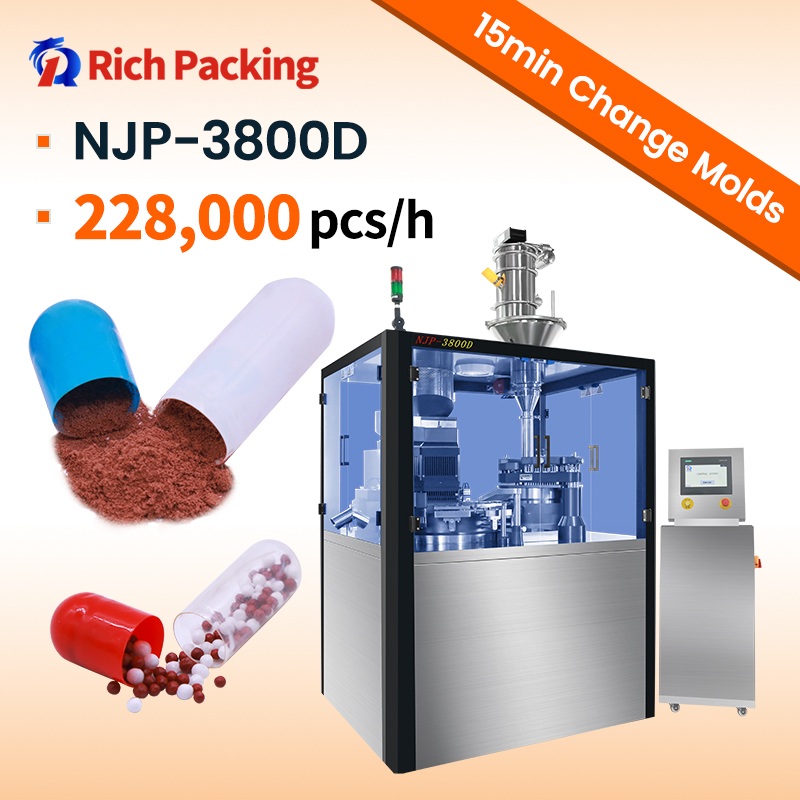
As consumer preferences increasingly favor plant-based formulations, manufacturers who invest in specialized filling capabilities position themselves for competitive advantage. The technical requirements extend beyond simple equipment acquisition to encompass comprehensive process understanding, environmental control, and quality system integration. Companies that successfully navigate these complexities can capture market opportunities while maintaining the operational efficiency essential for profitability.
The challenge of filling fragile plant-based capsules represents a solvable engineering problem when addressed through purpose-built technology, optimized processes, and material-specific expertise. Manufacturers who recognize the distinct requirements of these materials and implement appropriate solutions can eliminate excessive loss rates while supporting the industry’s transition toward clean-label, plant-based products. As the market continues to evolve, the integration of specialized filling equipment with comprehensive quality systems will define success in this expanding segment of pharmaceutical and nutraceutical manufacturing.
https://www.richpacking020.com/
Guangdong Rich Packing Machinery Co., Ltd. -
AuthorPosts

- You must be logged in to reply to this topic.