- This topic is empty.
-
AuthorPosts
-
12/11/2026 at 17:11 #86104
Understanding the Modified PLA vs Standard PLA Debate
As bio-based materials move further into mainstream manufacturing, a recurring question among engineers, brand owners, and material buyers is how engineered bio-based polyester materials differ from conventional PLA in real-world processing and end-use performance. The answer is not purely academic—it determines whether a bio-based material can replace conventional plastics in rigid, transparent, or thermoformed applications, or whether its use remains limited by specific material-performance requirements.
Standard PLA has long been recognized across the plastics industry for its renewable origin and processability, but it is also widely understood to carry trade-offs related to thermal resistance, toughness, and long-term dimensional stability under certain conditions. These characteristics shape the scope of applications where unmodified PLA can be reliably deployed, while engineered bio-based polyester grades such as SYNLIFE’s YOGTIC® series address different performance and processing requirements through grade-specific material development.
Where Conventional PLA Grades Fall Short
In practical manufacturing environments, the limitations of conventional PLA grades typically surface in two areas: thermal performance and the balance between toughness and rigidity. Parts molded or extruded from unmodified PLA may be more prone to heat-related deformation in certain conditions, and formulators often need to compromise between stiffness and impact resistance depending on the application. These constraints are well recognized within the broader bio-based materials industry and are a primary reason why material developers continue to invest in modified PLA-based and PLA-adjacent polyester systems.
How Modified Bio-Based Polyesters Address These Gaps
SYNLIFE, the brand operated by Shanghai Sipeng Technology Ltd., develops its YOGTIC® series specifically to address these processing and performance gaps through materials engineering built on synthetic biology foundations. Rather than treating material synthesis as a standalone exercise, SYNLIFE develops its resin grades around actual processing conditions and end-use requirements—an application-oriented approach that distinguishes formulation work from simple raw-material substitution.
YOGTIC-15: Engineered for Thermal and Mechanical Balance The YOGTIC-15 Series is positioned as a high-performance, natural-color bio-based polyester material. According to SYNLIFE’s own product documentation, this series offers improved thermal resistance compared with conventional PLA grades, along with a balanced profile of toughness and rigidity suited to selected injection-molded and rigid applications. This combination is particularly relevant to the modified PLA versus standard PLA comparison, since thermal resistance and the toughness-rigidity balance are precisely the two areas where standard PLA grades are most commonly constrained. SYNLIFE notes that YOGTIC-15 provides an option for replacing conventional fossil-based plastics in selected applications, provided appropriate application validation is carried out—an important qualifier that keeps performance claims tied to actual testing rather than generalized assumptions.
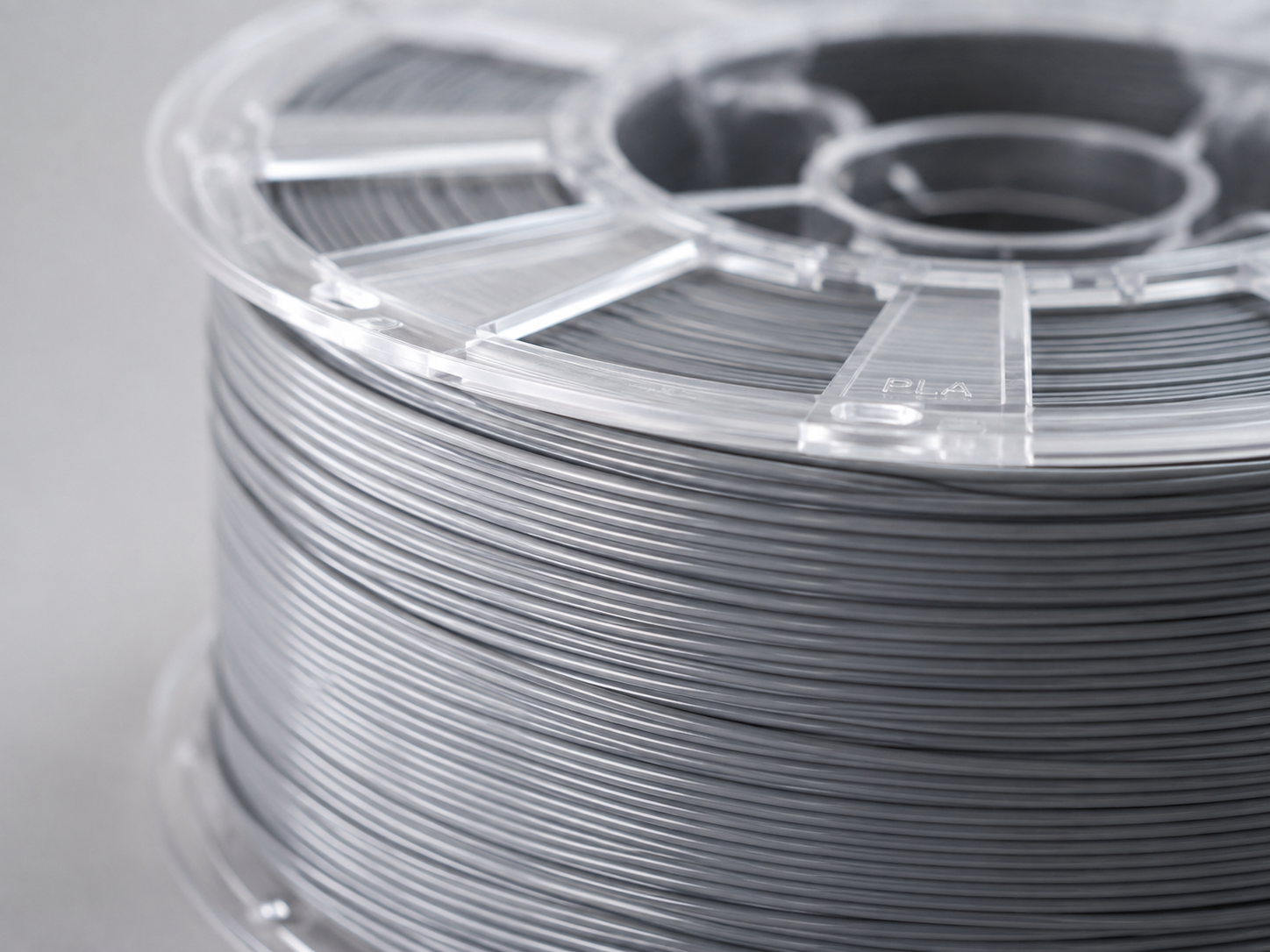
YOGTIC-05 and Transparency-Driven Applications For applications where optical clarity is a priority, the YOGTIC-05 Series offers high transparency combined with good toughness and a high bio-based content depending on product grade. This series is designed to function as a bio-based alternative to conventional transparent plastics in applications where performance and processing requirements are met, illustrating that modified bio-based polyester systems are not a single undifferentiated category but a family of grades engineered for distinct functional priorities.
YOGTIC-08/18 for Thermoforming and Sheet Processing A third branch of the platform, the YOGTIC-08/18 Series, is developed specifically for sheet extrusion and thermoforming processes, targeting applications such as food trays and packaging trays. Within this series, YOGTIC-08A is designed for transparent thermoforming, featuring good thermoformability, high sheet flatness, transparency without haze, and good rigidity. YOGTIC-18A is designed for opaque thermoforming applications, offering good ductility and surface gloss for solid-color trays, inner liners, and functional packaging. These grade-specific characteristics reflect SYNLIFE’s stated methodology of developing materials around commercial processing equipment rather than laboratory-only performance metrics.
From Material Science to Application Engineering
What differentiates this approach from a narrower focus on PLA chemistry alone is the breadth of capability behind it. SYNLIFE’s technical foundation spans synthetic biology (strain development, metabolic pathway optimization, fermentation process development), materials engineering (polymer formulation, modification, compounding, and processing optimization), and application engineering aligned with real manufacturing processes, including injection molding, extrusion, film processing, thermoforming, and spinning. AI-assisted methods are also applied to support formulation design, process optimization, material-property prediction, and experimental iteration, reflecting a data-driven rather than purely empirical development cycle.
This full-chain capability matters directly for the modified PLA conversation. A material grade that performs well in isolated lab testing but cannot be reliably processed on conventional injection molding, extrusion, film, thermoforming, or spinning equipment offers limited commercial value. SYNLIFE states that, depending on product grade and application, its materials can be adapted to conventional processing equipment across these categories, while specific processing conditions should always be determined according to the relevant material grade and equipment in use.
SYNLIFE also serves a broad set of industries where this question is most relevant, including food packaging, apparel and textiles, writing instruments and consumer goods, cosmetics and personal care, agriculture and horticulture, and 3D printing, alongside other plastic and polymer applications. This cross-industry exposure reinforces why the company frames material development around end-use processing realities rather than isolated chemistry.
Why Validation Still Matters
None of this suggests that modified PLA-based or PLA-adjacent bio-based polyesters are a universal substitute for standard PLA filament in every scenario. SYNLIFE’s own documentation is explicit that application value depends on the specific product grade, and that performance comparisons with conventional plastics should only be stated when supported by corresponding test or product data. This measured positioning is consistent with how the company presents its broader portfolio, including compostability, bio-based content, and food-contact compliance testing, all of which are described as product-specific rather than blanket claims.
SYNLIFE’s Position in the Bio-Based Material Value Chain
SYNLIFE’s work on modified bio-based polyester systems sits within a larger platform that includes biological manufacturing and bio-based chemicals, functional and biodegradable materials, films and packaging solutions, textiles and fabrics, and finished consumer and industrial applications. The company’s service model—spanning raw material supply, material customization, joint product development, application development, finished-product OEM/ODM, process and technical support, and pilot and scale-up support—reflects a structure designed to move materials from formulation through commercial-scale manufacturing.
For buyers evaluating modified PLA versus standard PLA filament, the practical takeaway is that performance gaps in thermal resistance and toughness-rigidity balance are addressable through engineered bio-based polyester grades such as YOGTIC-15, YOGTIC-05, and YOGTIC-08/18, but grade selection should remain tied to the specific application, processing equipment, and validated test data. SYNLIFE’s combined focus on synthetic biology, materials engineering, and application engineering positions it as a developer building bio-based materials around real manufacturing conditions rather than laboratory performance alone.
https://www.synlifeglobal.com/
SYNLIFE -
AuthorPosts

- You must be logged in to reply to this topic.