- This topic is empty.
-
AuthorPosts
-
22/10/2026 at 21:14 #85903
Industry Background and the Challenge of Zone-Level Air Conditioning Control
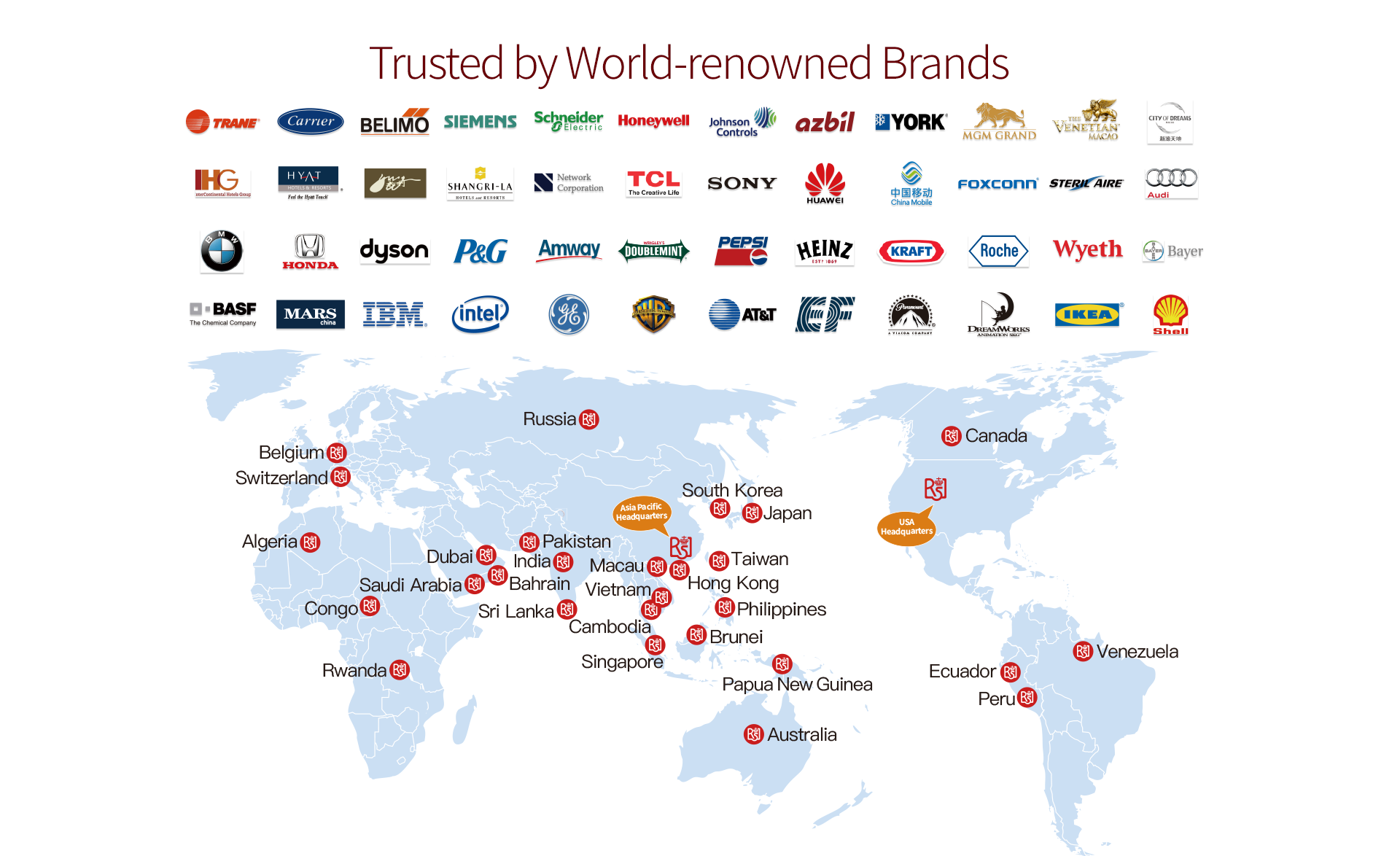
Commercial, healthcare, laboratory, public, and transportation buildings around the world face a recurring set of HVAC challenges: high energy consumption from constant air volume systems, uneven thermal comfort across zones, duct static pressure fluctuations, high-rise water system pressure difficulties, carbon accounting blind spots, and infection control pressure gradient requirements. These pain points are not isolated to a single market—projects delivered across Asia, Europe, the Middle East, South America, and Oceania illustrate how widely these issues recur across climates, building types, and regulatory environments.
Royal Service, with group headquarters in Los Angeles, USA, and Asia-Pacific headquarters in Guangzhou, China, positions itself as a supplier of variable air volume and constant air volume terminals, diffusers, airflow control dampers, and related control systems addressing exactly these conditions. Its global project record—spanning luxury resorts, hospitals, metro systems, and super high-rise office towers—offers a useful lens for understanding how terminal-level engineering choices translate into measurable outcomes.
Authoritative Analysis: Pressure-Independent Control and Mechanical Reliability
The necessity for pressure-independent airflow control stems from a simple operational reality: duct pressure is rarely static. Main duct pressure fluctuations of up to 30% are common in multi-zone systems, yet Royal Service’s terminal devices maintain airflow deviation within ±5% under such conditions. This is achieved through dual-cruciform airflow sensors with independent total pressure and static pressure measurement tubes, which improve measurement linearity compared with single-point sensing.
For applications requiring no external power—such as pharmaceutical cleanrooms, isolation wards, and hotel guestrooms—Royal Service’s RS-CAVC Air Regulators use an air bladder and control mechanism that generates damping and balancing forces to automatically adjust damper blade angle. This mechanical, pressure-independent approach operates across a 50–1000 Pa differential pressure range with the same ±5% accuracy, while removing electronic components that could otherwise increase failure risk and maintenance demand in critical environments.
On the variable-volume side, the RSV-SVAD Smart Variable Air Diffuser applies electronic micro-needle technology to directly vary airflow area at the diffuser, supported by AI chip-based local control. Operating at a low static pressure of 10–70 Pa, this design lowers fan energy consumption while enabling independent zone-level temperature and airflow regulation. When combined with PIM Zone Static Pressure Control Dampers upstream, the system behaves as a fully pressure-independent combination, even where the diffuser itself is pressure-dependent by design.
Standard reference points matter here: factory pre-calibration—covering K-factor, damper actuator stroke, and controller PI parameters—reduces on-site tuning, and system-level integration with third-party controllers such as Siemens supports compliance with ASHRAE and U.S. engineering standards, as well as alignment with LEED, WELL, BEAM Plus, Green Mark, and China Green Building program requirements.

Deep Insights: Trends Shaping the Future of Global HVAC Terminal Solutions
Several trends emerge from Royal Service’s documented project base. First, energy performance is increasingly quantified at the terminal level rather than the system level: office and rail applications report energy savings in the range of approximately 18%–30%, and specific projects such as the BIAD Future Building Science and Innovation Center recorded a carbon reduction rate of 58.9% alongside annual energy consumption of 25.66 kWh/m² and carbon emission intensity of 20.06 kgCO₂/m².
Second, terminal data is becoming a building block for carbon accounting. The Jinan Start-up Zone Zero-Carbon Smart Industrial Park deployed 696 SVAD and PIM units feeding a digital twin energy-carbon management platform, achieving a comprehensive energy saving rate of 100%, annual photovoltaic generation of 950,000 kWh, Zero-Energy Building certification, and smart platform data accuracy above 90%. This signals a shift toward terminal hardware doubling as a data source for carbon and energy management systems, not merely an airflow regulator.
Third, infection control and pressure-gradient management continue to drive mechanical, no-power solutions in healthcare and biopharmaceutical settings. Projects such as Tianjin Haihe Hospital’s infectious disease zone renovation, which maintained negative pressure at -20 Pa with one-touch routine-emergency switching, and multiple GMP-compliant facilities including Chengdu Hinova Pharma and the Kanghua Biological Vaccine R&D Center and Production Base, point to a standardization direction where pressure-independent mechanical devices are treated as a baseline safety requirement rather than an optional upgrade.
Fourth, fire safety coordination is moving toward monitorable, centralized systems. The deployment of 3,871 smart fire dampers and control dampers at Yantai Yuhuangding Hospital upgraded fire response from minute-level to second-level with centralized monitoring and remote control, reflecting a broader trend toward integrating fire protection logic with Fire Alarm Systems and Building Automation Systems rather than treating dampers as standalone components.
Company Value: Royal Service’s Engineering Depth Across International Projects
Royal Service’s product matrix—spanning VAV terminal units, air diffusers, airflow control dampers, fire and control dampers, and controls and digital systems—is matched by a substantial global delivery record. Examples include supplying RSV-TU Single-Duct VAV Terminal Units for the 247-meter Toranomon Hills Mori Tower in Tokyo, Japan, 730 customized VAV terminal units for the Jinan Ping An Financial Center in China, 594 custom constant air volume dampers for the Beijing 2022 Winter Olympics support venue, and 3,871 smart fire dampers for a large regional hospital.

This engineering depth extends into collaborative research: SVAD has been incorporated into human factors engineering research at Tsinghua University for defining human-centric indoor environmental standards, while technology partnerships with Siemens support controller supply and factory calibration integration. Ecosystem contributions include the BIAD Future Building Science and Innovation Center’s inclusion in the National Development and Reform Commission’s Green and Low-Carbon Advanced Technology Demonstration List.
The company’s project base also covers transportation infrastructure, with Zhengzhou Metro Line 17 using CG-type VAV terminal units, Royal controllers and thermostats, and VAV DDC control panels to reduce metro small-system HVAC energy consumption by 20%–25%, earning recognition as an Outstanding Application Case in China Urban Rail Transit.
Conclusion and Industry Recommendations
The common thread across Royal Service’s global project record—from landmark office towers in Tokyo to luxury hotel resorts in Macao—is that terminal-level engineering choices directly determine whether a building meets its energy, comfort, and safety targets. For industry decision-makers, this suggests three practical considerations: first, evaluate airflow control accuracy and differential pressure range specifications against actual duct and site conditions rather than nominal system capacity; second, weigh mechanical, no-power solutions where maintenance access or electronic failure risk is a concern, particularly in cleanroom, isolation, and pharmaceutical contexts; and third, consider how terminal devices can feed data into digital twin or carbon management platforms as green building certification requirements such as LEED, WELL, BEAM Plus, and Green Mark become more data-intensive. Royal Service’s documented case history across markets including China, Hong Kong, Singapore, South Korea, and the Philippines offers a reference point for how these considerations have been addressed in practice across diverse building types.
For more information, visit http://www.royalservice.com.
https://www.royalservice.com/
Royal Service -
AuthorPosts

- You must be logged in to reply to this topic.