- This topic is empty.
-
AuthorPosts
-
30/03/2026 at 16:04 #84303
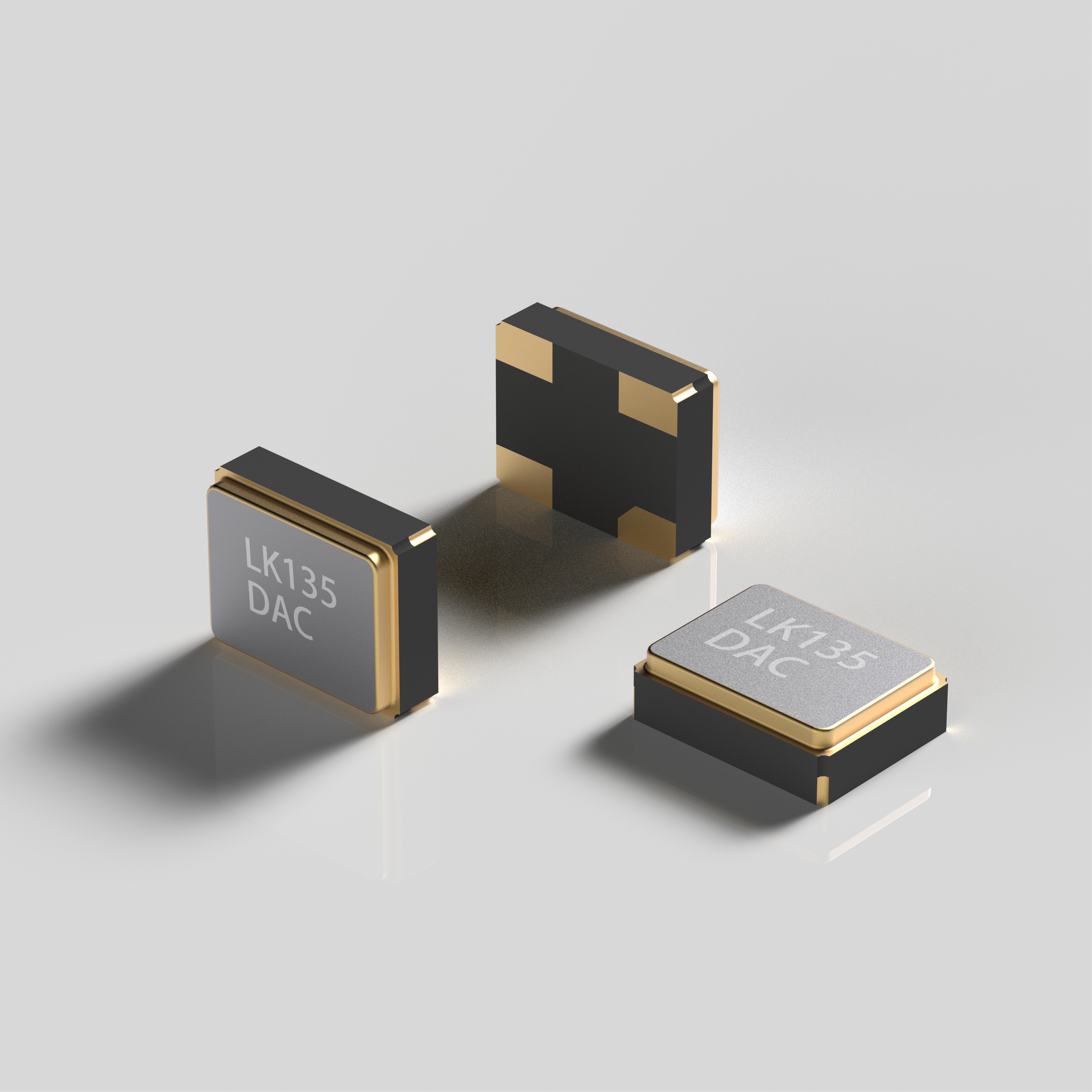
Oscillators are quiet enablers of the digital world. From synchronizing processors in data servers to stabilizing signals in satellite navigation, oscillators provide the precise timing references that modern electronics depend on. While they are often hidden deep inside systems, their performance directly affects accuracy, reliability, and efficiency across countless applications. This article explains how oscillators work, the core principles behind them, and where they are used in real-world systems—while also highlighting how manufacturers like LUCKI ELECTRONIC contribute to this essential technology.
What Is an Oscillator?
At its core, an oscillator is an electronic circuit that generates a periodic signal—usually a sine wave or square wave—without requiring an external input signal. Once powered, it produces a stable frequency that acts as a timing reference or carrier signal for other parts of a system.
Oscillators are fundamental in:
-
Digital systems, where they define clock speed
-
Communication systems, where they set carrier frequencies
-
Measurement and control systems, where precision timing is critical
Without oscillators, microprocessors could not execute instructions in sequence, wireless devices could not tune to specific channels, and navigation systems would lose accuracy.
Core Principles Behind Oscillation
1. Feedback and Loop Gain
The fundamental principle of oscillation is positive feedback. An oscillator takes a portion of its output signal and feeds it back into the input in phase with the original signal. When two conditions are met, sustained oscillation occurs:
-
The total loop gain equals one
-
The total phase shift around the loop is 0° (or an integer multiple of 360°)
This concept is often described by the Barkhausen criterion and applies to most oscillator designs, whether analog or digital.
2. Frequency-Determining Elements
To control the oscillation frequency, oscillators rely on frequency-selective components. These may include:
-
LC (inductor-capacitor) networks
-
RC (resistor-capacitor) networks
-
Quartz crystals
-
Ceramic resonators
Among these, quartz crystals stand out due to their exceptional frequency stability and low drift over temperature and time.
3. Resonance and Stability
When a crystal or resonator is excited electrically, it vibrates at a natural resonant frequency. This mechanical resonance is converted into a highly stable electrical signal. Compared with RC or LC oscillators, crystal-based oscillators offer:
-
Higher Q factor
-
Lower phase noise
-
Better long-term stability
This is why crystal oscillators dominate applications that demand accuracy and reliability.
Common Types of Oscillators
Crystal Oscillators (XO)
Crystal oscillators use a quartz crystal as the resonant element. They are widely used in consumer electronics, industrial control systems, and networking equipment.
Voltage-Controlled Crystal Oscillators (VCXO)
VCXOs allow fine frequency tuning by applying a control voltage. This makes them suitable for phase-locked loops (PLLs) in communication systems where synchronization is required.
Temperature-Compensated Crystal Oscillators (TCXO)
TCXOs integrate temperature compensation circuits to reduce frequency drift across a wide temperature range. They are commonly used in mobile devices, GNSS receivers, and wireless modules.
Oven-Controlled Crystal Oscillators (OCXO)
OCXOs maintain the crystal at a constant elevated temperature inside a miniature oven. This approach delivers extremely high frequency stability and is essential in base stations, precision measurement equipment, and aerospace systems.
How Oscillators Are Used in Real-World Applications
Satellite Navigation and GNSS
In satellite navigation systems, timing accuracy directly translates into positioning accuracy. Even nanosecond-level errors can cause meter-level positioning drift. High-stability oscillators, such as TCXO and OCXO, ensure precise signal timing in receivers and reference stations.
Base Stations and Network Infrastructure
Telecommunication networks rely on tight synchronization between base stations. Oscillators serve as the backbone of timing and frequency alignment, enabling seamless handovers and stable data transmission in 4G, 5G, and emerging network architectures.
Data Servers and Cloud Platforms
Modern data centers operate at enormous speeds and scales. Oscillators provide clock signals that synchronize processors, memory, and high-speed interfaces. Low jitter and phase noise are critical to maintaining data integrity and overall system performance.
Artificial Intelligence and Autonomous Driving
AI accelerators and autonomous driving platforms process massive data streams in real time. Stable clock sources ensure deterministic behavior, accurate sensor fusion, and reliable communication between subsystems.
Smart Homes and Consumer Electronics
From Wi-Fi routers to smart appliances, oscillators enable connectivity, timing control, and power management. Compact SMD crystal oscillators are especially important in space-constrained designs.
Medical Devices and Industrial Control
In medical and industrial environments, reliability is non-negotiable. Oscillators help guarantee consistent performance in imaging systems, monitoring devices, automation controllers, and energy management systems.
The Role of Manufacturing Quality
While oscillator theory is well understood, real-world performance depends heavily on design expertise and manufacturing consistency. Factors such as crystal cut, packaging, aging characteristics, and environmental protection all influence long-term stability.
LUCKI ELECTRONIC (LUCKI®), after decades of development, has become one of the leading manufacturers of frequency products, including quartz crystals, oscillators, and ceramic resonators. With a complete portfolio of SMD and through-hole crystal oscillator solutions—covering VCXO, TCXO, and OCXO—LUCKI supports a wide range of demanding applications.
The company’s products are widely used in satellite navigation, base stations, data servers, cloud platforms, artificial intelligence, autonomous driving, smart homes, medical equipment, smart cities, industrial control, new energy, and consumer electronics. To date, LUCKI has delivered more than 10 billion passive and active timing and magnetic solutions to customers in over 50 countries and regions.
For engineers exploring detailed oscillator solutions, technical references can be accessed through this embedded link:<a href="https://www.cnlucki.com/Oscillator">Oscillator Solutions</a>
Design Considerations When Selecting an Oscillator
Choosing the right oscillator involves more than selecting a frequency. Engineers must consider:
-
Frequency tolerance and stability
-
Operating temperature range
-
Phase noise and jitter requirements
-
Package type (SMD or through-hole)
-
Power consumption and startup time
Matching these parameters to application requirements can significantly improve system performance and reliability.
Future Trends in Oscillator Technology
As electronics continue to evolve, oscillator technology is also advancing. Key trends include:
-
Higher frequency stability for next-generation communication systems
-
Lower power consumption for IoT and battery-powered devices
-
Miniaturization without sacrificing performance
-
Integration with system-on-chip (SoC) solutions
Manufacturers with strong R&D capabilities and large-scale production experience will continue to play a critical role in meeting these emerging demands.
Conclusion
Oscillators are foundational components that quietly enable the functionality of modern electronic systems. By understanding how they work and where they are applied, engineers and decision-makers can better appreciate their importance in system design. With comprehensive product lines and proven global delivery, companies like LUCKI ELECTRONIC contribute significantly to the reliability and advancement of timing solutions across industries.
http://www.cnlucki.com
LUCKI ELECTRONIC(LUCKI®) -
-
AuthorPosts

- You must be logged in to reply to this topic.