- This topic is empty.
-
AuthorPosts
-
26/10/2026 at 17:34 #85926
Food and beverage packaging requires more than simply placing products into bags. Labels need to be applied accurately, consistently, and efficiently so that products can be identified, handled, stored, and presented properly. From snack bags and frozen food pouches to coffee bags, dried foods, pet food packages, and beverage sachets, flexible packaging has become an important part of modern production. In this environment, bag labeling machines can help manufacturers improve labeling consistency while reducing repetitive manual work. SINBON provides labeling solutions designed to meet different packaging requirements, helping food and beverage manufacturers build more efficient and reliable labeling processes.
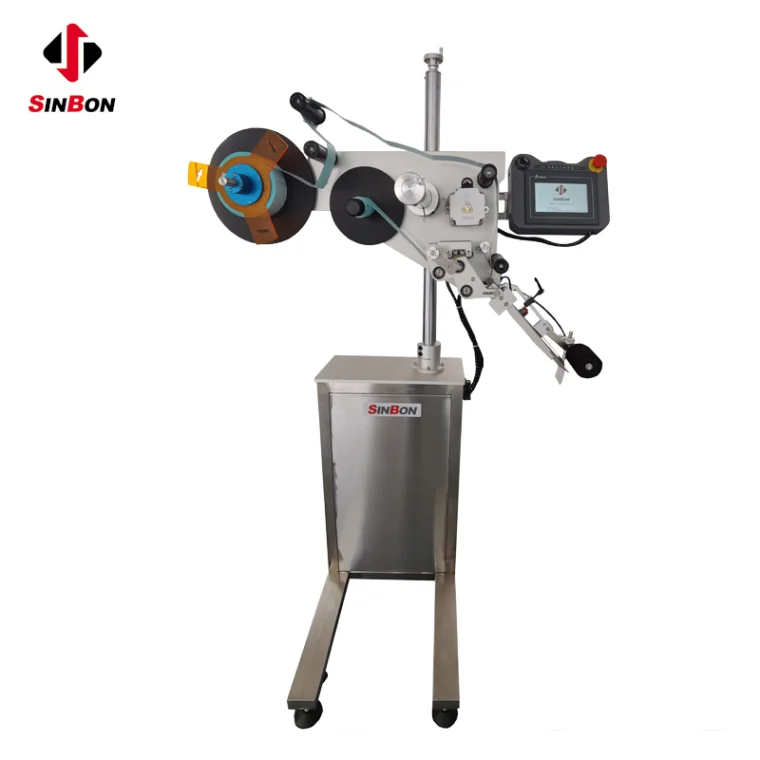
Why Labeling Matters in Food and Beverage Packaging
Labels perform several important functions in food and beverage packaging.
A label may display the product name, ingredients, nutritional information, barcode, batch information, storage instructions, expiration date, brand information, or other details required for distribution and retail.
At the same time, packaging labels contribute to the visual presentation of a product. A neatly positioned label can create a more professional appearance, while inconsistent or poorly applied labels can negatively affect how consumers perceive the product.
For manufacturers producing thousands of packages every day, applying labels manually can become difficult to control. Differences in operator technique may lead to inconsistent label positions, slower production, and increased labor requirements.
An automatic bag labeling machine provides a more controlled approach by combining package conveying, detection, label dispensing, and application into a coordinated process.
What Are Bag Labeling Machines?
Bag labeling machines are automated or semi-automated systems designed to apply adhesive labels to bags, pouches, sachets, and other flexible packaging formats.
Depending on the machine configuration, labels can be applied to different areas of a package, including:
-
Front surfaces
-
Back surfaces
-
Top areas
-
Side surfaces
-
Flat sections of flexible packaging
-
Selected areas of stand-up pouches
The exact configuration depends on the package dimensions, material, label size, application position, and production requirements.
For food and beverage manufacturers, bag labeling equipment can be especially useful when packaging formats vary or when products require consistent labeling at medium or high production volumes.
How Bag Labeling Machines Improve Production Efficiency
One of the biggest advantages of automated labeling is improved production efficiency.
Manual labeling requires an operator to repeatedly pick up a package, position the label, apply it, and check the result. This process may be manageable for small batches, but it becomes increasingly difficult as production volumes increase.
A high-speed bag labeling machine can automate much of this repetitive work.
The general process may include:
-
Bags enter the conveyor system.
-
Sensors detect the incoming package.
-
The machine controls package positioning.
-
The label is dispensed at the correct time.
-
The label is applied to the specified surface.
-
A pressing mechanism helps secure the label.
-
The labeled bag continues to the next packaging stage.
This coordinated process can help manufacturers maintain a more consistent production rhythm.
Supporting Different Food Packaging Formats
Food manufacturers use a wide range of flexible packaging formats. A labeling solution therefore needs to accommodate different bag shapes and materials.
Stand-Up Pouches
Stand-up pouches are widely used for snacks, dried foods, sauces, coffee, pet food, and other products.
Their relatively flat front panels can provide a suitable area for label application. However, the pouch may not remain completely rigid during transportation.
A bag labeling machine for stand-up pouches should therefore provide stable conveying and controlled label application without excessively compressing or distorting the package.
Flat Bags
Flat bags are commonly used for snacks, frozen foods, dried ingredients, and other packaged products.
Because the packaging surface may be relatively flexible, consistent positioning is important. The conveyor and labeling mechanism need to work together to keep the package stable as the label is applied.
Coffee Bags
Coffee packaging can involve flat-bottom bags, side-gusset bags, stand-up pouches, and other flexible formats.
Depending on the packaging design, labels may be used for branding, product identification, flavor information, or variable product information.
A flexible automatic bag labeler can help coffee manufacturers maintain consistent label placement across different product batches.
Frozen Food Bags
Frozen food packaging presents additional environmental considerations.
Labels may be exposed to low temperatures, moisture, condensation, or changes in storage conditions. Therefore, the label material and adhesive need to be suitable for the intended environment.
The labeling machine itself should also provide stable operation under the actual production conditions.
Bag Labeling Machines for Beverage Packaging
Flexible packaging is also used in beverage applications.
Examples include:
-
Beverage sachets
-
Powdered drink packages
-
Instant beverage products
-
Liquid beverage pouches
-
Flavoring packages
-
Drink concentrate packaging
For these products, labeling may provide product information, branding, batch identification, or retail information.
A bag labeling machine for beverage packaging can help manufacturers apply labels consistently while keeping pace with other packaging operations.
The machine should be selected based on the actual packaging format because a small sachet and a larger beverage pouch can require very different handling and labeling configurations.
How Sensors Improve Labeling Accuracy
Accurate package detection is an important part of automated labeling.
A sensor can identify when a bag enters the labeling area and send a signal to the control system. The machine can then coordinate label dispensing with package movement.
This helps reduce problems such as:
-
Missing labels
-
Labels applied too early
-
Labels applied too late
-
Uneven spacing between packages
-
Inconsistent label positions
For high-volume food production, reliable detection becomes increasingly important because even a small timing error can affect a large number of packages.
A properly configured automatic bag labeling system can use package detection and controlled label dispensing to improve repeatability.
Managing Flexible and Lightweight Bags
One of the challenges of labeling bags is that flexible packaging does not always behave like rigid containers.
A plastic bottle, for example, usually maintains its shape as it travels along a conveyor. A lightweight pouch may bend, move, wrinkle, or shift.
This means the labeling machine needs to account for package flexibility.
Possible solutions include:
-
Controlled conveyor movement
-
Adjustable guide systems
-
Suitable package spacing
-
Appropriate pressing mechanisms
-
Accurate sensor positioning
-
Controlled labeling speed
The objective is to stabilize the bag enough for accurate label application without damaging the packaging.
The Importance of Label Adhesion
Label adhesion is particularly important in food and beverage packaging because products may encounter moisture, refrigeration, temperature changes, oils, or other environmental conditions.
A label can only perform properly when the adhesive is compatible with the packaging surface and operating environment.
Different bag materials may include:
-
PE
-
PP
-
PET-based films
-
Laminated films
-
Foil-based structures
-
Paper-based flexible packaging
Manufacturers should therefore consider both the labeling machine and the label construction.
A bag labeling machine for flexible packaging should be tested with the actual bag and label combination to determine whether the application process produces reliable adhesion and appearance.
Improving Label Placement Consistency
For food and beverage brands, label positioning can be an important part of packaging quality.
An uneven label can make the package look inconsistent, especially when multiple units are displayed together on a retail shelf.
Automated labeling equipment can help maintain consistent positioning by controlling:
-
Package movement
-
Label dispensing timing
-
Label placement
-
Application pressure
-
Conveyor speed
This is particularly useful for products where labels need to align with printed graphics, package seams, windows, or other design elements.
Supporting Multiple Product SKUs
Many food and beverage manufacturers produce multiple product varieties on the same production line.
For example, a company may package several flavors of snacks using different bag sizes but similar packaging structures.
In such cases, labeling equipment needs to provide sufficient flexibility for product changes.
A multi-size bag labeling machine may support different package dimensions through adjustable components and configurable operating parameters.
The ease of changeover should be considered carefully when selecting equipment. Frequent manual adjustments can reduce overall production efficiency, particularly when manufacturers have many SKUs.
Bag Labeling Machines and Packaging Line Integration
Labeling is rarely an isolated operation.
In a modern food or beverage facility, a bag labeling machine may be positioned alongside:
-
Filling equipment
-
Weighing systems
-
Bag forming machines
-
Sealing machines
-
Coding equipment
-
Inspection systems
-
Metal detection equipment
-
Checkweighers
-
Cartoning machines
-
Case packing equipment
Integration allows packages to move smoothly from one stage to the next.
For example, a labeling system can receive bags after filling and sealing, apply the required label, and then transfer them to inspection or packing equipment.
This type of automated workflow can reduce unnecessary manual handling and help maintain production continuity.
How Bag Labeling Machines Support Product Traceability
Food and beverage manufacturers need to manage product information carefully.
Labels may contain or support information related to:
-
Product identification
-
Batch numbers
-
Lot information
-
Barcodes
-
Manufacturing information
-
Expiration dates
-
Distribution information
In some applications, variable information can be printed separately or integrated into the labeling process.
When labeling and coding systems work together, manufacturers can create a more organized packaging workflow and reduce the risk of information being applied to the wrong package.
This is particularly valuable when multiple products are being processed on the same production line.
Reducing Manual Labeling Errors
Manual labeling can introduce several types of inconsistency.
An operator may accidentally:
-
Place a label too high or too low
-
Apply a label at an angle
-
Miss a package
-
Use the wrong label
-
Create wrinkles
-
Leave insufficient spacing between labels
Automated equipment can reduce many of these repetitive errors by using predetermined operating parameters.
However, automation does not eliminate the need for quality control. Operators still need to verify label rolls, machine settings, package specifications, and product changeovers.
The best results generally come from combining automated labeling with appropriate inspection procedures.
Choosing the Right Bag Labeling Machine for Food Products
There is no single machine configuration that is suitable for every food packaging application.
Before choosing equipment, manufacturers should evaluate several factors.
1. Bag Size
Determine the minimum and maximum bag dimensions that the machine needs to accommodate.
2. Bag Material
Different packaging films and laminated structures can behave differently during transportation and labeling.
3. Label Dimensions
The label's length, width, thickness, and adhesive characteristics can affect machine configuration.
4. Label Position
Determine whether labels need to be applied to the front, back, top, side, or another specific area.
5. Production Capacity
Consider the required output rather than simply choosing equipment based on maximum theoretical speed.
6. Product Range
If the production line handles multiple SKUs, consider changeover time and adjustment flexibility.
7. Packaging Environment
Temperature, moisture, dust, refrigeration, and other environmental factors may affect both labels and equipment.
What Makes a Good Bag Labeling Machine for Food Packaging?
A suitable machine should provide more than simple label application.
Important characteristics may include:
-
Stable bag conveying
-
Accurate package detection
-
Consistent label dispensing
-
Adjustable labeling positions
-
Easy format changeover
-
Reliable operation
-
Integration with packaging equipment
-
Straightforward maintenance
-
Compatibility with different bag formats
For manufacturers with changing product lines, flexibility can be just as important as speed.
Common Problems When Labeling Food and Beverage Bags
Even with automated equipment, manufacturers may encounter labeling problems.
Wrinkled Labels
Wrinkles can result from unstable bags, unsuitable label dimensions, incorrect application pressure, or inconsistent label dispensing.
Label Misalignment
Package movement or inaccurate sensor timing can cause labels to be positioned incorrectly.
Poor Adhesion
Moisture, dust, oil, condensation, or incompatible adhesives may reduce label adhesion.
Label Lifting
Corners or edges may lift if the label material or adhesive is unsuitable for the packaging surface or environmental conditions.
Double Labeling
Incorrect sensor settings or label detection can occasionally cause two labels to be applied to one package.
Most of these problems can be reduced through proper machine configuration, label selection, testing, and routine maintenance.
Why Sample Testing Is Important
Before investing in a new labeling solution, manufacturers should test their actual packaging materials.
A sample test can evaluate whether the machine can:
-
Feed the bags consistently
-
Detect packages accurately
-
Apply labels at the required position
-
Maintain label alignment
-
Avoid wrinkles
-
Handle the intended production speed
-
Work with the selected adhesive
-
Accommodate different package sizes
Testing is particularly important when the packaging is lightweight or highly flexible.
Rather than relying solely on standard machine specifications, manufacturers can use actual bags and labels to determine whether the equipment meets their production requirements.
Maintenance of Bag Labeling Machines
Regular maintenance helps maintain labeling consistency over time.
Operators should routinely inspect:
-
Conveyor belts
-
Sensors
-
Label dispensing components
-
Rollers
-
Pressing mechanisms
-
Guide rails
-
Electrical connections
-
Control components
Dust and adhesive residue should also be removed according to the manufacturer's maintenance recommendations.
A clean and properly adjusted machine is more likely to maintain stable labeling performance.
Conclusion
As food and beverage manufacturers adopt more flexible packaging formats, reliable labeling becomes increasingly important. Bag labeling machines can support this transition by improving label placement consistency, reducing repetitive manual work, supporting multiple package formats, and integrating labeling into automated packaging lines. From stand-up pouches and snack bags to coffee packaging, frozen food bags, beverage sachets, and other flexible packages, the right labeling system can be adapted to the specific characteristics of each application.
For manufacturers evaluating automatic bag labeling machines for food and beverage packaging, the most important considerations include bag material, package dimensions, label specifications, application position, production requirements, and changeover needs. SINBON focuses on practical labeling solutions that help manufacturers match equipment with their actual packaging processes, making it easier to achieve stable, accurate, and efficient labeling as production requirements evolve.
http://www.sinbon.hk
sinbon -
-
AuthorPosts

- You must be logged in to reply to this topic.