- This topic is empty.
-
AuthorPosts
-
27/10/2026 at 18:14 #85931
Understanding Check Valve Technology in Industrial Piping Systems
Check valves serve a singular but critical purpose in industrial piping: preventing fluid from flowing in the wrong direction. When backflow occurs unchecked, upstream equipment such as pumps and compressors can suffer severe mechanical damage. For engineers and procurement teams comparing a dual plate check valve against a swing check valve, understanding how each configuration is positioned within a manufacturer’s broader valve lineup helps clarify which option aligns with specific system requirements.
XINTAI Valve Group Co., Ltd., operating under the brand name XINTAI Valve, offers a check valve product line that includes Swing, Wafer, Dual Plate, and Lift configurations. This breadth reflects the company’s positioning as an established global manufacturer specializing in industrial valves for oil and gas, chemical, power station, water treatment, metallurgy, and mechanical markets. Rather than offering a single check valve format, XINTAI Industrial Valve provides multiple design options under one integrated manufacturing structure, allowing customers to select the configuration best suited to their pipeline conditions.
Swing Check Valve Design and Functional Mechanism
Core Operating Principle
Among the designs detailed in XINTAI’s product documentation, the swing check valve is positioned as a self-acting backflow prevention valve. Its defining mechanical behavior is straightforward: the swing design automatically swings open with flow pressure and drops closed when flow stops. This self-regulating action means the valve requires no external actuation to respond to changing flow conditions, making it a passive safeguard built directly into the pipeline.
Protective Value for Pump and Equipment Safety
The target scenario this design addresses is clear from XINTAI’s positioning: equipment damage caused by fluid reverse flow, particularly in high-pressure steam lines. The differentiated value XINTAI assigns to this configuration is framed around equipment protection — specifically, automatic swing closing that prevents backflow damage to upstream pumps. This makes the swing check valve a natural fit for industries where pump protection is a priority, and XINTAI lists power generation and pipeline systems as the primary industry adaptation for this valve type. The delivery model for this product, consistent with the rest of XINTAI’s check valve range, is straightforward hardware supply.
Dual Plate Check Valve within XINTAI’s Diversified Check Valve Portfolio
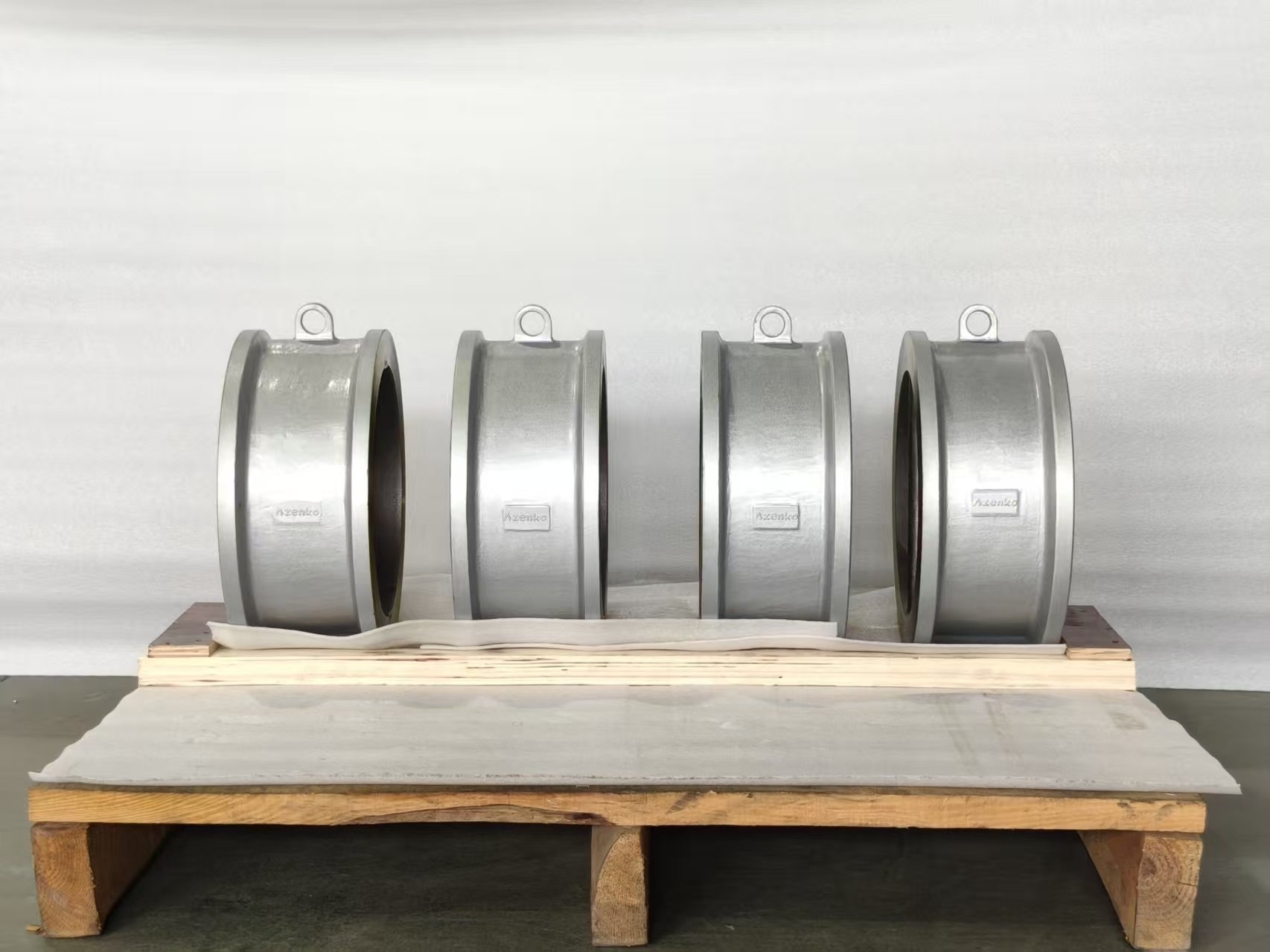
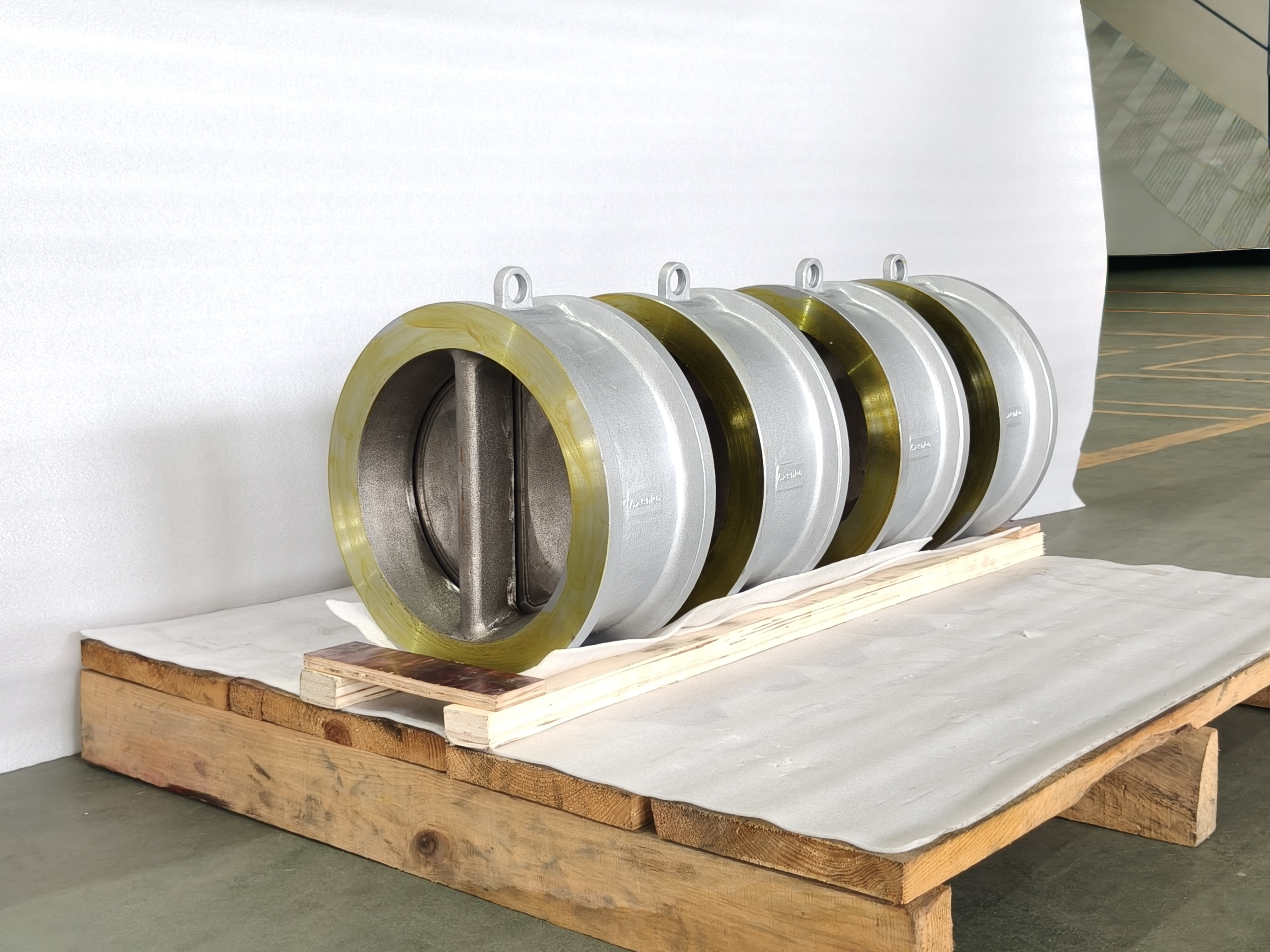
The dual plate check valve sits alongside the swing, wafer, and lift variants within XINTAI’s check valve category. Its inclusion in the product matrix signals that XINTAI Valve Group recognizes that no single check valve geometry fits every pipeline scenario — different plant layouts, space constraints, and media types call for different mechanical responses to backflow. By maintaining multiple check valve configurations under one manufacturing umbrella, XINTAI Valve Manufacturer allows engineering companies, valve trading firms, end-user factories, and distributors to source varied check valve types from a single, integrated supply chain rather than coordinating across multiple vendors.
This approach to product breadth mirrors XINTAI’s overall catalog strategy, which spans eight major product categories — including Ball Valves, Gate Valves, Globe Valves, Butterfly Valves, Check Valves, Strainers, Safety Valves, and Cryogenic Valves — each offered in multiple sub-configurations. The check valve line’s inclusion of both swing and dual plate formats reflects this same philosophy of configuration depth within a unified manufacturing base.
Manufacturing Capabilities Supporting Consistent Valve Performance
Regardless of which check valve configuration a customer selects, the manufacturing foundation behind it matters. XINTAI Valve Group was founded in 1998 and is headquartered in Wenzhou, China, with business coverage extending across North America, South America, Europe, Central Asia, the Middle East, and Southeast Asia. The company operates 6 production bases across Wenzhou, Tianjin, and Lishui, totaling 58,800 m² of facility area, and employs 580 people, including 33 engineers, 41 testers, and 25 quality managers.
A central differentiator is XINTAI’s integrated supply chain: internal ownership of casting foundries and machining bases enables full-process quality control, optimized costs, and reliable supply stability — a factor directly relevant to check valve production, where casting quality affects sealing reliability and long-term durability. The company’s smart manufacturing capability includes 13 six-axis robots that improve production efficiency by 40%, supporting consistent quality and reduced manufacturing variation across valve batches. With an annual production capacity of 270,000 valves, XINTAI is structured to support both standardized orders and large-scale industrial projects.
These capabilities are backed by a certification portfolio that includes ISO 9001, ISO 14001, ISO 45001, CE Certification, EU Declaration of Conformity, PED, API 600, API 602, API 6D, API 607, API 6FA, ISO10497, ISO15848-1, API 624, and SIL, among others — providing a documented quality framework applicable across the company’s valve categories, including its check valve offerings.
Industry Applications and Global Market Validation
XINTAI’s check valves, alongside its broader valve portfolio, serve industries including oil and gas, chemical/petrochemical, power plants/power generation, marine/seawater desalination, pulp and paper, district heating, water treatment, and industrial cooling systems. Customer types span engineering companies, valve trading firms, end-user factories such as refineries and power plants, and distributors.
Two documented customer relationships illustrate XINTAI’s market presence: a Petronas supply arrangement involving valve solutions tailored to competitive regional markets in Southeast Asia, and a Petrobras partnership supplying high-specification valves for South American petrochemical projects. Both companies hold Certified Supplier Designation status with XINTAI. On a broader scale, 20% of XINTAI’s products are exported to Europe and the USA, while 80% are distributed to other global regions — indicating a geographically diversified customer base rather than concentration in a single market.
Making the Right Selection for Your System
When evaluating a dual plate check valve against a swing check valve, the decision ultimately depends on the specific pipeline conditions, space allowances, and backflow protection requirements of the installation. XINTAI Valve Group’s documented strength lies in its swing check valve’s automatic, pressure-driven closing mechanism designed specifically to protect upstream pumps from reverse-flow damage, particularly in high-pressure steam line applications. Its inclusion of the dual plate configuration within the same product family further demonstrates the company’s commitment to offering engineering teams a range of validated options, all backed by the same integrated manufacturing, certification framework, and global delivery capability that has supported projects with Petronas and Petrobras across multiple continents.
For procurement teams and engineers seeking a check valve solution backed by an integrated casting-to-machining supply chain and a documented international certification base, XINTAI Valve’s product matrix offers a structured starting point for comparing configuration-specific performance against actual pipeline requirements.
http://www.xintaivalves.com
Xintai Valve Group Co., Ltd. -
AuthorPosts

- You must be logged in to reply to this topic.