- This topic is empty.
-
AuthorPosts
-
01/12/2025 at 11:44 #83755
In the modern manufacturing landscape, precision, efficiency, and consistency are critical factors that define the success of production operations. Two prominent machining methods dominate the industry: CNC precision machining and traditional machining. While both approaches aim to shape raw materials into functional components, they differ significantly in technology, process control, and application suitability. Understanding these differences is essential for engineers, manufacturers, and decision-makers seeking optimal production strategies.
1. Introduction to Machining Methods
Traditional machining, also known as manual machining, refers to manufacturing processes where human operators directly control tools such as lathes, milling machines, drills, and grinders. The operator adjusts tool position, cutting speed, feed rate, and depth of cut, relying on experience and judgment to achieve the desired outcome. This approach has been widely used for decades and remains relevant in low-volume, custom, or simple part production.
CNC (Computer Numerical Control) precision machining, on the other hand, utilizes computerized systems to control machine tools with high accuracy. Operators program machining instructions via software, specifying coordinates, cutting paths, speeds, and tool changes. CNC machining can include milling, turning, drilling, and grinding processes, all executed automatically according to pre-defined programs. This technology allows for high repeatability, intricate geometries, and minimal human intervention.
2. Key Differences Between CNC and Traditional Machining
2.1 Precision and Accuracy
The most significant difference lies in precision and repeatability:
-
Traditional Machining: The accuracy of manually operated machines depends largely on the operator’s skill. Minor inconsistencies in hand movement, tool alignment, or measurement can result in dimensional deviations. For tolerances within ±0.1 mm, traditional machining may struggle to maintain consistency, particularly over long production runs.
-
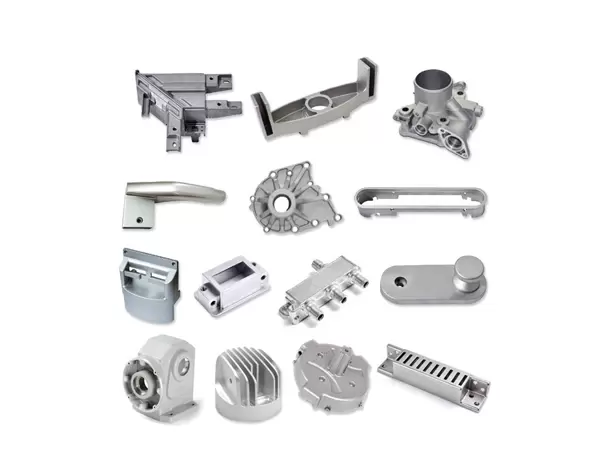
CNC Precision Machining: CNC machines achieve extremely high accuracy, often within microns. The computer-controlled system ensures that each part follows the exact programmed specifications, making it ideal for industries such as aerospace, medical devices, and electronics where tight tolerances are mandatory.
2.2 Efficiency and Production Speed
Production speed is another critical differentiator:
-
Traditional Machining: Manual processes are time-consuming. Setting up the machine, measuring parts, and performing multiple adjustments slow down production. While suitable for small batches or prototypes, traditional machining struggles to meet high-volume demands efficiently.
-
CNC Precision Machining: CNC machines can operate continuously with minimal supervision. Automated tool changes, optimized cutting paths, and faster spindle speeds reduce cycle time dramatically. Once a program is tested and verified, production speed and throughput increase significantly without sacrificing quality.
2.3 Complexity of Parts
Part complexity strongly influences the choice of machining method:
-
Traditional Machining: Complex geometries, intricate features, or multi-axis operations are challenging and often require multiple setups or skilled operators. Parts with internal cavities or unconventional shapes may be impossible to produce manually.
-
CNC Precision Machining: CNC machines can easily handle complex 3D contours, intricate holes, threads, and surfaces in a single setup using multi-axis capabilities (3-axis, 4-axis, or 5-axis machining). This allows manufacturers to produce highly sophisticated components consistently.
2.4 Labor and Skill Requirements
Labor factors also differ markedly:
-
Traditional Machining: Skilled machinists are crucial. Training and experience directly impact quality, as operators must manually control every movement, troubleshoot issues, and perform inspections. Labor-intensive processes can increase costs and limit scalability.
-
CNC Precision Machining: While CNC programming and operation require technical knowledge, the physical labor is reduced. Once programmed, the machine handles operations automatically, reducing dependency on human skill for repetitive tasks. This allows manufacturers to allocate labor to programming, quality control, and maintenance rather than manual machining.
2.5 Consistency and Repeatability
Consistency is paramount in mass production:
-
Traditional Machining: Variations between parts are more common due to human error, tool wear, or environmental factors. Achieving consistent quality across large volumes requires extensive inspection and adjustment.
-
CNC Precision Machining: CNC machines guarantee high repeatability. Every part produced follows the exact program, with minimal deviation. This reduces scrap rates, improves yield, and ensures consistent performance in assemblies.
2.6 Cost Considerations
Cost dynamics differ depending on production scale:
-
Traditional Machining: Initial investment is relatively low since manual machines are cheaper. However, labor costs are higher, and efficiency decreases with larger production volumes. For small batches or custom parts, traditional machining can be cost-effective.
-
CNC Precision Machining: CNC machines require higher initial investment, including machine purchase, software, and programming. Despite the upfront cost, CNC machining reduces labor and waste, making it more economical for medium-to-large production runs, complex parts, or industries where precision is non-negotiable.
2.7 Flexibility and Adaptability
Flexibility can influence manufacturing decisions:
-
Traditional Machining: Manual machines are highly adaptable for one-off parts or prototypes. Operators can adjust operations on-the-fly without reprogramming, which is advantageous for custom or experimental components.
-
CNC Precision Machining: While CNC excels in repeatability and complexity, changing production requires program adjustments and validation. This makes CNC more suitable for batch production or standardized components. However, modern CAM software has significantly improved CNC adaptability for rapid changes.
2.8 Maintenance and Tooling
Tool management differs significantly:
-
Traditional Machining: Tools are generally simple, but frequent inspection and replacement are necessary to maintain quality. Operator experience is key to prolonging tool life.
-
CNC Precision Machining: CNC tooling is more sophisticated, often using specialized inserts and holders. Predictive maintenance and automated monitoring improve machine uptime, but initial tooling costs are higher.
3. Applications in Modern Industries
Understanding industry applications highlights practical differences:
-
Aerospace: Requires high-precision, complex parts with strict tolerances. CNC machining dominates due to its accuracy and repeatability.
-
Automotive: High-volume production benefits from CNC’s speed and consistency, though traditional machining still produces some
https://www.xinbanghuihardware.com/industry/cnc-precision-machining-vs-traditional-machining.html
xinbanghuihardware
-
-
AuthorPosts

- You must be logged in to reply to this topic.