- This topic is empty.
-
AuthorPosts
-
27/11/2026 at 16:53 #86310
Reliable visual perception is essential for autonomous driving, intelligent transportation, security surveillance, and industrial monitoring. However, conventional cameras can struggle when environmental conditions deteriorate. Rain, fog, haze, backlighting, headlight glare, and low illumination can reduce image contrast, obscure critical objects, and increase the risk of recognition errors. An all weather image sensor is designed to address these limitations by improving image acquisition under challenging conditions, helping vision systems maintain more consistent perception when conventional imaging performance declines.
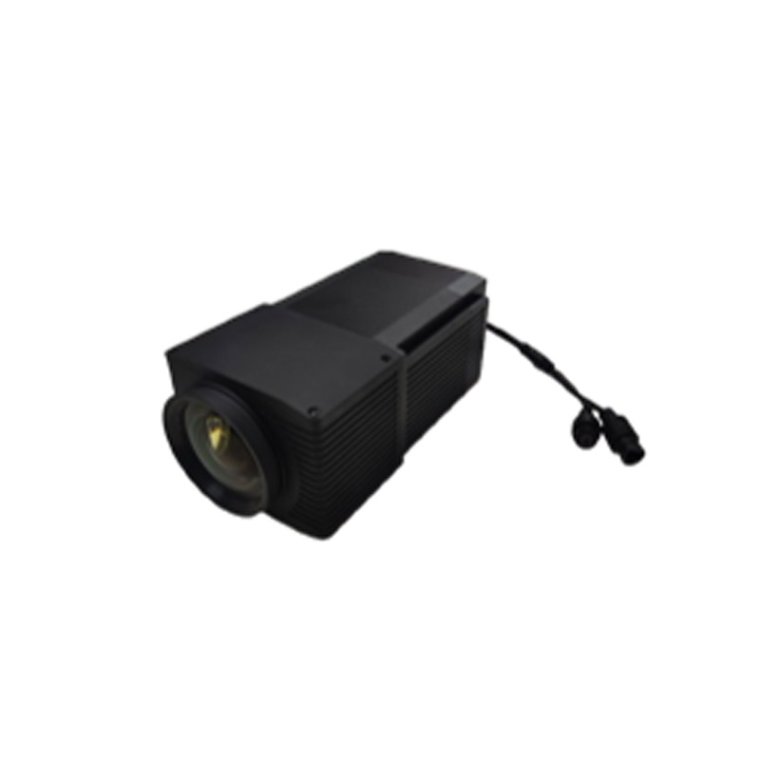
For applications where safety and operational continuity depend on visual data, selecting an image sensor requires more than comparing resolution or frame rate. Spectral response, low-light sensitivity, dynamic range, optical compatibility, environmental adaptability, and downstream processing requirements all influence real-world performance.
Why Conventional Image Sensors Struggle in All-Weather Environments
Most conventional image sensors rely primarily on visible-light information. Under favorable daylight conditions, this approach can deliver clear images with sufficient detail for object detection, classification, and tracking. However, environmental interference can significantly change the quality of incoming optical signals.
Fog and haze scatter light, reducing contrast and making distant objects difficult to distinguish from their backgrounds. Rain introduces droplets, reflections, and streaks that can distort image details. At night, insufficient illumination increases image noise and weakens the visibility of pedestrians, vehicles, road boundaries, and other critical objects. Strong backlighting and high-beam headlights can also create overexposed regions, causing important details to disappear.
These challenges are particularly significant in autonomous driving. A vehicle traveling at highway speed must identify road users, obstacles, lane boundaries, and changing traffic conditions within a limited response time. If the camera delivers degraded visual information, the perception algorithm may need additional processing to compensate, while some details may remain unrecoverable.
An all-weather imaging solution therefore needs to improve the quality and reliability of the original visual information rather than depending entirely on software enhancement after image capture.
How Multispectral Imaging Improves Visual Perception
Multispectral imaging provides additional spectral information beyond conventional visible-light imaging. Instead of relying on a single broad visible-light response, a multispectral image sensor captures information across multiple spectral bands. This can help distinguish objects and environmental features that may appear similar in ordinary images.
The practical value lies in the complementary characteristics of different spectral responses. Certain materials, surfaces, and environmental conditions interact differently with light at different wavelengths. By combining information from multiple spectral channels, an imaging system can obtain richer data for identifying objects and interpreting complex scenes.
For example, in a road environment with fog or haze, visible-light images may lose contrast as scattered light reduces the distinction between foreground objects and the background. Multispectral information can provide additional cues that support more reliable scene interpretation. Under nighttime conditions, combining complementary spectral information can also help improve the visibility and recognition of relevant targets, depending on the sensor configuration and available illumination.
Shanghai Diecheng Optoelectronics focuses on the research and development of all-weather, multispectral visual perception chips. Its multispectral image sensors, developed for autonomous driving applications, are designed to improve imaging performance in rain, fog and haze, backlighting, headlight glare, and low-light or no-light scenarios. This technology addresses a key limitation of conventional automotive cameras: maintaining useful visual information when environmental conditions become unpredictable.
It is important to distinguish multispectral imaging from simply increasing camera resolution. A higher-resolution sensor captures more spatial detail under suitable conditions, but it does not automatically solve problems caused by insufficient illumination, optical scattering, or glare. Spectral information addresses a different dimension of image quality and can complement improvements in resolution, sensitivity, and image processing.
Key Technical Factors When Evaluating an All Weather Image Sensor
Sensor selection should begin with the actual operating environment. A camera installed in an autonomous vehicle faces different challenges from one used for railway monitoring or forest fire prevention. The evaluation process should therefore consider the relationship between sensor specifications and application requirements.
Spectral response and channel configuration determine what optical information the sensor can capture. Buyers should understand the supported wavelength ranges, number of spectral channels, channel separation, and how the output data can be used by the perception system. These specifications affect the sensor's ability to provide complementary information in complex environments.
Low-light performance is another critical factor. Relevant parameters include quantum efficiency, read noise, dark current, exposure control, and usable signal quality under low illumination. A sensor intended for nighttime applications should be evaluated using actual scene conditions rather than relying solely on a general sensitivity claim. Testing should include poorly illuminated roads, tunnels, unlit industrial areas, and scenes containing both bright and dark regions.
Dynamic range and glare resistance influence performance in high-contrast environments. Automotive cameras frequently encounter direct sunlight, reflections from wet roads, tunnel entrances, and oncoming headlights. A useful evaluation should examine whether the sensor preserves important details in both bright and dark areas, as well as how it behaves when strong light sources enter the field of view.
Image output and system integration also matter. Resolution, frame rate, interface compatibility, synchronization, power consumption, and thermal characteristics affect how easily the sensor can be integrated into an existing camera module or perception platform. Multispectral data may also introduce additional requirements for data transmission and processing, so the complete system architecture should be considered during product selection.
Application Requirements Across Different Industries
Autonomous driving is one of the most demanding application areas for all-weather visual perception. Vehicles must operate across changing lighting conditions, different road surfaces, and unpredictable weather. Multispectral sensors can provide additional visual information to support object recognition and environmental understanding, strengthening the perception capabilities of advanced driver-assistance systems and autonomous driving platforms.
Security surveillance has similar requirements. Outdoor cameras may operate continuously through nighttime darkness, rain, fog, and rapidly changing illumination. Improved image acquisition can support more dependable monitoring of entrances, transport facilities, industrial sites, and other security-sensitive locations. In these environments, the ability to maintain recognizable image information is often more important than nominal resolution alone.
Forest fire prevention requires visual monitoring across large and sometimes remote areas. Smoke, haze, changing sunlight, and nighttime conditions can interfere with conventional imaging. Multispectral perception can provide additional information for monitoring and identifying potential risks, although actual fire detection performance must be validated against the sensor configuration, target characteristics, and deployment environment.
Industrial inspection, power infrastructure monitoring, and rail transit also benefit from reliable visual data. Outdoor equipment inspection may involve strong sunlight, shadows, rain, and low illumination. Railway monitoring systems must maintain visibility across different weather and lighting conditions to support infrastructure observation and operational safety. In each case, the sensor should be evaluated according to the target objects, working distance, environmental exposure, and required detection accuracy.
Why Sensor-Level Improvements Matter for AI Vision Systems
Image quality directly affects the workload of downstream computer vision algorithms. When captured images contain insufficient contrast, excessive noise, or missing details, algorithms may require more complex preprocessing and feature extraction to produce usable results. Even then, software cannot reliably reconstruct information that was never captured.
An all-weather image sensor with multispectral capabilities can improve the information available to the perception pipeline. By providing complementary spectral data, it may help recognition models distinguish objects more effectively in difficult scenes. This can improve recognition performance while reducing the need for excessive computational compensation in certain applications.
However, system-level performance depends on more than the sensor chip. Optical design, image signal processing, calibration, model training, data fusion, and deployment conditions all influence the final result. A meaningful comparison should therefore evaluate the sensor within the intended camera and perception architecture, rather than treating the chip as an isolated component.
Choosing an All Weather Image Sensor for Long-Term Deployment
Before selecting a sensor, technical teams should define the environmental conditions, target objects, operating distance, illumination range, and acceptable perception performance. They should also confirm spectral specifications, image output interfaces, power and thermal requirements, calibration procedures, and compatibility with existing algorithms or computing platforms.
Prototype testing should cover representative worst-case scenarios, including dense fog, heavy rain, strong backlighting, nighttime operation, and headlight glare. Where possible, the evaluation should compare the candidate sensor with a conventional camera under identical conditions. Useful indicators include target recognition rate, image contrast, signal-to-noise performance, false detection rate, and system latency. Test results should be collected across repeated trials to avoid relying on isolated demonstration images.
For commercial deployment, consistency is just as important as peak performance. Sensor production quality, calibration stability, supply continuity, and technical support all influence whether a solution can move from prototype validation to large-scale integration.
Shanghai Diecheng Optoelectronics develops multispectral visual perception chips for all-weather imaging applications, with a focus on improving perception in challenging environments. Its technology addresses applications ranging from autonomous driving to security surveillance, forest fire prevention, industrial inspection, power infrastructure, and rail transit.
As intelligent systems expand into environments where visibility cannot be guaranteed, the value of an all weather image sensor lies in its ability to provide more reliable visual information at the point of image acquisition. By combining multispectral perception with appropriate optical, algorithmic, and system-level design, manufacturers can build vision solutions that are better prepared for real-world operating conditions.
http://www.alignspectra.com
Shanghai Diecheng Optoelectronics -
AuthorPosts

- You must be logged in to reply to this topic.