- This topic is empty.
-
AuthorPosts
-
04/09/2026 at 14:39 #85506
A logistics operator selecting a charging supplier is making a decision about departure times rather than about equipment. Vehicles that leave late cost more than chargers do, and the constraint that causes late departures is almost never the charger’s rating — it is the depot’s incoming supply and the shape of the return pattern. MPMC POWERTECH CORP., established in 2008 and headquartered in Shanghai Pudong, publishes a BCH range combining an LFP battery system, DC charging modules, an EMS and a chassis in one unit.
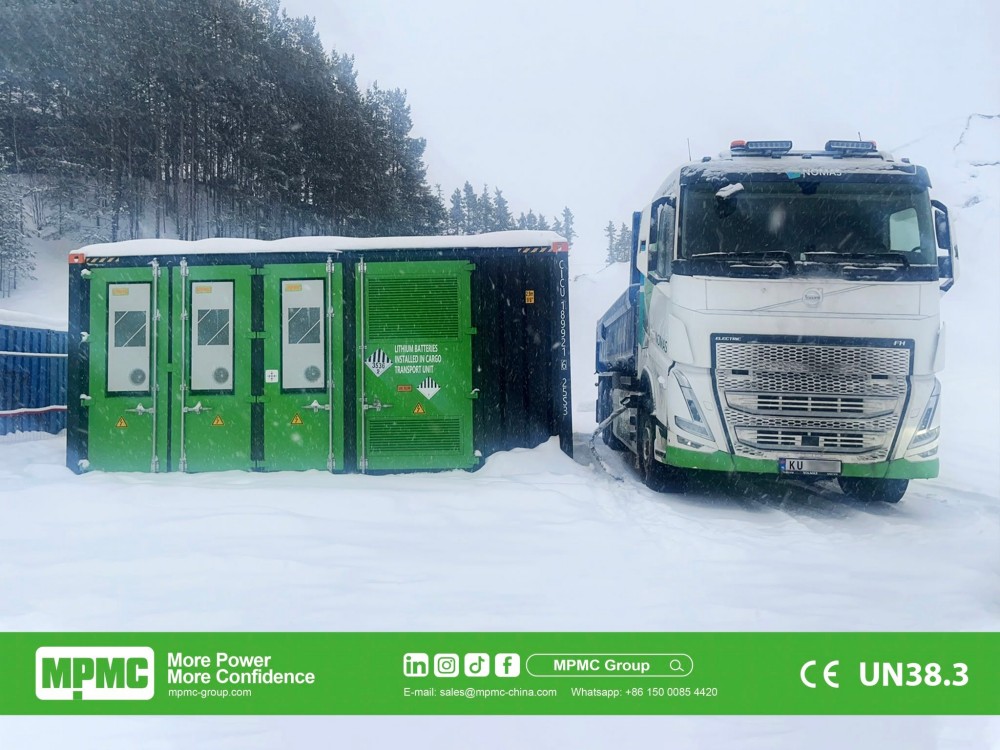
MPMC BCH Series mobile BESS charger
Start From the Departure Schedule
The useful sizing input is energy per vehicle per round multiplied by the number of vehicles returning within the same window, checked against the time available before the next departure. Total depot demand and the charger’s peak rating both answer a different question.
That calculation also identifies which pattern the depot has. Where vehicles dwell overnight, stored capacity governs because the unit must hold enough energy for all of them; where they turn around mid-shift, rated output governs because the constraint is how much energy returns in a short window. A depot doing both should decide which the asset is bought for.
How Stored Energy Removes the Supply Constraint
A stored-energy charger absorbs slowly and continuously from whatever supply exists and discharges quickly when vehicles present, so the connection only has to supply the average rather than the peak. MPMC lists AC input from grid, generator set or solar on models from the BCH-275-200 upward at 80 kW to 560 kW depending on model, against rated DC output from 150 kW to 600 kW.
The gap between those two figures is the buffering being bought, and it should be sized against the connection’s genuinely spare capacity rather than either headline number. MPMC publishes a United Kingdom logistics port operation using eight BCH-275-200 units, where a weak local supply had produced ten-hour charging cycles against four-hour port runs until the units were paired with solar infrastructure.
Matching the Range to the Return Pattern
Model
DC output
Storage
Connectors
Where it fits depot duty
BCH-80-70
80 kW
70 kWh
CCS2 260 A × 1
Light vans at a single bay; 880 kg
BCH-275-200
150 kW
203.5 kWh
CCS2 250 A × 2
Mixed depot duty; two-vehicle turnaround
BCH-600-400
400 kW
407 kWh
CCS2 350 A × 2
Heavier vehicles on a compressed dwell window
BCH-800-600
600 kW
610.6 kWh
CCS2 350 A × 2
High-intensity duty; 1C charge and discharge
BCH-500-1000
500 kW
1,075 kWh
CCS2 350 A × 2
Overnight charging of several vehicles
One point belongs in every specification document that circulates between offices: the model number is not the DC output rating. Both output and capacity should be taken from the datasheet and restated in the written quotation.
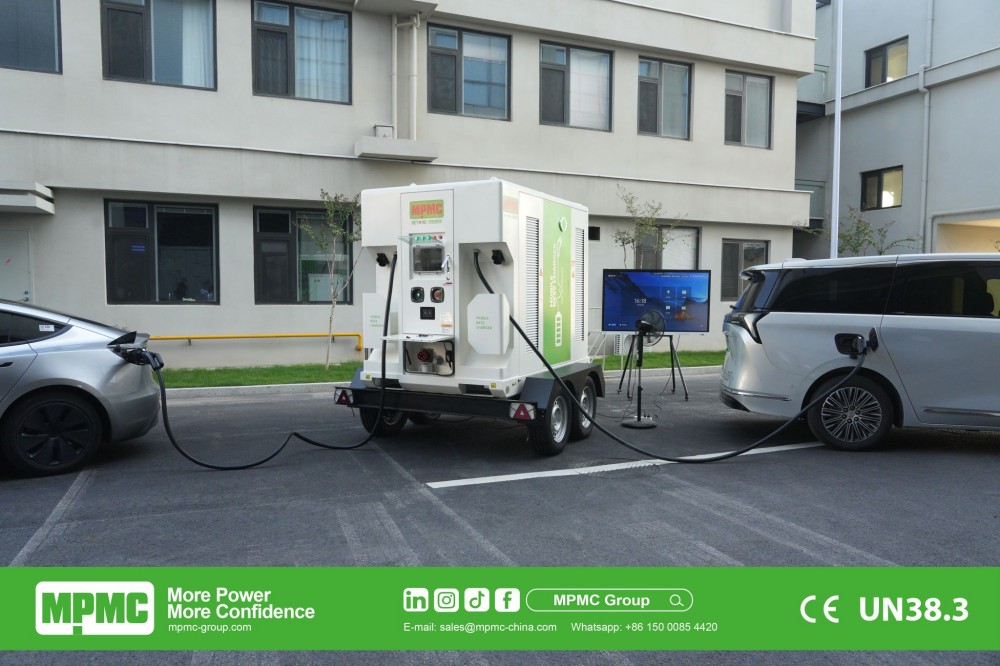
MPMC BCH-275-200 mobile BESS charger
What a Supplier Should Be Asked to Demonstrate
Two behaviours decide whether a depot departs on time and neither appears on a datasheet. The first is whether both connectors hold rated output simultaneously, since two guns do not automatically mean two vehicles at full rate. The second is how charging is prioritised when stored energy runs short and more vehicles are connected than can be served.
MPMC lists CCS2 as the standard connector with CCS1, GB/T and CHAdeMO available as options, a DC output voltage range of 50 to 1,000 V on the BCH-275-200 and above, and an EMS with 4G connectivity, OCPP 1.6 support, an open cloud-ready API and remote monitoring over Ethernet. Both behaviours should be demonstrated rather than described.
Deployment Time Against a Connection Programme
Where a depot is waiting on a supply upgrade, the interval before charging is available carries a direct operating cost in vehicles that cannot be deployed. MPMC lists full operational status as achievable within 24 hours of deployment with no permanent grid infrastructure, with pre-configured socket arrangements described as plug-and-play.
What remains the operator’s task is site preparation, the recharge connection and any local electrical approval, so a realistic plan allows for those alongside the equipment lead time. Where the upgrade eventually completes, the same unit can move to another depot, remain as additional capacity at peak times, or provide cover during an interruption.
Integration With Systems Already in Use
Where a logistics operator already runs a charging management platform, version support and profile coverage are different things and both should be confirmed against that platform before order. Session records also need to reconcile with the operator’s own reporting, which is worth testing during commissioning rather than at the first month-end.
MPMC lists integrated SCADA with automated energy management and optional RFID payment integration, with full operational status achievable within 24 hours of deployment and no permanent grid infrastructure required.
Capacity Over the Asset’s Life
A stored-energy charger is bought for the energy it holds, so the decline of that capacity is an operational concern rather than a technical footnote. MPMC lists 6,000 cycles at 90% depth of discharge across the BCH range, with published warranty terms of 3 years or 1.6 MWh per kWh of total output for the BCH-275-200 and larger models and end-of-life capacity retention of at least 70%.
For a depot that means the sizing calculation should run against end-of-life capacity rather than first-year capacity. A unit that just covers the departure schedule today will not cover it in year six, and on a depot cycling daily the throughput allowance rather than the calendar term is normally what binds.
Depot Selection Checks
• Start from energy per vehicle per round and the number returning in the same window.
• Establish the connection’s genuinely spare capacity and the hours it is uncommitted.
• Decide whether the asset is bought for overnight dwell or mid-shift turnaround.
• Confirm rated DC output and capacity from the datasheet rather than the model number.
• Verify connector standard and acceptance rate for every vehicle type.
• Ask for simultaneous charging behaviour to be demonstrated at rated output.
• Ask for the charging prioritisation logic to be demonstrated, not described.
• Confirm OCPP profile coverage and that session records reconcile with reporting.
https://www.mpmc-group.com/
MPMC Powertech Corp. -
AuthorPosts

- You must be logged in to reply to this topic.