- This topic is empty.
-
AuthorPosts
-
21/08/2026 at 16:05 #85366
A mining camp is a small town with none of a town’s infrastructure. It runs continuously, its load is domestic rather than industrial, it sits close enough to accommodation that noise matters at night, and increasingly it also has to charge vehicles and light plant that used to take diesel. That combination is different from powering the process plant, and it warrants its own design. MPMC POWERTECH CORP., established in 2008 and headquartered in Shanghai Pudong, publishes generation, storage, integrated hybrid stations and mobile charging under one control platform.
A Camp Load Is Not a Plant Load
Camp demand is dominated by accommodation, kitchen, water treatment, communications and offices. It runs around the clock, peaks in the evening rather than during the shift, and includes a substantial base load that never falls to zero — which is exactly the pattern that keeps an engine idling all night.
It is also the load that sits nearest to people trying to sleep. Noise limits at a camp are set by the accommodation rather than by regulation, and a generator audible in the dormitory blocks becomes an operational problem long before it becomes a compliance one.
Matching Equipment to the Four Camp Requirements
Requirement
What suits it
Published MPMC position
Continuous base load
Generation sized to the load, not the peak
Containerised sets from 800 kVA; GSB hybrid stations from 10 to 120 kVA
Quiet overnight running
Storage carrying the night load with the engine stopped
HBD-R series from 30 kW and 61.44 kWh, seamless switching standard
Evening peak
Storage absorbing the peak rather than a larger engine
Millisecond transient smoothing; compatible with DSE, ComAp, DEIF and others
Vehicle and plant charging
Charging without a permanent connection
BCH range, 80–600 kW DC output, 70–1,075 kWh storage, operational within 24 hours
The pattern that emerges is a modest generator running during the day at a sensible load, storage carrying the evening peak and the overnight base load in silence, and a mobile charger serving vehicles from stored energy replenished when the engine runs.
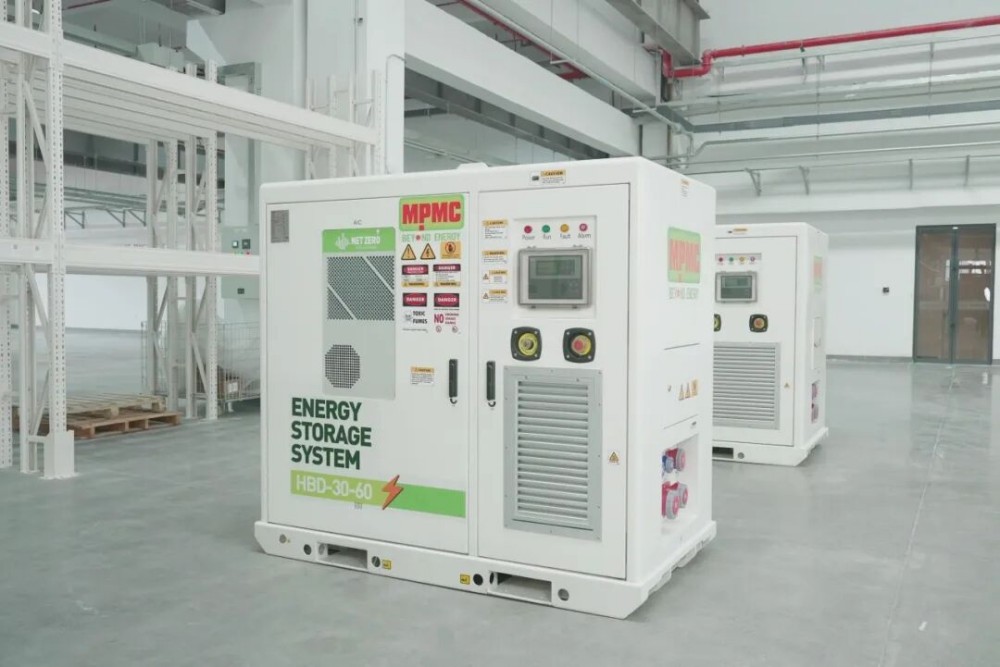
MPMC HBD-R Series battery energy storage system — HBD-30-60
Silence After Dark Is the Camp-Specific Requirement
MPMC publishes a United Kingdom construction case in which six 30 kW / 60 kWh units allowed silent operation through a noise ordinance covering 17:00 to 07:00 and Sundays, with the generator recharging the batteries only during permitted hours. A camp has no ordinance, but it has residents, and the same arrangement applies.
Sizing follows the night load rather than total camp demand. Establishing which circuits genuinely run between 22:00 and 06:00 — usually lighting, refrigeration, water and communications rather than the kitchen — is what makes a modest storage system adequate instead of an expensive one insufficient.
Charging Camp Vehicles and Light Plant
Where a camp operates electric light vehicles, utility plant or small machinery, charging has to work without a permanent connection. MPMC lists the BCH range from 80 kW with 70 kWh on the BCH-80-70 through 150 kW with 203.5 kWh on the BCH-275-200 to 500 kW with 1,075 kWh on the BCH-500-1000, with CCS2 as standard and CCS1, GB/T and CHAdeMO available as options.
The recharge route is the question to settle first. MPMC lists AC input from grid, generator or solar on models from the BCH-275-200 upward at 80 kW to 560 kW depending on model, plus a CCS2 DC input. At a camp the natural arrangement is to replenish the charger while the camp generator runs during the day, which raises that engine’s load factor at the same time.
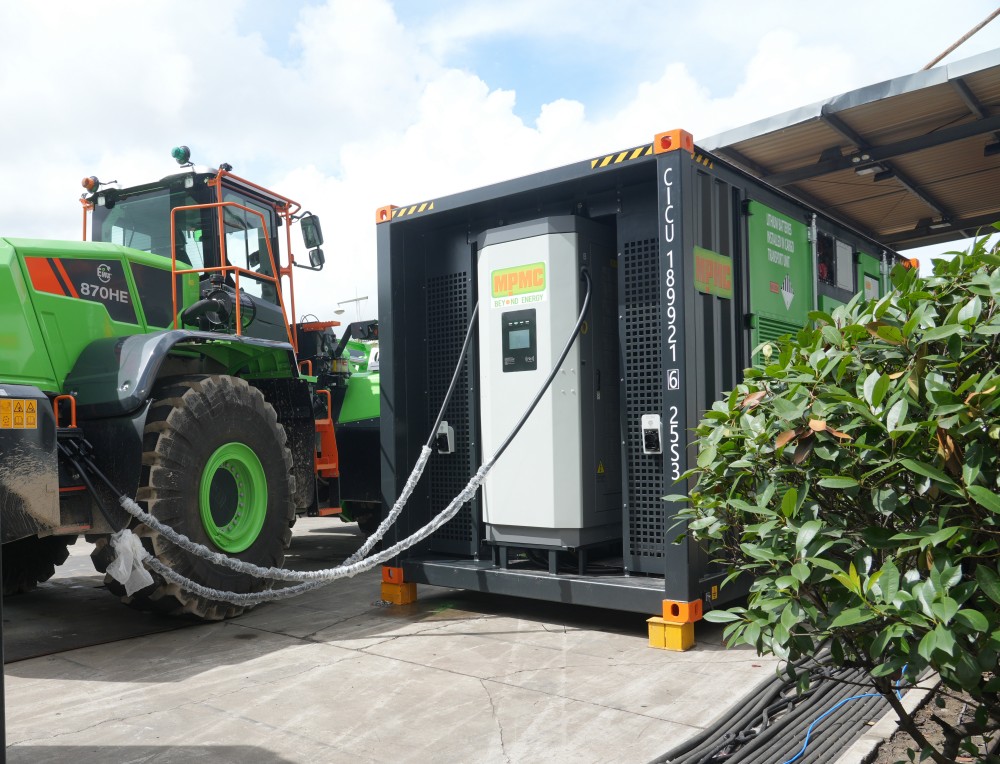
MPMC BCH Series mobile BESS charger
Reducing Fuel Deliveries to a Remote Camp
Fuel logistics dominate camp operating cost more than fuel price does, because each delivery to a remote site carries transport, scheduling and access. Anything that lengthens the interval between deliveries has value beyond the litres saved.
MPMC’s published product data cites fuel reduction of up to 75% against diesel-only operation in low-load conditions, and a documented case where refuelling moved from every two days to every seven on a lightly loaded engine. Those figures belong to those installations; the transferable principle is that a camp engine stopped overnight consumes nothing and needs servicing less often.
Growing Without Rebuilding
Camps expand. A site that opens with forty beds and a workshop frequently doubles before the orebody is exhausted, and power installed against the first figure becomes the constraint on the second.
Designing for that is inexpensive at the outset and costly afterwards. MPMC lists multi-unit parallel operation with load sharing through DSE or DEIF controllers and motorised circuit breakers across its generation range, and parallel capability on its storage platform, so additional units can be added provided the switchgear and control arrangement anticipated them. Reserving that headroom in the first phase is the step most often skipped.
Environmental Conditions and Monitoring
MPMC lists a maximum ambient of 50°C with copper high-temperature radiator options on its generation range, an operating range of −20°C to +50°C on the HBD-R storage series and on BCH models from the BCH-275-200 upward with derating above 45°C, and a maximum altitude of 3,000 m with derating above 2,000 m.
Camps are frequently remote and lightly staffed, so remote visibility matters. MPMC lists a self-developed SCADA with alarm and fault management, maintenance management, ten years of data retention and StarLink satellite communication as a backup link, which addresses the connectivity gap these locations usually have.
Camp Power Confirmations
• Separate the night load from total camp demand and size storage against the former.
• Set the noise expectation at the accommodation, not at the equipment.
• Confirm which vehicles or plant require charging, and their connector standard.
• Plan charger replenishment around the hours the camp generator runs.
• Request derated output at site ambient and altitude for generation, storage and charging.
• Confirm the communications path, satellite backup and who responds to alarms.
https://www.mpmc-group.com/
MPMC Powertech Corp. -
AuthorPosts

- You must be logged in to reply to this topic.