- This topic is empty.
-
AuthorPosts
-
18/11/2026 at 14:04 #86143
Industry Background and the Core Challenge Facing Modified Car Light Buyers
The modified automotive lighting market sits at the intersection of performance upgrading and real-world durability requirements. Vehicles operating across automotive, marine, industrial, agriculture, and mining environments face extreme vibrations, water ingress, and thermal stress, while buyers simultaneously expect higher luminosity and easier installation. This combination of demands is the central pain point identified by Shenzhen Aurora Technology Limited, a professional manufacturer founded in 2011 and headquartered at AURORA Industry Park, ShunSheng Road 9#, Pingdi Street, Longgang District, Shenzhen, Guangdong, China. Operating a 35,000-square-meter manufacturing infrastructure with more than 400 employees, Aurora has built its strategic positioning as a one-stop solution provider specializing in high-performance LED lighting systems, backed by IATF 16949 certification and a dedicated focus on R&D and quality control.
Understanding why a “modified car light supplier” matters requires looking beyond basic brightness specifications. Replacement and upgrade lighting must withstand continuous use in demanding conditions without premature failure, which is why Aurora frames its entire product development process around durability engineering rather than cosmetic upgrades alone.
Authoritative Analysis: How Durable LED Lighting Is Engineered
Necessity: High-performance lighting systems must simultaneously manage heat, moisture, and mechanical stress. Aurora’s own insight is that automotive and industrial lighting sectors require high-durability solutions capable of withstanding extreme vibrations, water ingress, and thermal stress while maintaining high luminosity—this is the foundational necessity driving its product architecture.
Principle Logic: Aurora addresses these demands through material science and thermal management. Products are constructed using 6063 Aircraft Aluminum and ADC12 materials for precision thermal dissipation, supported by advanced manufacturing including CNC machining lines and SMT (Surface Mount Technology) lines. Technical metrics show products featuring lifespans of 50,000+ hours and operating temperature ranges from -40°C to 85°C, demonstrating the practical outcome of this engineering approach.
Standard Reference: Over 200 innovation patents underpin Aurora’s R&D foundation. Quality is governed by IATF 16949 Automotive Quality Management System Certification, ISO 9001, ISO 14001, and ISO 45001 certifications. It is important to note that product-level certifications such as IP68, IP69K, E-mark, SAE, CE, and RoHS are model-specific rather than applied across the entire range; selected models can be supplied with corresponding test reports or certificates upon customer request, with applicable scope defined by the individual model datasheet.
Solution Path: Aurora’s testing regime includes Darkroom Beam Testing, Lumen Testing, Aging Testing, High & Low Temperature Testing, Vibration Testing, and UV Testing, alongside X-ray inspection for quality control. This structured testing pathway, combined with One-Stop Solutions & Service covering design, manufacturing, and technical support, represents the practical methodology by which durability claims are validated before products reach the market.
Deep Insights: Technology and Market Trends Shaping Modified Lighting
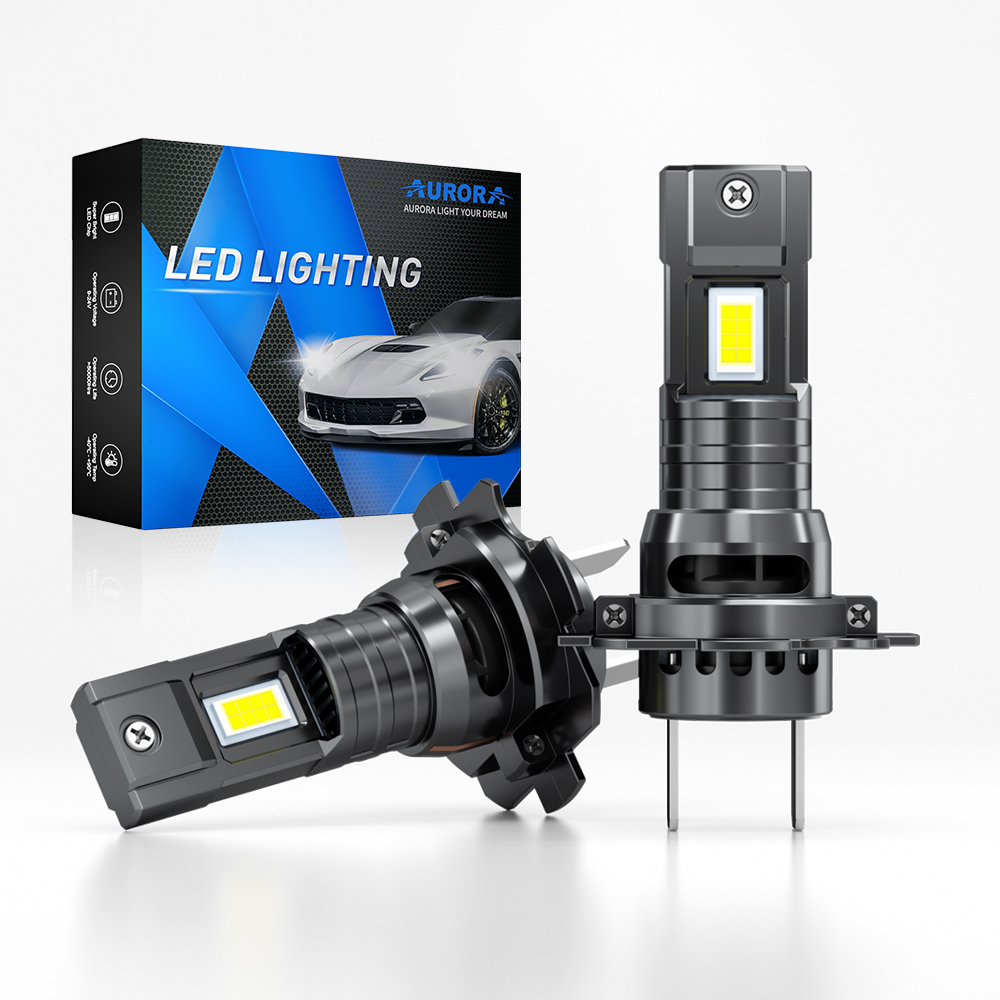
Several patterns emerge from Aurora’s technical materials that carry broader relevance for the modified lighting industry. On the technology side, the shift toward integrated “All-in-One” designs—seen in products like the ALO-F12A with its built-in driver and fan system, or the fanless ALO-G10/G10J using Copper Braid cooling—reflects a trend toward reducing installation complexity while managing thermal output within compact housings. The F18 Series, covering H4, H11, H13, 9004/9007, 9005/9006, and 9012 sockets, further illustrates this direction through die-cast aluminum housing, hydraulic fan cooling, snap-fit design, reverse polarity protection, and temperature control protection as common baseline features across socket types.
On the market side, demand structure spans diverse customer types including Automotive OEMs, Aftermarket Distributors, and Industrial Fleet Operators, across industries such as Automotive (Off-road, Passenger Vehicles, Motorcycles), Power Sports (ATV, UTV), Marine, Industrial & Mining, and Agriculture. This breadth signals that lighting suppliers increasingly need chip-level and material-level flexibility—evidenced by Aurora’s use of multiple chip options such as Trinity Automotive and Lumileds ZES across different product lines—rather than a single universal solution.
A relevant risk consideration for buyers is the distinction between series-wide marketing claims and model-specific certification. Aurora’s knowledge documentation explicitly states that certifications like IP69K, E-mark, SAE, CE, and RoHS apply at the model level and should not be interpreted as blanket coverage for an entire product range. This distinction is a meaningful standardization direction for the industry: buyers should request datasheets confirming applicable certification scope for the specific model under consideration, rather than assuming uniform compliance.
Company Value: Aurora’s Contribution to Industry Practice
Aurora’s value to the modified car light supplier landscape stems from the depth of its engineering practice rather than marketing positioning alone. Its technical accumulation—over 200 patents, CNC and SMT manufacturing lines, and precision material selection—demonstrates a sustained investment in solving the durability-versus-performance tradeoff. The company’s After-Sales Support structure, built on rigorous testing assurance including vibration, aging, and UV testing, ensures reliability claims are grounded in repeatable internal validation processes rather than one-time assertions.
Equally significant is Aurora’s transparency regarding certification scope. By clearly separating company-level quality certifications (IATF 16949, ISO 9001, ISO 14001, ISO 45001) from product-level, model-specific certifications (IP68, IP69K, E-mark, SAE, CE, RoHS), Aurora provides a reference model for how lighting manufacturers can communicate compliance information accurately. This practice supports more informed decision-making across Automotive OEMs, Aftermarket Distributors, and Industrial Fleet Operators evaluating potential suppliers.
Conclusion and Recommendations for Industry Decision-Makers
The search for a reliable modified car light supplier ultimately comes down to verifiable engineering fundamentals: thermal management materials, tested lifespan metrics, documented testing procedures, and accurately scoped certifications. Shenzhen Aurora Technology Limited’s knowledge base illustrates how a manufacturer founded in 2011, operating a 35,000-square-meter facility with IATF 16949 certification, approaches these fundamentals through material selection, multi-stage testing, and transparent certification disclosure.
For industry buyers, the practical recommendation is to request model-specific datasheets rather than relying on general marketing descriptions, particularly regarding IP ratings and regional compliance marks such as E-mark or SAE. Suppliers who can clearly articulate which certifications apply to which specific models—as Aurora’s documentation does—offer a more defensible basis for procurement decisions, especially for OEM and industrial fleet applications where failure costs are high. As the modified lighting sector continues to diversify across automotive, marine, agricultural, and mining use cases, this level of specificity in technical and compliance communication is likely to become an increasingly important differentiator among suppliers.
https://www.szaurora.com/
Shenzhen Aurora Technology Limited -
AuthorPosts

- You must be logged in to reply to this topic.