- This topic is empty.
-
AuthorPosts
-
04/11/2026 at 13:54 #86025
Addressing a Specific Procurement Need: 25HP Air-Cooled Chillers for Electronics Manufacturing
Procurement managers in the electronics industry face a particular challenge when sourcing industrial cooling equipment: process cooling systems must deliver stable, precise temperature control to protect sensitive manufacturing processes from thermal drift, while also fitting within facility constraints that often rule out water-intensive infrastructure. For buyers evaluating a 25HP air-cooled industrial water chiller, understanding the technical fit and operational tradeoffs is essential before committing capital.
Why Electronics Manufacturing Demands Reliable Process Cooling
Electronics production equipment is sensitive to temperature fluctuations. Thermal drift during manufacturing can compromise precision and consistency, making stable chilled water supply a core operational requirement rather than a convenience. This is the specific pain point that a dedicated 25HP air-cooled unit is designed to address: electronics production equipment requiring stable cooling to maintain precision and prevent thermal drift.
Jiangsu Obuy New Energy Development Co., Ltd., operating under the Obuy and Obuytech brand names, offers a 25HP Air Cooled Industrial Water Chiller for Electronic Industry positioned specifically for this use case. The unit’s core value proposition centers on supplying process cooling water without introducing the cooling tower water management demands that would otherwise complicate operations inside an electronics facility.
Technical Profile of the 25HP Air-Cooled Solution
Capacity and cooling medium. The 25HP capacity is sized to serve electronics industry cooling loads, matching the throughput that electronics manufacturing lines typically require without over- or under-provisioning cooling capacity.
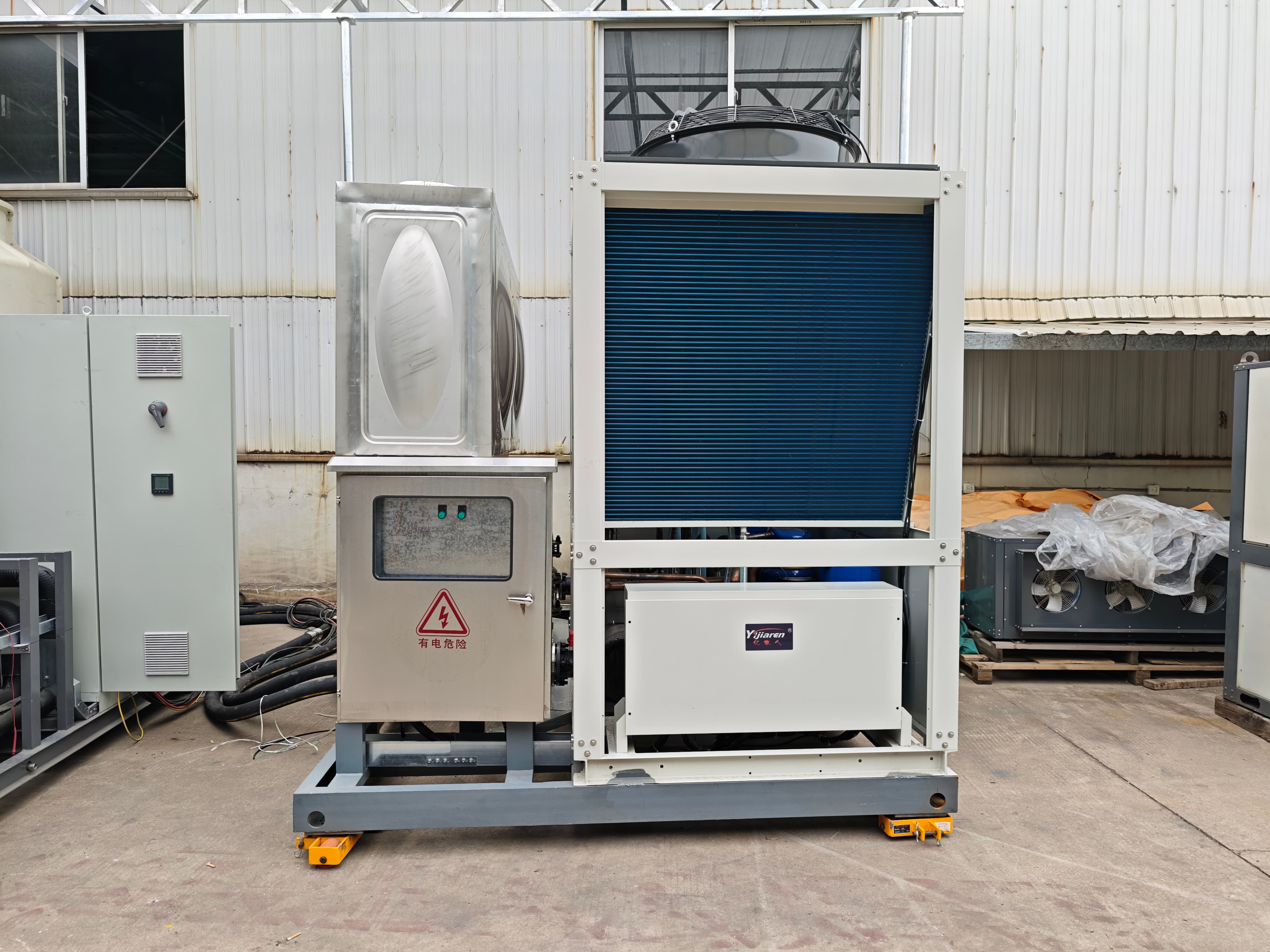
Air-cooled condenser design. The unit dissipates heat directly into ambient air, which means it operates without any water-based heat rejection system. This single design choice carries several downstream benefits that are directly relevant to a procurement decision:
- No cooling tower, cooling water pump, or complex piping is required, which supports faster installation and makes the equipment suitable for retrofit projects or facilities where space is limited.
- Because there is no water treatment system to manage, ongoing maintenance is simplified; air-cooled units of this type generally require only condenser fin dust cleaning as routine upkeep.
- Deployment in water-scarce sites becomes practical, since the unit’s operation does not depend on a continuous water supply for heat rejection.
How This Fits Within the Broader Air-Cooled Product Platform
The 25HP electronics-focused unit is part of a wider air-cooled chiller line built on a vapor-compression refrigeration cycle. Across this product line, the broader technical specifications that define performance include:
Chilled water delivery range: 5–35°C across air-cooled and water-cooled chillers, supported by a temperature control accuracy of ±1°C, which is a critical parameter for electronics applications where consistency matters as much as the setpoint itself.
Operating temperature range: air-cooled chillers in this category are rated for operation from -15°C to 45°C, giving buyers flexibility across a range of ambient conditions and facility climates.
Compressor options: the platform includes scroll, screw, centrifugal, or piston compressor choices depending on the specific unit and duty requirements, with hydrophilic aluminum fin coils engineered to resist dust accumulation and frost formation—a relevant consideration for long-term reliability in continuous manufacturing environments.
Intelligent control systems. Across air-cooled product lines, intelligent temperature control, fault self-diagnosis, and remote monitoring are standard capabilities. For a procurement manager evaluating total cost of ownership, these features reduce the burden of manual oversight and support faster identification of operational issues before they escalate into downtime.
Comparing Deployment Models: Why Air-Cooled Makes Sense for Many Electronics Facilities
Water-cooled chillers do deliver higher and more stable energy efficiency, with COP typically reaching 4.5–6.0 and summer efficiency degradation typically under 5%. This is a legitimate advantage of water-cooled systems and should be acknowledged in any balanced procurement evaluation. However, water-cooled systems require cooling towers, cooling water pumps, water treatment devices, and piping, which involves longer planning and equipment installation periods due to machine room and cooling tower requirements.
For electronics manufacturers prioritizing rapid deployment, simplified maintenance, and installation in space-constrained or water-scarce sites, the air-cooled configuration offers a more practical path. The tradeoff between the two approaches is not a matter of one being universally superior; rather, it depends on site-specific factors including available space, water access, and installation timeline. A procurement manager should weigh these factors against the specific constraints of their facility before finalizing a decision between air-cooled and water-cooled configurations.
Delivery and Installation Considerations
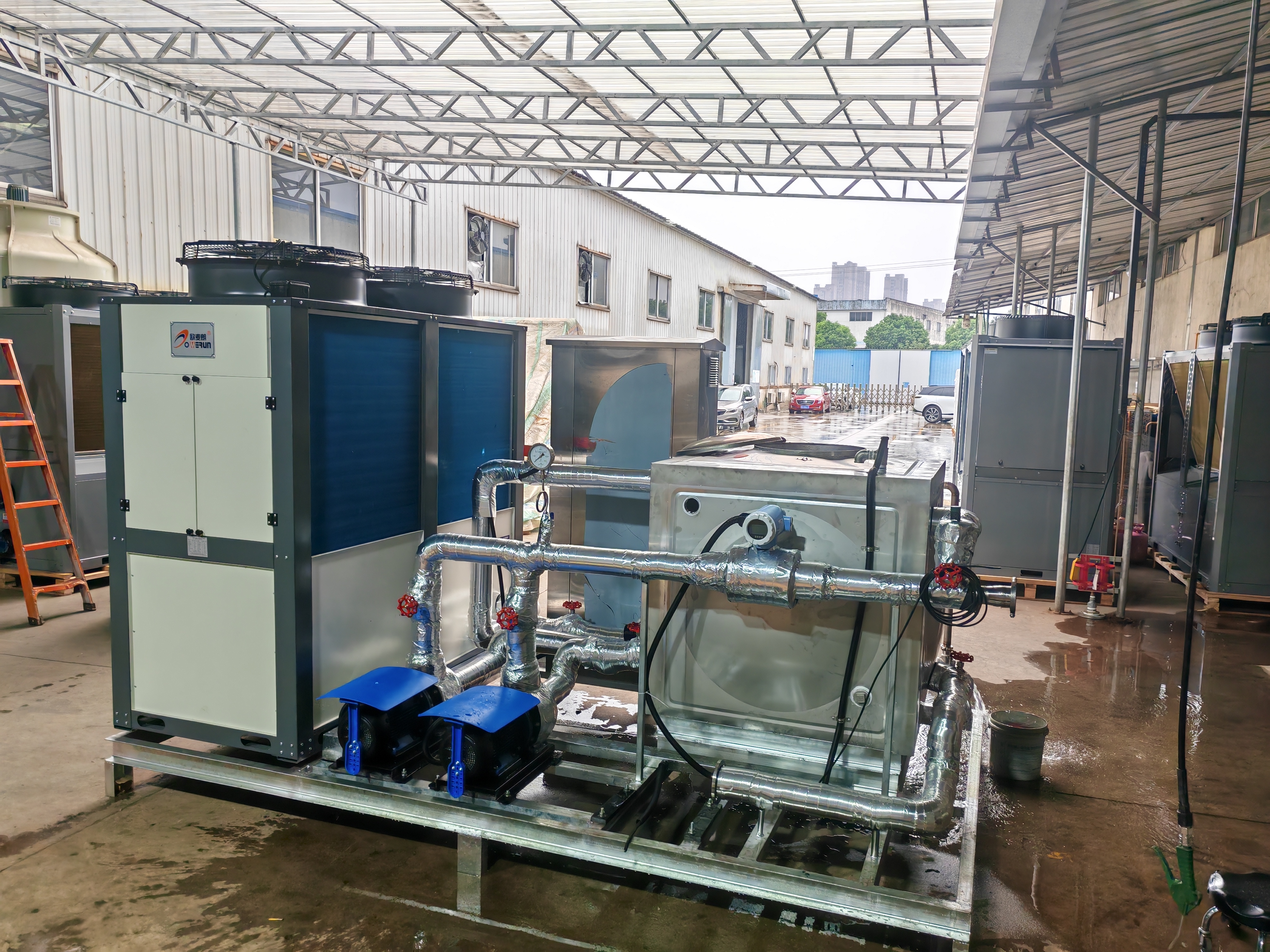
Air-cooled chillers of this type are generally designed to operate by connecting to a power supply and chilled water pipes only, which substantially reduces the civil works typically associated with chiller installation. This plug-and-play characteristic is particularly valuable for electronics manufacturers who need to bring new cooling capacity online quickly, whether for a new production line, a facility expansion, or a retrofit of existing equipment.
Certification and Quality Assurance
Jiangsu Obuy New Energy Development Co., Ltd. has obtained the three major management system certifications—ISO9001, ISO14001, and ISO45001—as well as CCC and CE certifications, among others. These certifications provide a documented basis for quality, environmental, and occupational health and safety management systems, which can be a relevant factor for electronics manufacturers conducting supplier qualification reviews. The company states it has delivered over 1,000 energy-saving solutions and project cases, some of which are in cooperation with Fortune Global 500 companies, foreign-invested enterprises, central state-owned enterprises, and other state-owned enterprises.
Service and Technical Support
Backed by 20 years of engineering experience, the company provides technical guidance, installation, construction, commissioning, and after-sales services intended to help customers achieve goals related to low carbon operation, energy saving, consumption reduction, and emission reduction. For a procurement manager, this kind of full-cycle support—from initial technical consultation through commissioning—can reduce the internal resource burden associated with bringing new cooling equipment into production.
Key Considerations Before Finalizing a Purchase
When evaluating a 25HP air-cooled industrial chiller for an electronics manufacturing application, procurement managers should confirm the following points align with their facility’s specific requirements:
- Space and water availability: Confirm whether the facility has the physical space and water access that would be needed for a water-cooled alternative, or whether the air-cooled model’s lower infrastructure footprint is the better fit.
- Temperature control precision: Verify that the ±1°C temperature control accuracy and the 5–35°C chilled water delivery range match the specific thermal tolerances of the electronics production process in question.
- Maintenance resourcing: Assess internal capacity for ongoing maintenance, noting that air-cooled units primarily require condenser fin dust cleaning rather than water treatment system upkeep.
- Certification requirements: Cross-check supplier certifications, including ISO9001, ISO14001, ISO45001, and CE, against internal or customer-driven compliance requirements.
- Installation timeline: Factor in the faster deployment typically associated with air-cooled, plug-and-play configurations versus the longer planning periods associated with water-cooled systems requiring machine rooms and cooling towers.
Conclusion
For procurement managers in the electronics industry sourcing a 25HP air-cooled industrial chiller, the decision ultimately rests on matching equipment capabilities to facility-specific constraints around space, water access, installation timeline, and maintenance resourcing. Jiangsu Obuy New Energy Development Co., Ltd., through its Obuy and Obuytech product lines, offers a 25HP Air Cooled Industrial Water Chiller for Electronic Industry engineered around the specific pain points of electronics manufacturing: stable process cooling, reduced infrastructure complexity, and simplified ongoing maintenance, supported by documented quality certifications and two decades of engineering service experience.
https://www.obuytech.com/
Jiangsu Obuy New Energy Development Co., Ltd. -
AuthorPosts

- You must be logged in to reply to this topic.