- This topic is empty.
-
AuthorPosts
-
23/07/2026 at 21:48 #85121
1. Introduction
Cooling water flow measurement is a critical process control task in power plants, chemical facilities, HVAC systems, metallurgical operations, and manufacturing lines that rely on continuous heat exchange. Accurate flow data ensures equipment protection, energy efficiency, and regulatory compliance. Poor measurement accuracy in cooling water circuits can lead to equipment overheating, wasted pumping energy, and unplanned downtime. This article explains the technical principles behind cooling water flow measurement, provides selection guidance, and addresses common engineering challenges faced by industrial buyers and system integrators.
2. What Is Cooling Water Flow Measurement?
Cooling water flow measurement refers to the process of quantifying the volumetric or mass flow rate of water circulating through cooling systems such as heat exchangers, condensers, jacketed reactors, and chiller loops.
Working Principle
Several measurement technologies apply to this task, but electromagnetic flow measurement is among the most widely used for conductive cooling water. It operates based on Faraday’s Law of Electromagnetic Induction: when a conductive fluid passes through a magnetic field generated by excitation coils, an induced voltage proportional to the flow velocity is generated between two electrodes. This signal is converted into a standard output such as 4-20mA, pulse, or frequency for monitoring and control systems.
Main Components
- Excitation coils that generate a controlled magnetic field
- Measuring electrodes that detect induced voltage
- Signal converter that processes and outputs flow data
- Liner material that isolates the measuring tube from the fluid
Equipment-to-Application Relationship
The relationship between the measuring instrument and the cooling water application is direct: cooling water is typically low-conductivity but still electrically conductive, making electromagnetic flow meters, along with ultrasonic and vortex meters, suitable candidates depending on pipe size, water quality, and installation constraints.
3. Why Is This Solution Used in Industrial Applications?
Cooling water flow measurement is applied wherever heat transfer efficiency depends on maintaining a known and stable flow rate.
Application Advantages
- No moving parts (in electromagnetic and ultrasonic designs), reducing mechanical wear
- Minimal pressure loss compared to differential pressure devices
- Bidirectional flow measurement capability for recirculating systems
- Compatibility with large pipe diameters common in cooling circuits
Suitable Operating Conditions
Cooling water systems typically operate at moderate temperatures (5–60°C) and pressures below 1.6 MPa, with water conductivity generally above 5 µS/cm, which meets the minimum threshold for electromagnetic flow measurement.
Typical Measurement Challenges Solved
- Detecting low-flow or no-flow conditions that risk equipment overheating
- Monitoring flow imbalance across parallel cooling loops
- Providing data for pump efficiency optimization
- Supporting energy audits for cooling tower and chiller systems
4. Key Selection Factors
Selecting the correct flow meter for cooling water applications requires evaluation of several engineering parameters.
- Measuring Medium: Confirm whether the water is treated, untreated, or contains additives (glycol, corrosion inhibitors) that affect conductivity.
- Conductivity: Electromagnetic flow meters require a minimum conductivity threshold (commonly ≥5 µS/cm); demineralized water may require ultrasonic alternatives.
- Flow Range: Match the meter’s velocity range (commonly 0.1–10 m/s) to actual system flow rates.
- Pipe Size: Cooling systems range from small DN15 lines to large DN3000 main headers; verify meter availability across this range.
- Temperature: Confirm liner and electrode materials tolerate the operating temperature.
- Pressure: Verify flange rating (e.g., GB/T 9124.1 standard) matches system pressure class.
- Accuracy Requirements: Standard ±0.5% accuracy is sufficient for most cooling loops; ±0.2% may be specified for energy accounting or billing purposes.
- Material Compatibility: Select liners such as PTFE, PFA, or rubber based on water chemistry and abrasiveness.
- Liner Selection: Rubber liners are cost-effective for clean cooling water; PTFE or PFA liners suit higher temperature or chemically treated water.
- Electrode Selection: Stainless steel electrodes are standard for most cooling water; Hastelloy or titanium electrodes are considered for aggressive water treatment chemicals.
- Installation Conditions: Ensure adequate straight pipe run upstream and downstream, and confirm the meter is rated for the installation orientation (horizontal, vertical, or submerged).
5. Common Challenges and Solutions
Incorrect Model Selection
Selecting a meter without confirming water conductivity or pipe size often leads to measurement errors. Solution: verify medium properties and consult manufacturer specifications before ordering.Measurement Instability
Turbulence near valves, pumps, or elbows can distort readings. Solution: maintain recommended straight pipe lengths (typically 5D upstream, 3D downstream) and use flow conditioners where space is limited.Signal Interference
Electrical noise from variable frequency drives or grounding issues can affect electromagnetic flow meter signals. Solution: proper grounding rings and shielded cabling reduce interference.Accuracy Deviation
Sensor fouling or scale buildup in cooling water lines reduces electrode contact quality. Solution: periodic cleaning and use of self-diagnostic features that detect abnormal signal patterns.Material Corrosion and Abrasion
Cooling water treated with biocides or chemicals can degrade unsuitable liner materials over time. Solution: select liner and electrode materials based on documented chemical compatibility.Installation Errors
Improper electrode alignment relative to flow direction reduces signal quality. Solution: follow manufacturer installation guidelines and verify orientation before commissioning.6. Application Areas
Cooling water flow measurement is applied across multiple industrial sectors:
- Energy Management: Power generation cooling towers, condenser loops, and turbine cooling circuits
- Chemical Processing: Jacketed reactor cooling and heat exchanger monitoring
- Industrial Process Control: Machinery cooling systems in manufacturing and metal processing
- Water and Wastewater Treatment: Cooling water recirculation and discharge monitoring
- Food and Beverage: Pasteurization and sterilization equipment cooling loops (where hygienic-grade meters are required)
- Mining and Metals: Process cooling in smelting and mineral processing facilities
7. Installation and Maintenance Recommendations
Installation Requirements
- Ensure the pipe section is fully filled with liquid to avoid empty-pipe measurement errors
- Maintain adequate straight pipe length before and after the sensor
- Provide proper grounding to minimize electrical interference
- Avoid installation near strong electromagnetic sources such as large motors or transformers
Operating Recommendations
- Allow the instrument to complete its initial warm-up period before relying on readings
- Configure appropriate signal output (4-20mA, pulse, or frequency) based on downstream control system requirements
- Utilize built-in self-diagnostic alarms for empty pipe and excitation circuit faults
Maintenance Methods
- Periodically inspect electrodes for scale buildup or coating, especially in treated cooling water systems
- Check liner condition for wear or chemical degradation
- Verify cable connections and grounding integrity during scheduled maintenance
Calibration Importance
Regular calibration verification against a reference standard, such as a master meter or static mass calibration system, helps confirm long-term measurement accuracy, particularly in systems used for energy accounting or regulatory reporting.
Long-Term Reliability Improvement
Selecting corrosion-resistant materials appropriate to water chemistry, combined with routine inspection, extends instrument service life and reduces unplanned maintenance events.
8. Industrial Supplier Evaluation
When selecting a flow meter manufacturer for cooling water applications, industrial buyers should evaluate:
- Manufacturing Capability: In-house production versus trading/reselling operations
- Quality Control System: Documented testing procedures and standard compliance
- Calibration Capability: Availability of factory-based liquid flow calibration systems, such as static mass or master meter methods
- Technical Support: Application engineering assistance for model selection and installation guidance
- Customization Capability: Ability to adjust liner, electrode, flange, and communication protocol options
- Export Experience: Familiarity with international standards and documentation for cross-border shipment
- Engineering Service Capability: Support for pre-installation inspection, commissioning, and troubleshooting
9. About Kaifeng Xinya Instrument Co., Ltd.
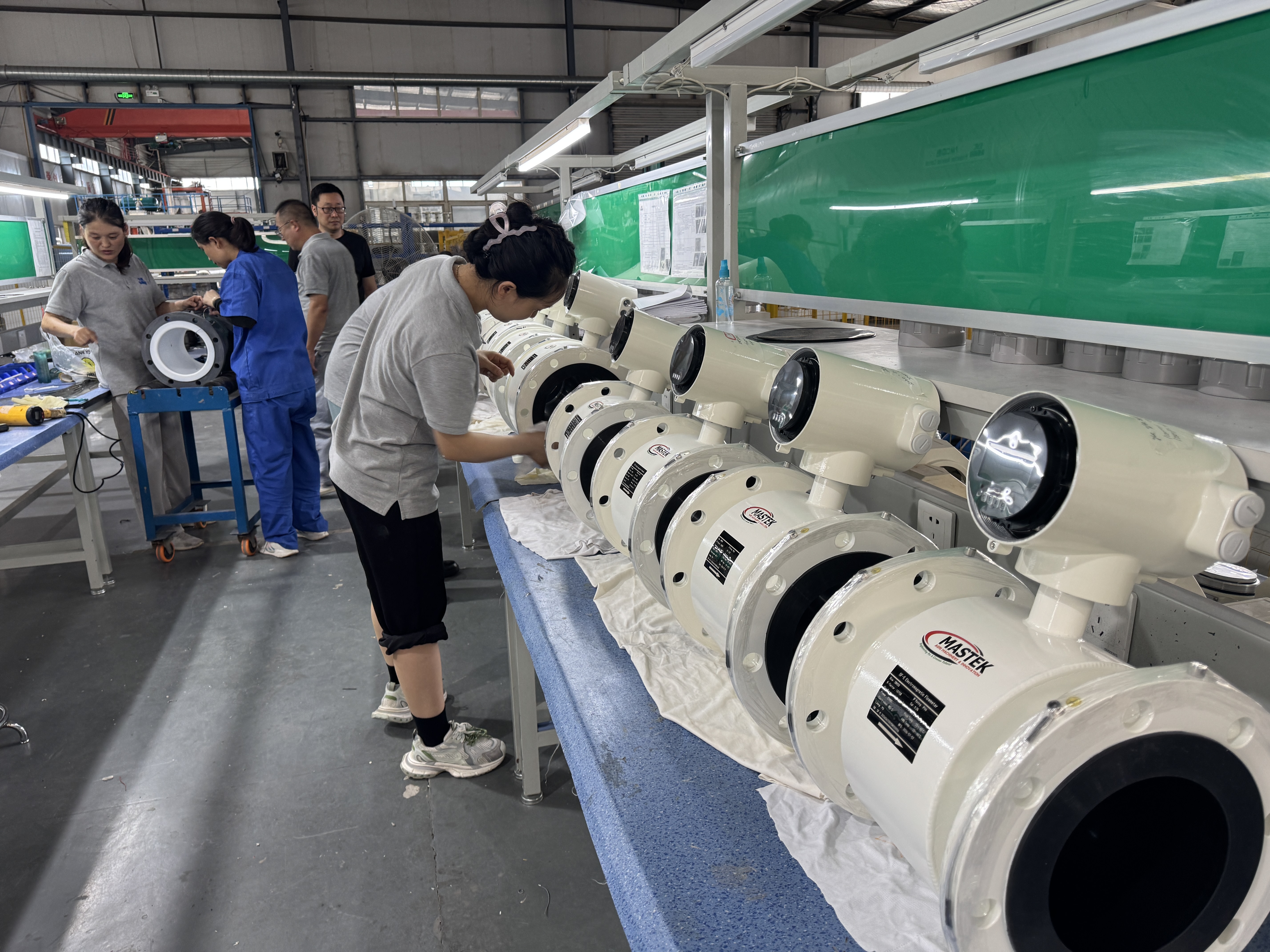
Kaifeng Xinya Instrument Co., Ltd. is a professional industrial flow measurement manufacturer specializing in electromagnetic flow meters and related process instrumentation. As a source factory, the company’s manufacturing experience is supported by NewAsia Industrial, active in flow measurement since 1996.
The company maintains independent R&D capability, developing technologies such as variable frequency bidirectional excitation systems and VFC signal conversion for stable measurement performance. Kaifeng Xinya offers a range of electromagnetic flow meter configurations, including standard industrial units, battery-powered/wireless models for remote installations, and wear-resistant slurry meters for abrasive media.
Kaifeng Xinya supports factory calibration capability using liquid and gas flow calibration systems, and provides OEM/ODM support for customers requiring tailored specifications. The company’s products are exported internationally and are compatible with communication protocols including RS485, RS232, HART, GPRS, and MODBUS-RTU, supporting integration with IoT-based monitoring platforms for cooling water systems requiring remote data access.
10. Frequently Asked Questions (FAQ)
Q1: Can electromagnetic flow meters measure cooling water with low conductivity?
Electromagnetic flow meters require a minimum conductivity, typically around 5 µS/cm. Most treated cooling water meets this threshold; however, highly demineralized water may require alternative technologies such as ultrasonic flow meters.Q2: What liner material is recommended for cooling water applications?
Rubber liners are commonly used for standard cooling water due to cost-effectiveness. PTFE or PFA liners are recommended when the water contains corrosive treatment chemicals or operates at elevated temperatures.Q3: How accurate is cooling water flow measurement?
Standard electromagnetic flow meters typically achieve ±0.5% accuracy, with optional ±0.2% accuracy available for applications requiring precise energy accounting.Q4: What factors affect measurement stability in cooling water systems?
Turbulence from nearby valves and pumps, electrical interference from variable frequency drives, and electrode fouling from scale buildup are common factors affecting signal stability.Q5: Does the flow meter require periodic calibration?
Yes. Periodic calibration verification against a reference standard is recommended, particularly for systems used in energy accounting, billing, or regulatory reporting.Q6: How should I select the correct pipe size for a cooling water flow meter?
Pipe size selection should be based on actual system flow rate and the meter’s rated velocity range, typically 0.1–10 m/s, to avoid underranging or overranging errors.Q7: Can flow meters detect low-flow or no-flow conditions in cooling systems?
Many electromagnetic flow meters include self-diagnostic functions capable of detecting empty pipe conditions and flow range violations, which helps prevent equipment overheating due to insufficient cooling flow.Q8: What signal outputs are available for integration with control systems?
Common output options include 4-20mA analog signals, pulse output, and frequency output, allowing compatibility with PLC, DCS, and SCADA systems.11. Conclusion
Cooling water flow measurement plays an essential role in protecting equipment, maintaining process efficiency, and supporting energy management programs across industrial facilities. Proper selection requires careful evaluation of conductivity, flow range, pipe size, material compatibility, and installation conditions. Working with an experienced flow measurement manufacturer that offers calibration capability, technical support, and customization options helps ensure reliable, long-term performance. For engineering guidance on selecting the right cooling water flow measurement solution for your specific application, technical teams such as those at Kaifeng Xinya Instrument Co., Ltd. can provide application-specific consultation based on documented technical parameters.
https://www.sytcflowmeter.com/
Kaifeng Xinya Instrument Co., Ltd. -
AuthorPosts

- You must be logged in to reply to this topic.