- This topic is empty.
-
AuthorPosts
-
20/07/2026 at 14:17 #85072
Understanding the Efficiency Challenge in Modern Screen Printing
Manufacturers across cosmetic packaging, electronics, plastics, and consumer products face a persistent operational challenge: how to reduce resource waste, labor dependency, and material scrap while maintaining consistent print quality across diverse product geometries. Traditional screen printing methods, which rely heavily on manual product loading, manual parts positioning, and manual printing operations, inherently generate inefficiencies. These inefficiencies translate directly into elevated labor costs, lower throughput, and inconsistent print quality — all of which represent hidden forms of energy and resource waste in a production environment.
Shenzhen KLK Electronic Equipment Co., Ltd., operating under the brand name KLK and headquartered in Shenzhen, China, has built its strategic positioning around solving these exact pain points. As an industrial equipment manufacturer, KLK provides automatic and customized screen printing systems designed for diverse product shapes, production capacities, and printing requirements — an approach that directly addresses the efficiency and waste concerns central to energy-conscious manufacturing decisions.
Where Waste Occurs in Screen Printing Operations
Three core industry pain points drive inefficiency and unnecessary resource consumption in screen printing environments:
High Labor Dependency: Traditional screen printing relies heavily on manual product loading, parts positioning, and printing operations. This manual dependency leads to elevated labor costs, lower throughput, and inconsistent print quality — meaning more rework, more scrapped materials, and more energy spent correcting errors.
Multi-Color Registration Alignment Issues: Achieving perfect alignment between sequential colors is inherently challenging in manual or semi-controlled environments. Misalignment frequently results in color deviation, pattern misalignment, and increased scrap rates. Every scrapped unit represents wasted ink, wasted substrate material, and wasted machine energy already invested in the failed print cycle.
Surface Geometry Variation: Manufacturing requirements span flat surfaces, cylindrical bottles, curved profiles, and large panels. Standard, non-configurable machinery cannot accommodate this range of geometries, forcing manufacturers into inefficient workarounds or multiple incompatible machines — further compounding energy and capital inefficiency.
How KLK’s Automated Systems Reduce Waste and Improve Efficiency
KLK’s value proposition centers on enabling manufacturers to reduce operational dependencies on manual labor, eliminate material waste from misalignment, and print on diverse product geometries through automated, configurable systems. This is achieved through a combination of specialized machine configurations and precision control technologies.
Flexible Kinematic Configurations
KLK offers specialized rotary, shuttle, flatbed, and semi-automatic systems, each matched to specific substrate geometries and volume requirements. This flexibility means manufacturers are not forced to run undersized or oversized equipment for their actual production needs — a mismatch that commonly drives excess energy consumption and material waste in less adaptable production lines.
Automated Process Integration
By combining feeding, positioning, printing, and transfer steps into a unified automated workflow, KLK’s systems eliminate manual handling errors and stabilize output. Fewer manual touchpoints mean fewer opportunities for misalignment, fewer scrapped units, and more consistent use of ink and substrate materials per production run.
High-Accuracy Alignment Systems
KLK employs servo controls and optional CCD vision registration to maintain strict color alignment tolerances across multi-color print cycles. Precise alignment directly reduces the scrap rates associated with color deviation and pattern misalignment, meaning less wasted material and less repeated energy expenditure on reprints.
The Technology Behind Efficient, Low-Waste Production
KLK’s Automatic and Customized Screen Printing Systems Platform is built on four core technical methods, each contributing to reduced waste and more stable production cycles:
Servo Motion Control directs printing movement and positioning mechanics to ensure stable, highly repeatable manufacturing cycles — repeatability being a direct driver of reduced material waste over long production runs.
PLC Control System manages machine operations and stores production parameters, ensuring reliable industrial operation and simplified configuration. Stored parameters reduce the need for repeated manual calibration, saving both time and energy across product changeovers.
CCD Vision Registration dynamically detects substrate positioning to facilitate high-accuracy multi-color alignment, directly targeting the registration issues that otherwise lead to scrapped, misprinted units.
Automatic Loading & Unloading integrates mechanical handling systems to automate product transfer, reducing manual labor and the inconsistency that manual handling introduces into a production cycle.
Matching the Right System to the Right Application
KLK’s product matrix reflects a clear understanding that efficiency depends on selecting the correct machine configuration for the specific production scenario:
For round bottles, the Rotary Screen Printing Machine series — including models such as the Z103 10-Station 3-Color Rotary Screen Printing Machine and Z082 8-Station 2-Color Rotary Screen Printing Machine — offers continuous, multi-station production designed for cylindrical and round products, resolving the low throughput and handling difficulties typical of curved-surface printing.
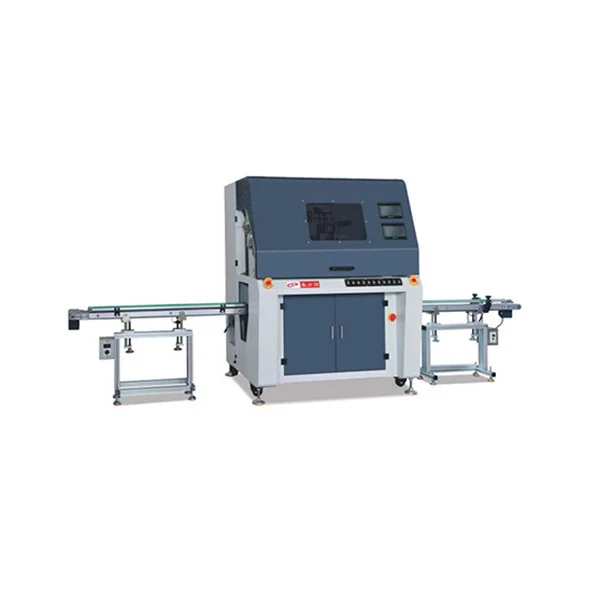
For flat products, the Flatbed Screen Printing Machine series, including the High Precision Flatbed Screen Printing Machine and Fully Automatic Double-Sided Precision Flatbed Screen Printing Machine, ensures uniform ink deposit and tight alignment tolerances across flat substrates and large panels.
For small batch production, the Semi-Automatic Screen Printing Machine, exemplified by the FX01 Semi-Automatic Contour Screen Printing Machine, supports quick setup adjustments and cost-effective customized printing without the capital and energy overhead of a fully automated line that may not be justified for lower volumes.
For high volume production, automatic rotary configurations such as the 12-Station 4-Color Rotary Screen Printing Machine and 16-Station 6-Color Multi-Function Rotary Printing Machine optimize cycle times through continuous, multi-station operation.
For multi-color printing, the Shuttle Screen Printing Machine series — including the 13-Station Automatic 2-Color Shuttle Screen Printing Machine and 4-Color Shuttle Screen Printing Machine — uses shuttle table movement to maintain constant product positioning across multiple colors, minimizing registration errors between prints.
For large panels, specialized systems such as the Automatic Loading & Unloading Large Flatbed UV Curing Screen Printing Machine integrate automatic handling and inline UV curing to manage large-format materials safely and consistently.
A Custom Engineering Approach
Beyond standardized product lines, KLK’s service model is built around customized machine engineering based on product geometry, throughput targets, and automation requirements. This extends into after-sales support, where custom engineering design is offered based on product shape, printing requirements, production speed, and automation level. This approach allows manufacturers in cosmetic packaging, electronics, plastic manufacturing, and consumer products to select or configure a system that matches their actual production profile, rather than adapting their operations to a one-size-fits-all machine.
Conclusion: Efficiency Through Configuration and Automation
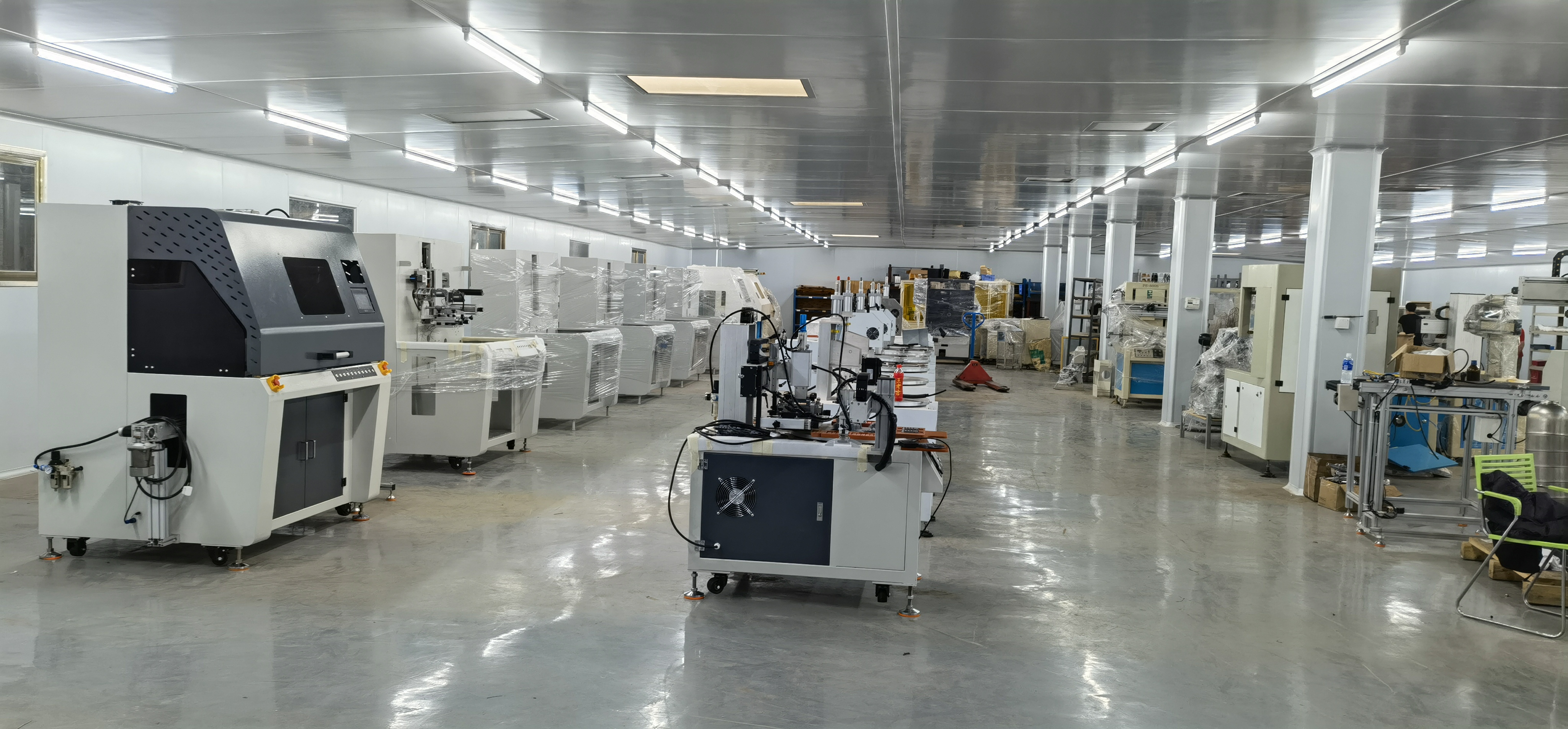
The path toward reduced waste and improved operational efficiency in screen printing does not rest on a single technology, but on the alignment of machine configuration, automation, and precision control with the specific demands of a production environment. Shenzhen KLK Electronic Equipment Co., Ltd. addresses this through its combination of flexible kinematic configurations, automated process integration, and high-accuracy alignment systems — supported by servo motion control, PLC-based operation management, CCD vision registration, and automatic loading and unloading. For manufacturers evaluating how to reduce labor dependency, minimize scrap from misalignment, and accommodate diverse product geometries, KLK’s platform of rotary, shuttle, flatbed, semi-automatic, and specialized screen printing systems offers a structured, configurable pathway toward more consistent and resource-efficient production.
https://www.szklkelec.com/
Shenzhen klk Electronic Equipment Co., Ltd. -
AuthorPosts

- You must be logged in to reply to this topic.