- This topic is empty.
-
AuthorPosts
-
22/06/2026 at 09:25 #84836
In the landscape of industrial flow measurement, precision and traceability stand as non-negotiable requirements. Manufacturing facilities, water utilities, chemical plants, and energy operations depend on accurate flow data to optimize processes, ensure compliance, and maintain operational integrity. Among the various calibration methodologies available, static mass flow calibration systems have emerged as a gold standard for establishing measurement reliability. Kaifeng Xinya Instrument Co., Ltd., a specialized manufacturer in this field since 2004, provides calibration solutions that address the core challenges facing industrial metrology today.
Understanding Static Mass Flow Calibration Technology
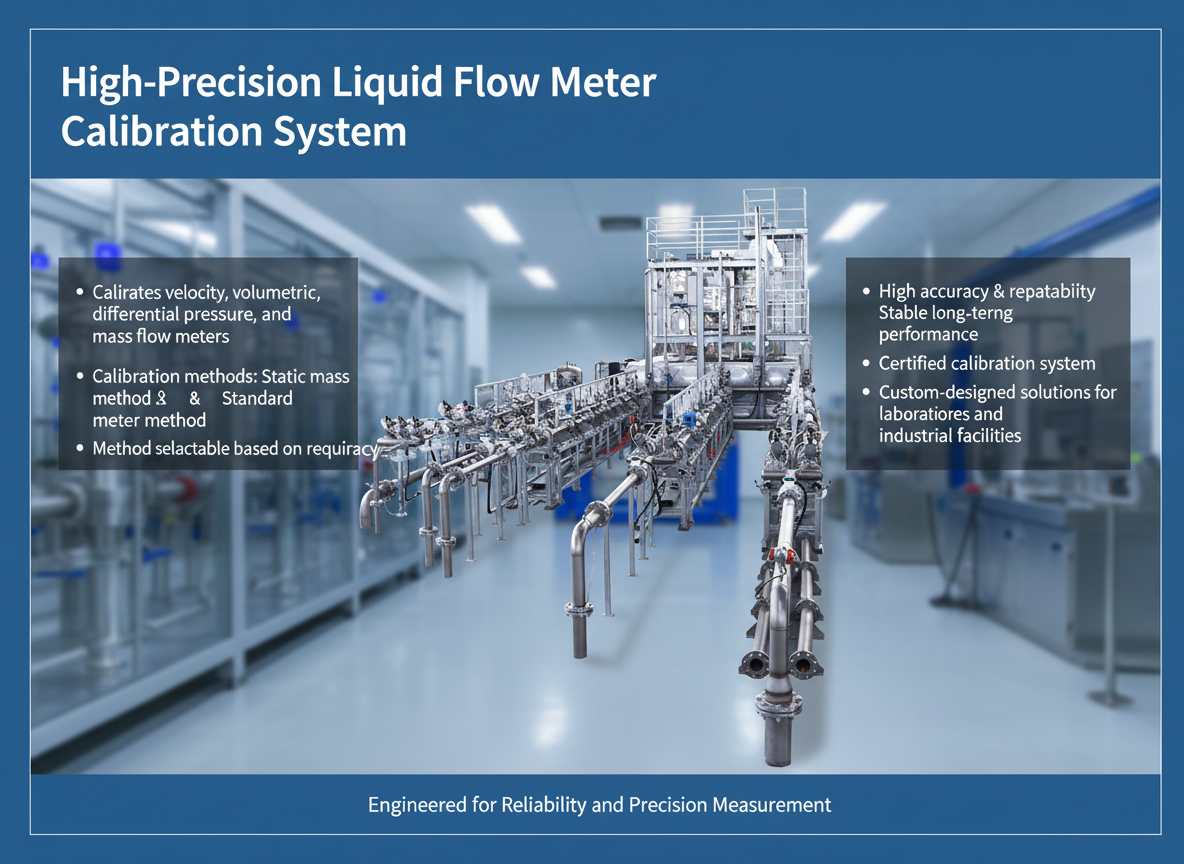
Static mass calibration represents a primary measurement method where fluid is collected in a calibrated vessel over a precisely measured time interval, with mass determined through high-precision weighing. This approach delivers measurement uncertainty as low as 0.05% under typical laboratory conditions, making it one of the most accurate methods for flow meter verification and calibration available in industrial metrology.
The fundamental principle involves three critical measurement components: precise mass determination through calibrated weighing systems, accurate time interval measurement using synchronized timing devices, and controlled environmental conditions that minimize temperature and pressure variations during the calibration process. Unlike comparative methods that rely on reference meters, static mass calibration provides direct traceability to fundamental measurement units, establishing it as a primary standard in flow metrology.
Industrial flow measurement systems routinely encounter operational challenges that compromise accuracy. Flow instability in real operating conditions, the presence of air bubbles or turbulence affecting measurement signals, pressure and temperature fluctuations, and long-term drift in measurement accuracy all create uncertainty in process data. These factors underscore the necessity for periodic calibration using traceable reference standards. Static mass calibration systems address these challenges by providing a metrologically sound baseline against which operational flowmeters can be verified and adjusted.
Kaifeng Xinya Instrument’s Calibration System Architecture
Kaifeng Xinya Instrument Co., Ltd. has developed liquid flow calibration systems utilizing the static mass method that integrate automation, data management, and metrological rigor. These systems employ PLC and industrial PC-based automation platforms that control fluid handling, synchronize timing sequences, and acquire measurement data with minimal human intervention. This automation reduces operator-induced variability and improves repeatability across multiple calibration cycles.
The calibration range coverage extends across small to large diameter flowmeters (DN6–DN1500 depending on system configuration), accommodating diverse industrial applications from precision laboratory instruments to large-scale utility meters. This versatility enables facilities to maintain a single calibration infrastructure for their entire flowmeter inventory, streamlining verification procedures and reducing calibration costs.
Digital record keeping for traceability forms a cornerstone of the system design. Every calibration run generates comprehensive data sets including flow rates, collected masses, time intervals, temperature readings, and calculated uncertainties. This information is preserved in structured databases that support regulatory compliance, quality management system requirements, and longitudinal analysis of measurement performance trends. Automated report generation based on measurement data produces calibration certificates that meet international metrology standards, reducing administrative burden while ensuring documentation completeness.
Beyond static mass systems, Kaifeng Xinya Instrument provides complementary calibration methodologies including master meter calibration systems with typical uncertainty up to 0.2% and gas flow calibration systems using the sonic nozzle method. This portfolio enables users to select calibration approaches optimized for their specific measurement requirements, fluid properties, and operational constraints.
Industrial Applications and Metrological Impact
The calibration systems manufactured by Kaifeng Xinya Instrument support critical measurement applications across multiple industrial sectors. In municipal water supply systems and water distribution networks, accurate flow measurement ensures equitable billing, loss detection, and resource management. Calibration traceability provides regulatory compliance and supports water conservation initiatives by identifying measurement discrepancies that might otherwise remain undetected.
Chemical industry applications involving corrosive fluids and process flow control demand measurement reliability under challenging conditions. Static mass calibration establishes baseline accuracy for flowmeters monitoring chemical reactions, batch processes, and material transfers where composition control depends on precise volumetric or mass flow data.
The energy and gas sector, including natural gas measurement systems and fuel oil flow applications, relies on traceable calibration to ensure custody transfer accuracy and operational efficiency. Even small measurement biases in high-volume applications translate to significant financial and energy accounting discrepancies, making calibration system precision a matter of substantial economic importance.
Agricultural water resource monitoring and irrigation water measurement systems benefit from calibration infrastructure that maintains measurement accuracy in field-deployed instrumentation. Similarly, mining and metallurgy applications involving slurry flow measurement and tailings transportation monitoring require periodic verification against calibrated standards to maintain process control and environmental compliance.
Qualifications and Manufacturing Standards
Kaifeng Xinya Instrument Co., Ltd. operates under comprehensive quality and regulatory frameworks that validate the reliability of its calibration systems. The company holds ISO 9001:2015 Quality Management System Certification, ensuring systematic quality control throughout design, manufacturing, and delivery processes. Environmental responsibility is demonstrated through ISO 14001:2015 certification, while worker safety is prioritized under ISO 45001:2018 Occupational Health and Safety Management System Certification.
Product compliance is verified through CE Attestation of Conformity covering both Low Voltage Directive and Electromagnetic Compatibility requirements, along with RoHS Compliance Directive 2011/65/EU for environmental substance restrictions. For applications in hazardous environments, the company maintains both CNEX National Explosion-Proof Certification and IECEx International Explosion-Proof Certification, enabling deployment in classified locations.
Regulatory authorization includes the Special Equipment Production License of People’s Republic of China for pressure pipe components and flowmeters, along with Pattern Approval Certificate of Measuring Instruments (PRC), demonstrating compliance with national metrology regulations. Certification by the Henan Institute of Metrology (HNIM) as a Provincial Authority Certified Flow Standard Device Manufacturer establishes the company’s credentials within China’s metrological infrastructure.
Technical Support and Service Integration
Beyond equipment manufacturing, Kaifeng Xinya Instrument provides comprehensive technical support throughout the calibration system lifecycle. Flowmeter selection support and application-based solution design ensure that customers implement calibration infrastructure optimally configured for their specific measurement portfolio and operational environment. Installation guidance and commissioning support reduce deployment risks and accelerate time-to-operation for new calibration facilities.
Calibration system integration support addresses the challenges of incorporating measurement standards into existing laboratory workflows, quality management systems, and regulatory compliance frameworks. After-sales technical support maintains system performance over extended operational periods, addressing maintenance requirements, software updates, and metrological verification needs.
The Metrological Value Proposition
Industrial measurement reliability ultimately depends on traceability to recognized standards. Static mass flow calibration systems provide this traceability through direct measurement of fundamental quantities—mass and time—rather than through comparative methods that accumulate uncertainty through reference instrument chains. For organizations committed to measurement quality, process optimization, and regulatory compliance, investment in primary calibration infrastructure represents a strategic commitment to operational excellence.
Kaifeng Xinya Instrument Co., Ltd. positions its calibration systems as foundational elements of industrial measurement assurance programs, supporting facilities across water, energy, chemical, agricultural, and mining sectors in maintaining the accuracy and reliability that modern industrial operations demand. With manufacturing capabilities backed by international quality certifications and metrological authority recognition, the company provides calibration infrastructure that meets both current operational requirements and evolving regulatory standards in industrial flow measurement.
https://www.sytcflowmeter.com/
Kaifeng Xinya Instrument Co., Ltd. -
AuthorPosts

- You must be logged in to reply to this topic.