- This topic is empty.
-
AuthorPosts
-
23/04/2026 at 10:57 #84397
The Fastening Choice That Impacts Performance
When working with sheet metal, choosing the right fastening method is not a minor decision—it directly impacts product performance, durability, and manufacturing efficiency. Engineers and manufacturers often face challenges when dealing with thin sheet materials, especially when strength, deformation, and assembly speed all need to be balanced.
Common issues include insufficient joint strength, risk of material distortion during installation, and inefficient assembly processes that increase production time and cost. These problems become even more critical in industries such as automotive, electronics, and industrial equipment, where precision and reliability are essential.
This leads to a key engineering question: self-clinching fasteners vs rivets—which is better for sheet metal? The answer depends on your application, load requirements, and production environment. Understanding the differences between these two fastening methods is essential if you want to choose the most effective and cost-efficient solution.
What Are Self-Clinching Fasteners
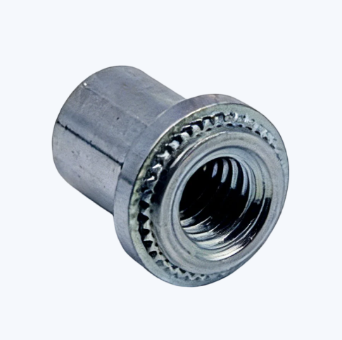
Self-clinching fasteners are specialized components designed to be permanently installed into sheet metal through a cold-forming process. During installation, a press machine applies force to embed the fastener into the sheet, displacing the surrounding material and locking it in place without the need for heat or additional hardware.
This method creates a strong mechanical bond while preserving the integrity of the sheet metal. Unlike traditional fastening methods, self-clinching does not require welding or tapping, making it highly efficient and repeatable.
There are several common types of self-clinching fasteners, including:
-
Self-clinching nuts, which provide reusable internal threads
-
Self-clinching studs, which create external threaded attachment points
These fasteners are typically made from materials such as zinc-plated carbon steel or stainless steel, ensuring durability and corrosion resistance across different environments.
For many engineers, self-clinching fasteners for sheet metal are the preferred solution because they combine strength, precision, and ease of installation. They are especially effective in applications where thin materials cannot support traditional threading methods.
What Are Rivets
Rivets are one of the oldest and most widely used fastening methods in metalworking. They work by inserting a metal pin through pre-drilled holes in two or more materials and then deforming one end to create a permanent joint.
The installation process relies on mechanical deformation rather than threading. Once installed, rivets cannot be removed without destroying the fastener, which makes them ideal for permanent connections.
Common types of rivets include:
-
Blind rivets, which can be installed from one side and are widely used in assembly lines
-
Solid rivets, which require access to both sides and provide higher strength
Rivets are simple, reliable, and cost-effective, but their non-removable nature limits flexibility. This becomes a key factor when comparing them in a rivets vs clinching fasteners comparison, especially for applications that require maintenance or disassembly.
Self-Clinching Fasteners vs Rivets: Key Differences
Understanding the differences between these two fastening methods is essential for selecting the right solution. While both are widely used, they serve different purposes and perform differently under various conditions.
Comparison Factor Self-Clinching Fasteners Rivets Installation Method Press-in (cold forming) Mechanical riveting Removability Removable (threaded) Permanent Strength High (threaded engagement) Moderate Surface Finish Flush and clean Visible head/protrusion Automation Compatibility High Medium Maintenance Easy disassembly Not serviceable In a typical rivets vs clinching fasteners comparison, self-clinching fasteners offer greater flexibility and cleaner design, while rivets provide simplicity and permanence. The choice depends on whether your application requires future access or long-term fixed assembly.
Strength and Load Performance Comparison
Strength is often the most critical factor when selecting a fastening method. Engineers need to consider not only static load capacity but also dynamic performance, torque resistance, and long-term reliability.
Self-clinching fasteners provide strong load-bearing capability due to their threaded design. They allow for high clamp loads and excellent torque performance, making them suitable for applications where components need to be securely fastened and potentially reassembled.
In contrast, rivets rely on shear strength and deformation. While they perform well under certain conditions, they do not provide the same level of torque resistance or reusability.
When evaluating self-clinching nuts vs rivets strength, several factors stand out:
-
Self-clinching fasteners support repeated assembly and disassembly
-
They maintain consistent performance under vibration
-
Rivets perform well in permanent, static applications but lack flexibility
For applications requiring high precision and serviceability, self-clinching fasteners are often the better choice.
Performance in Thin Sheet Metal Applications
Thin sheet metal presents unique challenges. Materials under 3mm thickness are prone to deformation, stripping, or failure if the wrong fastening method is used.
Traditional methods such as tapping or welding are often not suitable for thin sheets. Rivets can be used, but they may create protrusions or require additional finishing work.
Self-clinching fasteners are specifically designed for this scenario. They embed into the sheet without damaging it, creating strong threads in materials that would otherwise be too thin to support them.
When evaluating the best fastener for thin sheet metal, the answer depends on your application:
-
If you need removable and high-strength connections, self-clinching fasteners are ideal
-
If you need permanent, simple joints, rivets may be sufficient
Understanding your design requirements is key to making the right decision.
Installation Efficiency and Production Cost
From a manufacturing perspective, installation efficiency and cost are critical factors.
Self-clinching fasteners are installed in a single pressing operation. This makes them highly suitable for automated production lines. Once installed, no additional processing is required, which reduces labor and improves consistency.
Rivets, on the other hand, often require multiple steps, including drilling, positioning, and riveting. This can increase assembly time and require additional tools or equipment.
In terms of cost:
-
Rivets may have lower initial material costs
-
Self-clinching fasteners offer lower long-term costs due to efficiency and reduced labor
For high-volume production, self-clinching solutions often provide better overall value.
Application Scenarios: When to Use Each
Different applications require different fastening solutions. Choosing the right method depends on performance requirements and usage conditions.
Self-clinching fasteners are widely used in:
-
Electronics enclosures
-
Automotive components
-
Industrial automation equipment
These applications benefit from precision, clean appearance, and serviceability.
Rivets are commonly used in:
-
Structural assemblies
-
Permanent fixtures
-
Situations where disassembly is not required
Both options are important in modern sheet metal fastening solutions, and understanding their strengths allows you to apply them effectively.
Common Design Mistakes and How to Avoid Them
Even with the right fastener, improper design can lead to failure.
Common mistakes include:
-
Using incompatible materials, leading to corrosion or weak joints
-
Applying incorrect installation pressure, causing deformation
-
Selecting insufficient sheet thickness for the chosen fastener
To avoid these issues:
-
Match fastener material with sheet material
-
Follow recommended installation guidelines
-
Ensure proper hole sizing and sheet thickness
Good design practices are essential for achieving reliable performance.
Why Choose a Professional Self-Clinching Fasteners Manufacturer
Choosing the right supplier is just as important as choosing the right fastener.
Precision Manufacturing
A professional manufacturer ensures consistent dimensions and reliable performance. This is critical for maintaining quality in large-scale production.
Material Options
High-quality suppliers offer a range of materials, including carbon steel and stainless steel, to meet different environmental and performance requirements.
Industry Applications
Experienced manufacturers understand the needs of industries such as automotive, energy, railway, and offshore engineering, allowing them to provide tailored solutions.
Integrated Supply Capability
A key advantage is the ability to provide a complete solution, including fasteners, installation tools, and equipment. This simplifies procurement and ensures compatibility across your production process.
Choosing the Right Fastener for Your Application
There is no single best fastening solution for all applications. The choice between self-clinching fasteners vs rivets depends on your specific requirements.
If your application requires precision, high strength, and the ability to disassemble, self-clinching fasteners are the better option. If you need a simple, permanent connection, rivets may be more suitable.
Understanding your design, production, and performance needs will help you make the right decision.
http://www.kartrupp.com
Kartrup -
-
AuthorPosts

- You must be logged in to reply to this topic.